


How Much Car Window Tint Rules in India 2026: Legal Tint Percentage Explained
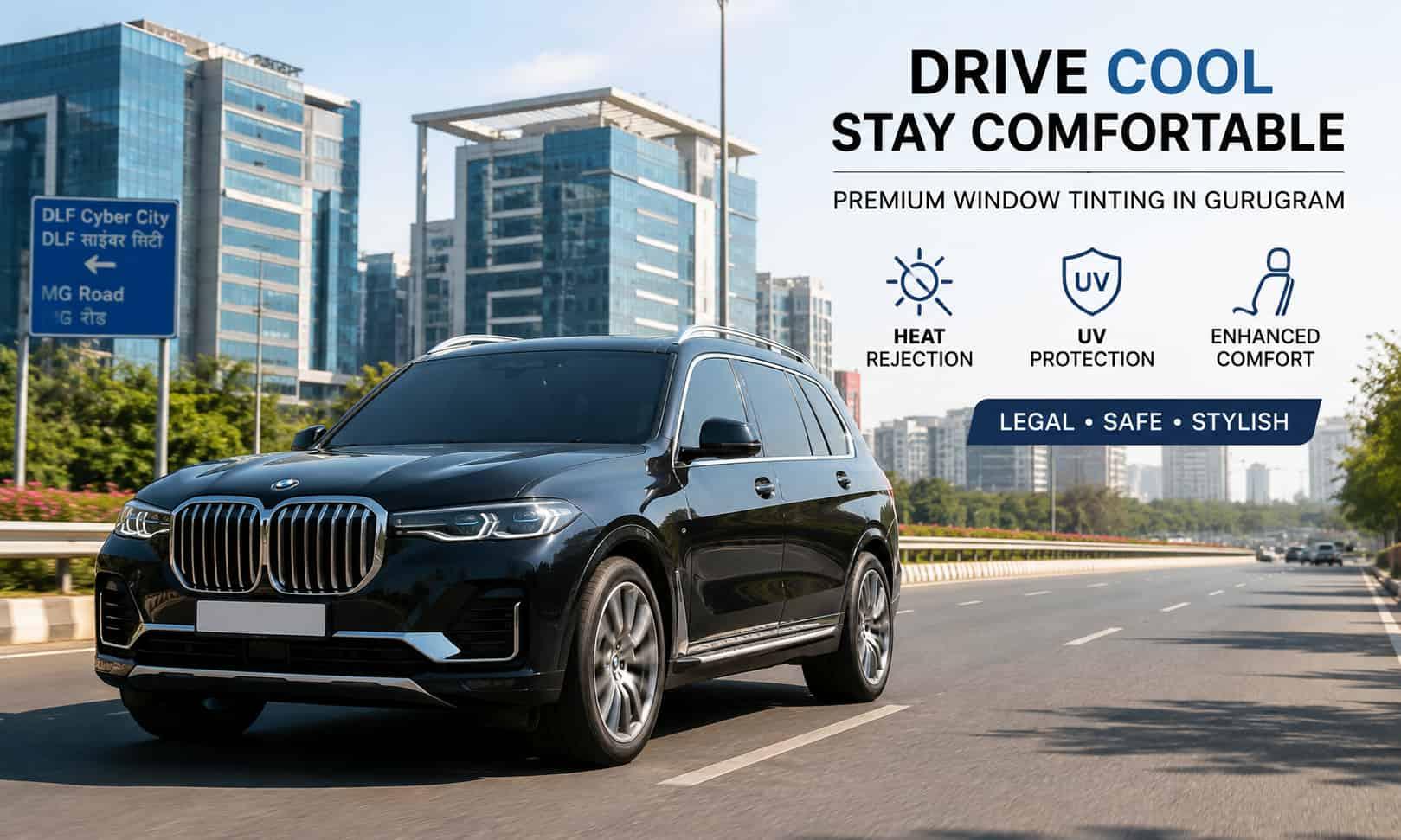
Car window tinting is popular across India, especially in hot cities like Gurugram, Delhi, Mumbai, Hyderabad, and Ahmedabad. Many drivers install window films to reduce cabin heat, block UV rays, improve privacy, and enhance driving comfort.
However, Indian traffic laws around tinted windows are strict. A large number of car owners still remain confused about how much car window tint is legal in India and whether aftermarket sun films are allowed.
If you are planning to install car window tint in India, this guide explains everything in simple language.
What Does Car Window Tint Mean?
Car window tint refers to a thin film or treated glass that reduces the amount of sunlight entering the vehicle.
The darkness of tint is measured through something called VLT.
Understanding VLT (Visible Light Transmission)
Visible Light Transmission (VLT) indicates how much visible light can pass through the glass.
For example:
-
70% VLT means 70% light passes through
-
50% VLT means the glass is darker
-
Lower VLT = darker tint
This is the key measurement used under Indian motor vehicle regulations.
Are Tinted Windows Legal in India?
Yes, are tinted windows legal in India is one of the most searched questions online, and the answer is yes — but only within specific VLT limits.
The confusion started after the Supreme Court banned the use of dark sun films on vehicles due to safety and law enforcement concerns.
The rule does not completely ban tinted glass. Instead, it restricts how dark the windows can be.
Supreme Court Rules on Car Window Tint
According to Supreme Court guidelines:
-
Front and rear windshields must allow at least 70% visible light transmission
-
Side windows must allow at least 50% visible light transmission
-
Any tint darker than these limits can result in fines and penalties
What Is the Legal Tint for a Car Window in India?
Many drivers ask what is the legal tint for a car window in India before installing sun films or ceramic tints.
Here is the legally allowed window tint percentage in India.
|
Car Window |
Minimum Allowed VLT |
|
Front Windshield |
70% |
|
Rear Windshield |
70% |
|
Side Windows |
50% |
This means your windows cannot block more light than permitted under the Motor Vehicles Act.
Front Windshield VLT Rules
The front windshield must maintain at least 70% visibility. Extremely dark front glass is illegal because it reduces road visibility and creates safety concerns during night driving.
Side Window VLT Rules
Side windows can have slightly darker glass but must still allow at least 50% light transmission.
Rear Window Rules
Rear windshields also require 70% VLT under Indian law.
Is 70 Tint Legal in India?
Yes, is 70 tint legal in India is another common question, and the answer is yes for front and rear windshields.
In fact, this is the minimum legally required VLT level for these windows.
However, there is an important difference many car owners misunderstand:
-
A 70% VLT glass allows 70% light inside
-
It is not considered “dark black tint”
Most factory-fitted premium car glasses already comply with these standards.
Can You Use Black Film or Sun Film on Cars?
Dark black films and heavily tinted aftermarket sun films are generally not allowed if they reduce visibility below legal limits.
Police often issue challans for:
-
Black reflective films
-
Very dark privacy tints
-
Mirror films
-
Non-compliant aftermarket sun films
Even expensive luxury vehicles can be fined if the tint exceeds legal limits.
Why India Restricted Dark Window Tints
The restriction was mainly introduced for public safety reasons.
Authorities believed excessively dark windows could:
-
Reduce visibility during driving
-
Increase accident risks
-
Make law enforcement checks difficult
-
Create passenger identification issues
This is why India follows strict visibility-based regulations.
Factory-Fitted Tinted Glass vs Aftermarket Film
This is one of the most searched questions online.
Factory-Fitted Tinted Glass
Usually legal if:
-
It meets approved VLT standards
-
The tint comes directly from the manufacturer
Aftermarket Window Film
Can become illegal if:
-
The final VLT drops below legal limits
-
The film creates excessive darkness
This is why many car owners in Gurugram and Delhi prefer light ceramic films instead of dark black tints.
Best Legal Tint Options for Indian Cars
Modern tint technology offers several legal alternatives that improve comfort without violating Indian laws.
Ceramic Tint
Ceramic tint films are becoming popular because they:
-
Block heat effectively
-
Reduce UV exposure
-
Maintain visibility
-
Look premium without excessive darkness
UV Protection Film
These films focus more on sun protection than privacy and are usually safer from a legal perspective.
Heat Rejection Films
Many modern transparent films reduce cabin temperature while keeping visibility high.
These are useful for Indian summers where temperatures can become extreme.
Traffic Fines and Challans for Illegal Window Tint
If your car windows violate VLT rules, traffic police may issue penalties.
Possible consequences include:
-
Traffic challan
-
Fine amount depending on state rules
-
Removal of film on the spot
-
Repeat offense penalties
Enforcement is stricter in metro cities such as:
-
Delhi
-
Gurugram
-
Noida
-
Mumbai
-
Bengaluru
Car Window Tint Rules in Delhi, Gurugram & Other Cities
Cities with heavy traffic monitoring often conduct special drives against illegal modifications.
In NCR regions like Gurugram and Delhi:
-
Police frequently inspect SUVs and luxury cars
-
Black films are commonly targeted
-
Luxury sedans with dark privacy tints are often checked
Drivers should ensure their vehicles remain compliant at all times.
How to Check If Your Car Tint Is Legal
You can verify tint legality through:
-
VLT meters used by professionals
-
Authorized car accessory shops
-
Manufacturer specifications
-
Vehicle compliance certificates
Before installing any film, always ask the installer:
-
Exact VLT percentage
-
Heat rejection level
-
Whether the product complies with Indian law
Benefits of Legal Window Tint
A legal window tint can still provide multiple advantages.
Reduced Cabin Heat
Helps keep interiors cooler during Indian summers.
UV Protection
Protects passengers and dashboard materials from sun damage.
Better Driving Comfort
Reduces glare during daytime driving.
Improved Energy Efficiency
Lower AC usage may improve fuel efficiency slightly.
Things to Avoid Before Installing Window Tint
Avoid:
-
Extremely dark black films
-
Cheap reflective tints
-
Mirror-finish films
-
Unverified local products
-
Installers who do not mention VLT ratings
Always prioritize visibility and compliance over appearance.
Final Verdict
Car window tint is legal in India, but only within approved VLT limits. If you are wondering how much car window tint is legal in India, the answer depends on the type of window and its VLT percentage.
To stay compliant:
-
Front and rear windshields must maintain 70% VLT
-
Side windows must maintain 50% VLT
If you want heat reduction and UV protection, modern ceramic or transparent heat-rejection films are safer options than dark black tints.
For drivers in Gurugram, Delhi, Mumbai, and other metro cities, following legal tint rules is important to avoid challans and unnecessary legal trouble.
A smart approach is choosing a high-quality, legally compliant film that improves comfort while maintaining road safety and visibility.
FAQs
Are tinted windows legal in India?
No, dark black films are not fully allowed. However, are tinted windows legal in India depends on whether the vehicle follows legal VLT percentage limits.
What is the legal tint for a car window in India?
If you are asking what is the legal tint for a car window in India, the rule is simple: front and rear windshields require 70% VLT, while side windows require 50% VLT.
Is 70 tint legal in India?
Yes, is 70 tint legal in India is legally permitted for front and rear windshields.
Can traffic police remove window film?
Yes, authorities may ask drivers to remove illegal dark films during inspections.
Are factory-tinted car windows legal?
Yes, factory-fitted tinted glass is usually legal if it complies with VLT standards.
Which tint is best for Indian weather?
Ceramic heat-rejection films are considered one of the best options for Indian climate conditions.
READ MORE :- BEST EMAIL MANAGEMENT TOOLS

 Arabic
 French
 Spanish
 Portuguese
 Deutsch
 Turkish
 Dutch
Dutch
 Italiano
 Russian
 Romaian
 Portuguese (Brazil)
 Greek
Greek