


Choosing Custom Packaging Solutions: What Procurement Teams Should Evaluate Before Ordering
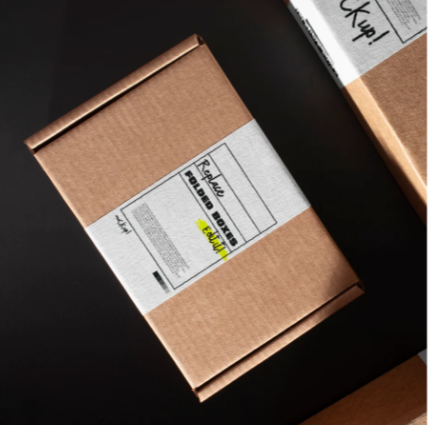
In many procurement and operations teams, packaging decisions often start as a cost discussion and quickly turn into something more complex. A supplier may offer attractive pricing, but issues appear later in production delays, inconsistent material quality, or unexpected limitations in customization. For business owners, procurement managers, and event companies managing product presentation or distribution, these gaps can lead to delays, added expense, and operational friction.
Selecting a custom packaging supplier is less about choosing a box and more about setting reliable conditions for production, delivery, and product protection.
Why packaging selection has become more strategic
With rising shipping volumes and tighter delivery timelines across e-commerce, retail, and event logistics, packaging now plays a functional role in operations. Boxes are expected to hold product integrity during transit, fit branding requirements, and still remain cost-controlled at scale.
Procurement teams are often balancing three competing priorities: cost efficiency, production reliability, and flexibility in design. A supplier who performs well in one area but poorly in another can create long-term inefficiencies.
Core factors to evaluate before placing an order
1. Material quality and structural consistency
Material choice directly affects performance during storage and transit. Common options include corrugated cardboard, rigid board, and kraft materials. Each serves a different purpose depending on product weight, fragility, and presentation needs.
Mailer boxes are frequently used for subscription shipments and e-commerce orders due to their durability and self-locking design. Rigid boxes are selected for higher-value products or gift-style presentation. Tuck-end boxes are commonly used in retail environments where quick assembly is important. Custom sleeves are often added for branding without changing the core packaging structure.
Consistency matters as much as material type. A batch that varies in thickness or folding accuracy can create assembly issues at scale.
2. Minimum order quantity (MOQ) and scalability
MOQ requirements vary widely across suppliers. For small businesses or event-based campaigns, high MOQs can create storage challenges and tie up capital unnecessarily. Larger procurement teams may prioritize lower per-unit cost at higher volumes, but still need flexibility when testing new packaging designs.
A practical approach is to evaluate whether the supplier can support both pilot runs and large-scale production without changing material specifications between batches.
3. Lead times and production scheduling
Lead time is often underestimated during procurement planning. Standard production timelines can be affected by seasonal demand, material availability, and customization complexity.
Procurement managers typically benefit from suppliers who provide clear production schedules, including pre-production sampling, approval stages, and shipping timelines. This reduces uncertainty in downstream logistics planning, especially for time-sensitive product launches or event-based packaging needs.
4. Customization options and print capabilities
Customization goes beyond logo placement. It includes structural design, internal inserts, coating options, finishing techniques, and color accuracy.
Some suppliers specialize in simple print applications, while others support more advanced requirements such as internal printing or multi-layer packaging structures. The right choice depends on whether packaging is primarily functional or also part of a broader presentation strategy for retail or event distribution.
5. Supplier reliability and quality control
Supplier reliability is often determined by consistency rather than one-time performance. Procurement teams should evaluate how suppliers handle revisions, production errors, and communication during production cycles.
Quality control processes such as sample approvals, batch testing, and final inspection reports are practical indicators of operational discipline. A supplier that documents production stages can reduce the likelihood of disputes or unexpected variations.
Common packaging types used in procurement planning
Several packaging formats are widely used across industries:
-
Mailer boxes for subscription services and direct-to-consumer shipping
-
Rigid boxes for premium product categories and corporate gifting
-
Tuck-end boxes for retail packaging and lightweight goods
-
Custom sleeves used to add branding layers without changing base structure
-
Corrugated cartons for bulk shipping and logistics handling
Each format serves a different operational requirement, and selection should align with product weight, handling method, and distribution channel.
Practical decision approach for procurement teams
A structured evaluation process helps reduce procurement risks. Many teams use a sample-first approach, requesting prototypes before committing to full production. This allows testing for durability, print accuracy, and assembly efficiency.
It is also useful to compare suppliers not only on unit cost but on total landed performance, which includes production reliability, defect rates, and delivery consistency.
Moving toward a purchasing decision
Once material, MOQ, lead time, customization, and supplier reliability are assessed together, procurement teams are in a stronger position to make informed sourcing decisions. Packaging choices then become part of a predictable supply chain rather than a recurring operational risk.
For teams preparing new product launches, retail expansions, or event-driven packaging programs, the next step is typically to request detailed quotations and sample runs based on specific requirements.

 Arabic
 French
 Spanish
 Portuguese
 Deutsch
 Turkish
 Dutch
Dutch
 Italiano
 Russian
 Romaian
 Portuguese (Brazil)
 Greek
Greek