


Can I See a Chiropractor on the NHS? The Ultimate Guide to UK Spinal Health
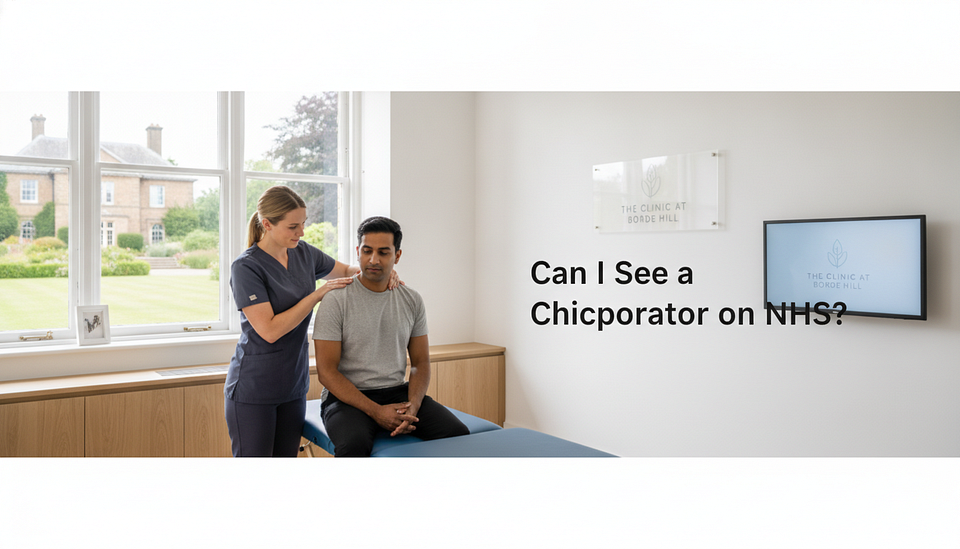
Persistent back pain, neck stiffness, and musculoskeletal discomfort are among the most common reasons patients seek medical advice in the UK. One question that frequently arises is: Can I see a chiropractor on the NHS? While chiropractic care is a recognized and effective health profession, accessing it through the National Health Service can be complex. This guide explores the current landscape of chiropractic availability, the referral process, and the benefits of choosing private care at The Clinic At Borde Hill.
The Current Landscape of NHS Chiropractic Services
In the United Kingdom, the availability of chiropractic treatment on the NHS is determined by local Integrated Care Boards (ICBs), formerly known as Clinical Commissioning Groups (CCGs). While the National Institute for Health and Care Excellence (NICE) guidelines recommend manual therapy — including spinal manipulation, which is a core component of chiropractic care — for the management of low back pain and sciatica, it is not universally available in all regions. In many areas, the NHS prioritizes physiotherapy over chiropractic care, meaning that patients may find limited options for chiropractic referrals.
How to Get a Referral for Chiropractic Treatment
If you are determined to see a chiropractor on the NHS, the process starts with your General Practitioner (GP). During your consultation, you must discuss your symptoms and how they affect your daily life. Your GP will assess your condition and determine if a referral to a musculoskeletal (MSK) clinic is appropriate. If chiropractic services are commissioned in your specific area, your GP may be able to refer you. However, patients should be prepared for significant waiting lists, as demand for MSK services often exceeds capacity. It is also important to note that the NHS may only fund a limited number of sessions, regardless of the severity of the condition.
NICE Guidelines and the Evidence for Chiropractic Care
The National Institute for Health and Care Excellence (NICE) provides evidence-based recommendations for health and social care in England. Their guidelines for the management of non-specific low back pain and sciatica specifically mention that manual therapy, including spinal manipulation, can be part of a treatment package. Because chiropractors are specialists in spinal health and manual therapy, their expertise aligns perfectly with these national standards. Despite this, the bureaucratic hurdles of the NHS mean that many patients remain stuck in a cycle of pain management through medication rather than addressing the mechanical cause of their discomfort.
Why Many Patients Choose Private Chiropractic Care
Due to the limited availability and long wait times associated with the NHS, an increasing number of individuals are turning to private clinics like The Clinic At Borde Hill. Private care offers several distinct advantages: 1. Immediate Access: You can often secure an appointment within days rather than months. 2. Comprehensive Assessments: Private chiropractors provide in-depth consultations, including postural analysis and neurological testing. 3. Continuity of Care: You see the same practitioner every time, allowing for a more personalized and effective treatment plan. 4. Modern Techniques: Private clinics often invest in the latest therapeutic technologies to enhance patient outcomes.
Is Private Chiropractic Care Affordable?
Many people assume that seeing a chiropractor on the NHS is the only way to afford treatment. However, when you consider the cost of missed work, ongoing prescription costs, and the impact on quality of life, private care is a valuable investment. Furthermore, many private health insurance providers cover chiropractic treatment, and self-pay options are often more accessible than expected.

 Arabic
 French
 Spanish
 Portuguese
 Deutsch
 Turkish
 Dutch
Dutch
 Italiano
 Russian
 Romaian
 Portuguese (Brazil)
 Greek
Greek