


The Tuffier Rib Spreader: A Surgeon's Guide to This Essential Thoracic Instrument

Open-chest surgery demands clear access to the organs inside. The ribs stand in the way. Surgeons need a reliable tool to hold them apart safely. That's exactly where the Tuffier rib spreader comes in. If you're learning about cardiothoracic surgery instruments, this guide breaks it down in plain terms. You'll understand what the tool does, how it works, and why it matters in the operating room.
What Is the Tuffier Rib Spreader?
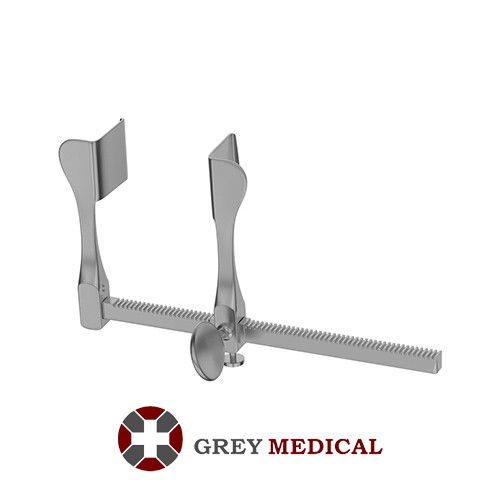
The Tuffier rib spreader is a surgical retractor used to open the chest cavity. It separates two adjacent ribs and holds them apart. This creates a stable window for the surgeon to work through.
It belongs to a family of tools called surgical retractors. These instruments keep tissue or bone out of the way during an operation. The Tuffier model is one of the most trusted names in this category.
Surgeons rely on it during procedures that reach the lungs, heart, or major vessels. Once the chest is opened, the spreader keeps it that way until the work is done.
Design and Construction
The design is simple but built for heavy duty. Here's what makes it work.
- Two arms (blades): These hook onto the ribs and apply outward pressure.
- A rack-and-pinion mechanism: A ratchet system lets the surgeon widen the gap step by step.
- A locking control: Once set, the spread stays locked in place. The ribs won't snap back.
- A crank or handle: Turning it adjusts the spread with precision.
Most Tuffier rib spreaders are made from stainless steel. This material resists rust, handles repeated sterilization, and stays strong under pressure. A good instrument lasts for years of regular use.
The smooth, fitted joints matter too. They prevent tissue from catching and make cleaning easier.
Primary Uses in Surgery
You'll find the Tuffier rib spreader in two main surgical fields.
Thoracic surgery. This covers operations on the lungs, chest wall, and esophagus. The spreader opens the rib cage so surgeons can remove tumors, treat infections, or repair damage.
Cardiovascular surgery. When the heart or large blood vessels need attention, access is everything. The spreader holds the chest open during procedures like bypass surgery or valve repair.
In both cases, the goal is the same. Give the surgeon a clear, steady view and enough room to operate with confidence.
How It Works to Retract the Ribs
The process is straightforward once you see it in action.
- The surgeon makes an incision between two ribs.
- The two blades of the spreader are placed against each rib.
- Turning the crank moves the arms apart in a controlled motion.
- The ratchet locks at the chosen width, holding the ribs open.
This tuffier rib spreader controlled motion is the key benefit. The surgeon decides exactly how wide to spread the ribs. Too little, and there's no room. Too much, and the ribs risk damage. The rack-and-pinion system finds the safe middle ground.
Once locked, the surgeon's hands are free. No one needs to hold the chest open manually.
Benefits for Surgeons and Patients
A well-designed retractor helps everyone in the operating room.
For surgeons:
- Clear, stable access to the surgical site
- Hands-free retraction that frees up the team
- Precise control over how wide the ribs open
- A dependable lock that holds steady during long procedures
For patients:
- Controlled spreading reduces the risk of rib fractures
- Smooth, careful retraction limits tissue trauma
- Better access can mean a more efficient operation
Less trauma during surgery often supports a smoother recovery afterward. That outcome matters most of all.
Notable Variations and Modern Advancements
The original design has come a long way. Surgeons today can choose from several updated versions.
- Self-retaining models: These hold position without constant adjustment, freeing the surgical team.
- Adjustable blade sizes: Different patients need different reach. Swappable blades handle that.
- Detachable parts: Removable components make deep cleaning and sterilization faster.
- Lighter, ergonomic builds: Newer materials cut weight without losing strength.
Some modern retractors also pair with minimally invasive techniques. As surgery moves toward smaller incisions, instrument design keeps adapting to match.
The core idea, though, stays the same. Open the chest safely. Hold it steady. Let the surgeon do the work.
Final Thoughts
The Tuffier rib spreader proves that simple tools can carry huge responsibility. It gives surgeons the access they need while protecting the patient from unnecessary harm.
Understanding how these surgical retractors work builds a stronger foundation in thoracic surgery instruments. Whether you're a medical student, a new surgical assistant, or a curious reader, you now know what this instrument does and why it earns its place in the operating room.
Keep learning the tools of the trade. Each one tells you something about how careful, precise surgery really works.

 English
 Arabic
 French
 Spanish
 Portuguese
 Turkish
 Dutch
Dutch
 Italiano
 Russian
 Romaian
 Portuguese (Brazil)
 Greek
Greek