


Equipments used in lube oil testing and why they are used
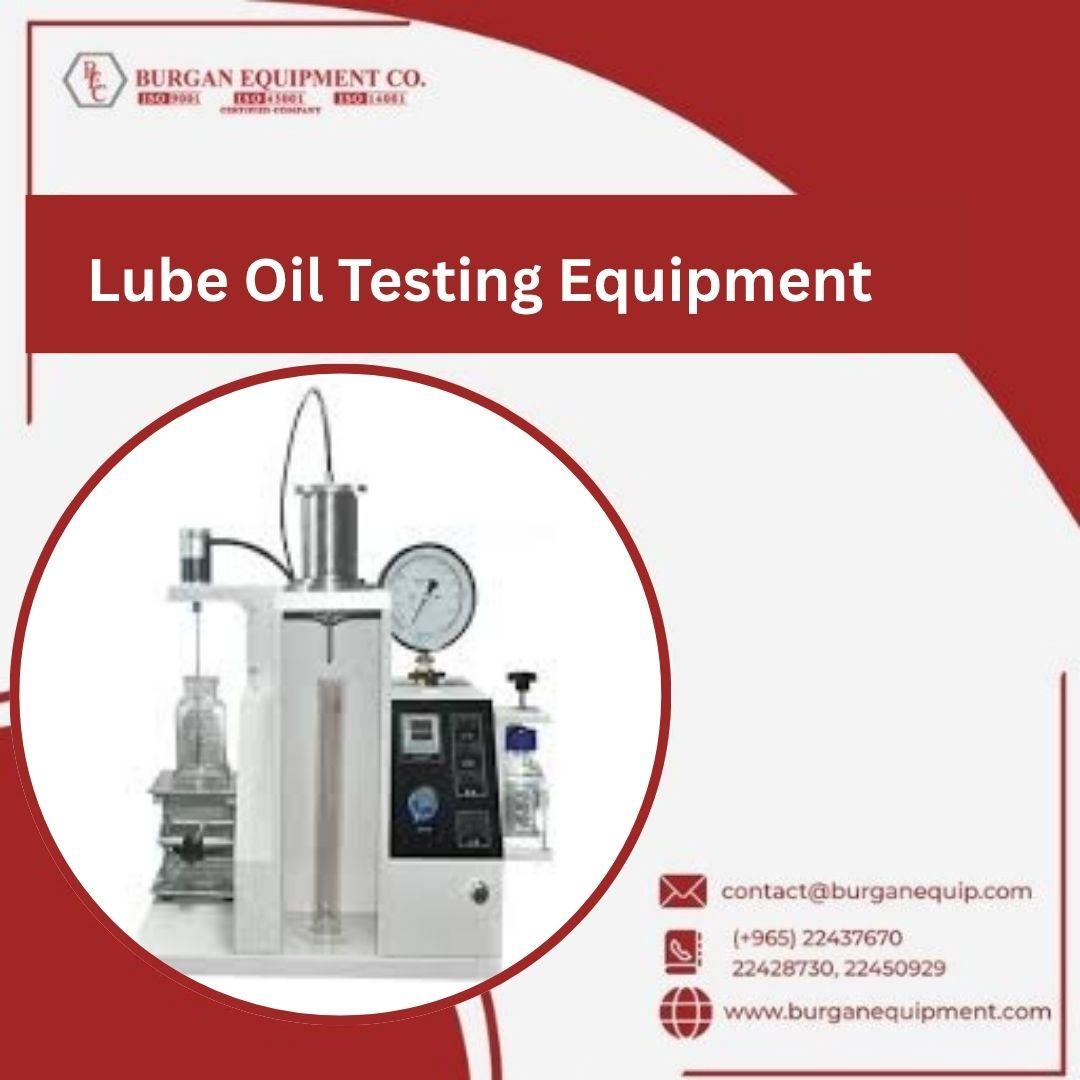
Lube oil testing is done to analyze lubricating oil to detect it contaminants, condition, and identify wear and tear in the machinery. Lube oil testing equipment assesses the properties of oils, like water content, viscosity, wear metals, and total base number. The analytical data of lubricant oil is used to undertake preventive maintenance for equipment failure and enhance the component’s performance. The Lube Oil Testing Equipment examples would include online particle counters, portable test kits, and highly sophisticated laboratory equipment like Ferrography Analyzer and FTIR spectrometers.
Common types of lube oil testing equipment in detail are
· Portable test kits – it is used for onsite-testing that are basic and testing parameters like water content, viscosity
· Hydrogauge – this equipment is used for measuring qualitative or quantitative water contamination
· Visgauge – it is a handy tool to check and measure the thickness (viscosity) of fresh or used oils.
· Blotter test - it is a basic test conducted to check insolubles and dispersancy of the oil
· Total Base Number (TBN) testing kits – it is for determining the minimum TBN value of the oil, which denotes the oil’s reserve alkalinity.
· Inline and online monitors – these are advanced instruments that offer real time screening of the oil’ conditions.
· Online laser particle counters – this counts the particles in the oil, and provides data of contamination in NAS or ISO standard formats.
· FTIR Spectrometers – it helps identify chemical changes in the oil such as nitration or oxidation. This indicates degradation of oil
· Lab equipments - for comprehensive analysis often with a dedicated laboratory
· BDV test kits – it is used to check transformer oils to check breakdown
Other laboratory tests include checking of water separation and foaming and also check rust prevention.
How air quality monitoring is done?
Checking the quality of air in your environment is an important task because it impacts human health. Air quality checking is a process undertaken to measure and analyze pollutants systematically thus unearth quality and the impact on human health. Air quality monitoring done by agencies and is done using portable air quality testing equipment. The process involves collecting samples and testing them with electrochemical sensors so as to detect harmful substances. The test is mostly done to measure the eventuality and quantity of harmful substances such as carbon monoxide and nitrogen oxide besides volatile organic compounds. If you are want to check the air quality in your environment you can always consult agencies that are authorized and authenticated for the purpose.

 Arabic
 French
 Spanish
 Portuguese
 Deutsch
 Turkish
 Dutch
Dutch
 Italiano
 Russian
 Romaian
 Portuguese (Brazil)
 Greek
Greek