


When Should You Visit a Specialist for Sudden Vision Changes?
Most people ignore small changes in their eyesight at first. It's pretty common. You wake up and things look a little blurry. Maybe you notice a few new floaters while looking at a bright wall. Maybe straight lines suddenly look slightly bent. The first thought is usually, "I'll see if it gets better."
Sudden vision changes can happen for many reasons, and some are harmless. Others can point to serious problems involving the retina, the delicate layer at the back of the eye responsible for sending visual information to the brain. This is where seeing a retina specialist in Washington can make a major difference. Early evaluation can help identify problems before they lead to permanent vision loss.
The tricky part about retinal conditions is that they don't always come with pain. Your vision may start changing quietly. Waiting for discomfort isn't always the right approach.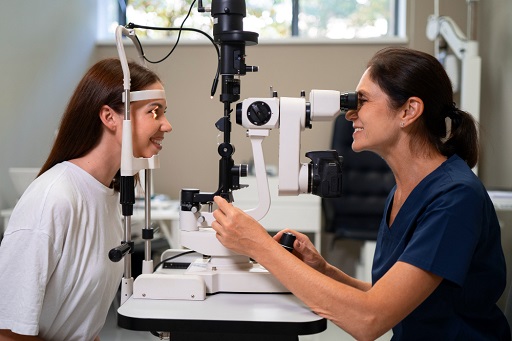
Why Sudden Changes in Vision Need Immediate Attention
Your eyes are always taking in information, but the retina is doing much of the work, which lie at the back of your eye. The retina receives light rays that penetrate the eye and transforms them into impulses that give us sight. A problem with the retina can cause anything to affect your vision.
Any rapid change in floaters, flashes of light, dark spots, or a curtain covering part of your vision should be reported immediately.
Most people think, “great, I can come back in a couple of weeks when it is not painful,” and this is where the problems can occur. Some retinal emergencies become more difficult to treat with delays.
A retina specialist in Washington is fully trained to properly diagnose and treat these issues. They can image the eye in a way that shows what is happening inside the eye at a level that others cannot see.
Common Vision Changes That Should Not Be Ignored
Not all vision changes are an emergency, but a few signs are more serious. Your eyes tend to have a stable pattern, so unusual changes should be watched.
A new or worsening floater is another. Floaters may take the form of small dots, strings or dark shapes drifting in your vision. Some are there normally, but a sudden surge in floater number may be a sign of bleeding or a problem with the retina.
Flashing lights are a further warning sign. Others have reported these as camera flashes or streaks of lightning in their peripheral vision. They may occur when the retina is being tugged upon or irritated.
Distorted vision is something to regard highly. If you notice that circles look wibbly or that things look different in shape, the macular (the central part of the back of the eye) may be changing.
Even a blurry patch, loss of part of the field of vision, or decreased vision suddenly are worth seeing for.
Conditions That Can Cause Sudden Vision Problems
There are a number of eye conditions which cause sudden or dramatic changes to your vision. Some happen very gradually but others can occur without warning.
Retinal detachment is a particularly urgent problem. It occurs when the retina becomes separated from the layer of tissue supporting it. Untreated, this can lead to permanent blindness.
Diabetic retinopathy. This is the leading cause of retinal damage caused by the high blood sugar levels. This reduces the strength of the tiny blood vessels in the retina that causes swelling, bleeding and problems with the vision.
Certain conditions can affect the sharpness of a person‘s vision. An example of this is macular degeneration, which affects the central part of a persons vision and can hinder activities such as reading, driving and identifying faces. Retinal vein occlusions are another condition in which the blood supply is abruptly stopped in the retina.
All of these conditions require specialized intervention. While all need a general eye examination; a retinal problem is more likely to require the skills of a retina specialist.
How a Retina Specialist Diagnoses the Problem
The appointment when you go to a retina specialist in Washington you want to find out exactly what is going on in your eye. This appointment may include numerous tests, depending on your symptoms.
Significantly newer imaging techniques enable experts to look at the various layers of the retina in extensive detail. Optical Coherence Tomography (or OCT) produces high resolution crosssection images of the retina to help spot any swelling, accumulated fluid or changes to anatomy.
A retinal examination may further show tears, bleeding, inflamation or other abnormality which may not be seen at an eye examination.
It is simple. The specialist will collect information, assess your symptoms and examine your retina and then tell you what happens next. This is not about having treatment prematurely but about making the right choice for what you need for your eye.
When Retina Eye Surgery May Become Necessary
Retina eye surgery these words can send a shudder down your spine. And you understand why. Just reading the words ‘eye surgery’ can be frightening. But today‘s retinal operations are much more sophisticated than they used to be.
Surgery may be undertaken for retinal detachment, severe intraocular bleeding, development of scar tissue or some types of macular problems. The aim of the surgery is generally to repair the damage and to keep the retina in a stable position and preserve remaining vision.
The treatment for common procedure is called vitrectomy, which the specialist will take out the gel (vitreous) inside the eye to treat some common problems of retina. In repairing retinal detachment, there are various ways of operation.
Not all retinal conditions need operations. They may be treated by medicines, laser treatments or observation. An experienced specialist considers the entire picture before doing anything.
People at Higher Risk Should Be More Careful
Certain individuals are at an increased risk of developing retinal problems. If you are in a higher-risk group, sudden changes in your vision should be treated even more seriously.
Diabetics, people with high blood pressure, previous eye injuries, those with severe myopia, and people with previous retinal problems should have routine eye examinations.
Age for one, increases risk. There is an increase in the prevalence of retinal diseases as an individual ages. Heredity is also an important factor. Certain eye diseases are inherited.
That‘s not to say that vision problems are inevitable, just to say that being aware is important. Exams and prompt attention to symptoms can save your vision.
Why Waiting Can Make Retina Problems Harder To Treat
Several eye problems are best treated when diagnosed early. I know this is blindingly obvious but people are constantly putting off treatment!
They wait because the symptoms are not painful. They wait because they are busy. They wait because they are hopeful.
The issue here is that damage to the retina can be silent. Once cells in the retina have been damaged to a certain level, they may not be able to be restored. Treatment can still be effective, it may just be a matter of time.
Getting checked does not mean surgery or even costly treatment. Sometimes the answer is something very simple and just needs monitoring. But you have to get to know what you are dealing with first.
Choosing the Right Retina Specialist in Washington
Having the right specialist is important if your sight is involved. The eye and nerves are complex structures, and experience counts when treating and detecting problems.
Are you looking for a specialist who: has a special interest in retinal disease, uses state of the art diagnostic equipment, and takes the time to explain your condition to you in simple terms. All medical information can sound frightening – especially when it is about your eyesight. A good doctor makes it simple.
If you require ongoing surveillance, injections, laser treatment or retina eye surgery, years of experience can make you feel assured that you are being examined effectively.
Conclusion
Sudden vision changes should never be ignored or treated like a minor inconvenience. Your eyesight can change quickly when retinal problems develop, and early action often provides better options for protecting your vision.
If you notice flashes, new floaters, blurry areas, distortion, or sudden vision loss, reaching out to a qualified retina specialist in Washington can help identify the cause and guide the right treatment.
Your vision is something worth protecting. A quick evaluation today may prevent a much bigger problem tomorrow.
FAQs
When should I see a retina specialist for sudden vision changes?
You should contact a retina specialist if you experience sudden floaters, flashes of light, dark spots, distorted vision, or unexplained vision loss.
Can sudden blurry vision be caused by a retina problem?
Yes. Retinal issues such as swelling, bleeding, retinal tears, or macular conditions can cause sudden blurry or distorted vision.
Is retina eye surgery always required for retinal problems?
No. Some retinal conditions can be managed with medication, laser treatments, or monitoring. Surgery is recommended only when necessary.

 English
 Arabic
 French
 Spanish
 Portuguese
 Deutsch
 Turkish
 Dutch
Dutch
 Italiano
 Russian
 Romaian
 Portuguese (Brazil)