


Why AI Security Is Becoming a Business Priority, Not Just an IT Concern
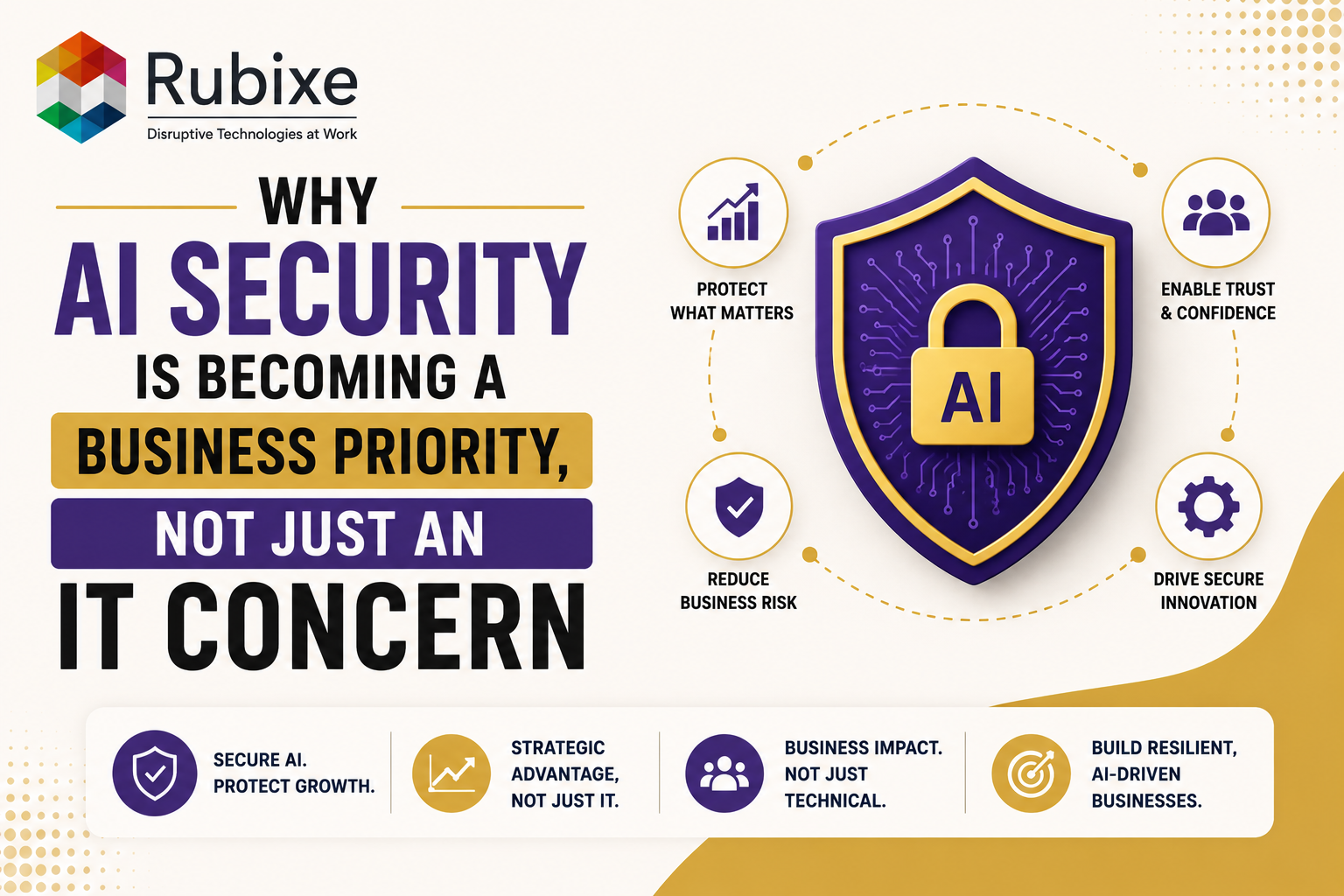
For many years, cybersecurity was viewed as a responsibility that belonged almost entirely to the IT department. Business leaders expected technical teams to install security software, manage updates, and respond whenever an incident occurred. As long as operations continued without disruption, cybersecurity rarely became part of broader business discussions.
That approach is changing. Today's organizations depend on digital platforms for customer service, finance, communication, operations, and decision making. A security incident no longer affects only servers or networks. It can interrupt business operations, damage customer trust, delay projects, and create financial consequences across the entire organization.
Because of this shift, businesses are paying greater attention to AI cyber security as part of their overall business strategy. Instead of treating cybersecurity as an isolated technical function, many organizations are involving leadership teams, operational departments, and employees in building a stronger security culture.
Why has cybersecurity become a business issue?
Modern businesses rely on connected systems every day.
A disruption in one area can quickly affect many others.
For example, a cyber attack may interrupt:
-
Customer support
-
Financial transactions
-
Supply chain operations
-
Employee productivity
-
Online sales
-
Business communication
As organizations become more digitally connected, cybersecurity decisions increasingly influence overall business continuity.
What has changed in the threat landscape?
Cyber attacks have become more sophisticated than they were only a few years ago.
Businesses now face risks such as:
-
AI generated phishing emails
-
Deepfake impersonation
-
Automated password attacks
-
Ransomware
-
Identity theft
-
Insider threats
Many of these attacks are designed to imitate normal business activity, making them harder to identify using traditional methods alone.
Why are executives becoming more involved?
Business leaders understand that cybersecurity affects more than technology.
They are asking questions such as:
-
How prepared are we for a cyber incident?
-
What systems are most critical?
-
How quickly can operations recover?
-
What would a security breach cost the business?
-
Are employees prepared to recognize threats?
These discussions demonstrate that cybersecurity is becoming part of strategic planning rather than remaining solely an IT responsibility.
How does AI support modern cybersecurity?
Security teams review thousands of alerts every day.
Many alerts are harmless, while others require immediate attention.
Modern AI security helps organizations:
-
Identify unusual activity
-
Prioritize high risk alerts
-
Detect hidden attack patterns
-
Reduce repetitive investigations
-
Improve response times
This allows security professionals to focus on incidents that require human expertise while reducing time spent reviewing routine alerts.
Why are businesses adopting layered protection?
No single security solution can protect every part of an organization.
Businesses increasingly combine:
-
Network security
-
Endpoint protection
-
Identity management
-
Email security
-
Employee training
-
Continuous monitoring
Many organizations also include AI cyber security solutions within this layered approach to improve visibility and strengthen threat detection without replacing existing security controls.
How should organizations evaluate cybersecurity investments?
Security investments should support business objectives as well as technical requirements.
|
Evaluation Area |
Why It Matters |
|
Business impact |
Protects critical operations |
|
Integration |
Works with existing systems |
|
Scalability |
Supports future growth |
|
Visibility |
Improves threat detection |
|
Ease of management |
Helps security teams operate efficiently |
Evaluating cybersecurity from both business and operational perspectives leads to more informed decisions.
Why does cybersecurity require every department?
Cybersecurity is no longer handled only by IT teams.
Every department interacts with business data, customer information, and digital systems.
Different teams contribute in different ways:
-
Finance verifies payment requests.
-
Human Resources protects employee information.
-
Sales secures customer records.
-
Operations manages business systems.
-
Leadership defines security policies.
When every department understands its role, businesses become better prepared to prevent and respond to cyber incidents.
How can businesses measure their security readiness?
Many organizations focus on the number of security tools they own.
A better approach is to evaluate how well those tools and processes perform together.
Useful indicators include:
-
Time taken to detect suspicious activity.
-
Time required to respond to incidents.
-
Employee awareness levels.
-
Frequency of security assessments.
-
Recovery time after security events.
These measurements provide a clearer picture of overall security maturity than technology alone.
Why is continuous improvement becoming essential?
Cyber threats continue evolving, which means security strategies cannot remain unchanged.
Businesses should regularly:
-
Review access permissions.
-
Update security policies.
-
Conduct employee training.
-
Test incident response plans.
-
Monitor new security risks.
-
Evaluate existing security controls.
Continuous improvement helps organizations remain prepared as both technology and attack methods change.
What should businesses consider before adopting AI powered security?
Selecting security technology should begin with understanding business priorities rather than purchasing the newest platform.
A practical evaluation includes:
|
Evaluation Area |
Why It Matters |
|
Threat visibility |
Detects suspicious behaviour earlier |
|
Integration |
Works with existing infrastructure |
|
Scalability |
Supports business growth |
|
Reporting |
Improves investigations and compliance |
|
Operational simplicity |
Reduces management complexity |
Businesses often achieve better long term results when security investments align with operational needs instead of short term trends.
Why are proactive security strategies replacing reactive ones?
Waiting until an incident occurs usually increases business disruption.
Organizations increasingly include AI cyber security solutions within broader security strategies because they help identify unusual behaviour earlier and improve the efficiency of security investigations.
Rather than replacing existing protections, these solutions strengthen overall visibility while supporting faster decision making during potential security events.
How are businesses preparing for the future?
Forward thinking organizations recognize that cybersecurity planning should evolve alongside business growth.
Many are investing in:
-
Continuous monitoring
-
Identity and access management
-
Security awareness programs
-
Regular risk assessments
-
Business continuity planning
These initiatives help businesses adapt as operational requirements and cyber threats continue changing.
Why does leadership involvement make a difference?
Cybersecurity decisions often influence customer trust, regulatory compliance, financial stability, and business continuity.
When leadership actively participates, organizations are more likely to:
-
Allocate appropriate resources.
-
Define clear security priorities.
-
Encourage cross functional collaboration.
-
Support employee training.
-
Review risks regularly.
For example, organizations such as Rubixe, along with other companies working in enterprise technology, often encourage businesses to assess operational risks before introducing new security technologies. This reflects a broader industry shift toward aligning cybersecurity with business objectives rather than treating it solely as a technical responsibility.
What does a resilient organization look like?
Businesses that respond effectively to modern cyber risks usually share several characteristics.
They:
-
Build security into everyday operations.
-
Train employees throughout the year.
-
Review policies regularly.
-
Monitor systems continuously.
-
Improve processes after every security exercise.
-
Balance technology with human expertise.
As cyber threats continue evolving, organizations increasingly view AI cyber security as one important component of a broader business resilience strategy instead of an isolated IT solution.
Frequently Asked Questions
Why is AI cyber security becoming important for businesses?
AI cyber security helps businesses improve threat detection, identify unusual activity, support faster incident response, and strengthen overall security as cyber attacks become more sophisticated.
Why is cybersecurity no longer just an IT responsibility?
Cybersecurity affects business operations, customer trust, financial performance, regulatory compliance, and organizational continuity. Protecting these areas requires participation from leadership and every department, not only IT teams.
What are AI cyber security solutions?
AI cyber security solutions use artificial intelligence to monitor systems, detect suspicious behaviour, prioritize alerts, and support security teams in identifying potential threats more efficiently.
How does AI security improve cybersecurity?
AI security helps analyze large volumes of security data, identify hidden attack patterns, reduce false alerts, and support faster investigations while allowing security professionals to make final decisions.
How can businesses strengthen their cybersecurity strategy?
Businesses can improve cybersecurity by combining employee awareness, layered security controls, continuous monitoring, regular risk assessments, incident response planning, and ongoing reviews of security processes.
Cybersecurity has become a business priority because digital systems now support nearly every part of modern organizations. A security incident can affect customers, employees, operations, finances, and reputation, making cybersecurity a shared responsibility across the business rather than a task handled only by technical teams.
Organizations that combine strong governance, employee awareness, continuous improvement, and AI cyber security are better prepared to manage evolving threats while supporting long term business resilience. The goal is not simply to prevent attacks, but to create an environment where the business can continue operating confidently even as the threat landscape changes.

 Arabic
 French
 Spanish
 Portuguese
 Deutsch
 Turkish
 Dutch
Dutch
 Italiano
 Russian
 Romaian
 Portuguese (Brazil)
 Greek
Greek