Stop Part Slippage and Tool Breakage
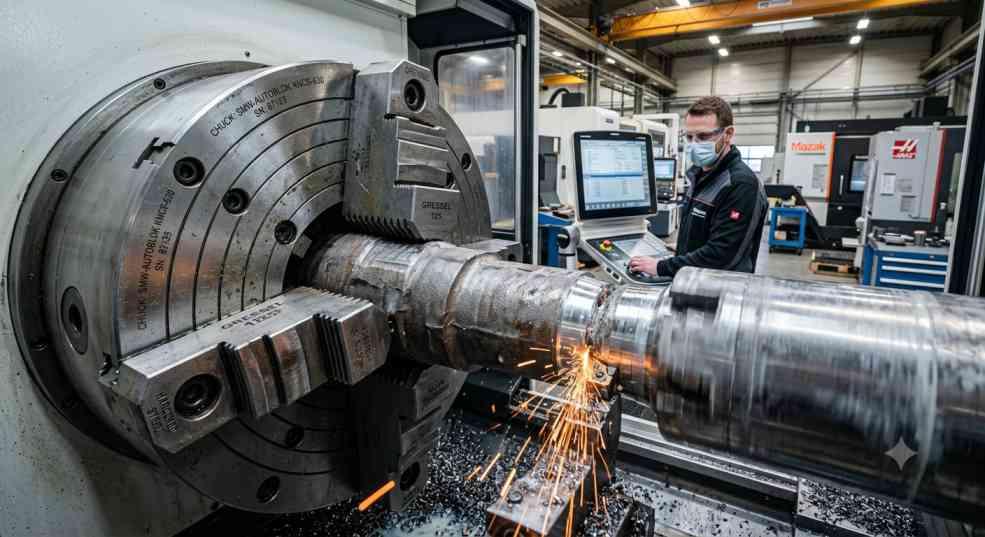
A single workpiece slipping from a lathe chuck can cost hundreds or even thousands of dollars. It can damage expensive tools, ruin finished parts, and create safety risks for machine operators. In heavy-duty machining, workholding is just as important as the cutting tool itself.
Many shops still use soft jaws for applications that demand high torque and heavy cuts. While soft jaws work well for delicate and custom parts, they often struggle under extreme cutting forces. This is why more manufacturers are switching to hard jaws for demanding machining operations in 2026.
Hard jaws are designed to provide maximum gripping force, excellent wear resistance, and long service life. They help machine shops achieve better productivity while reducing the risk of part movement and tool breakage.
In this guide, we'll explore the best hard jaws for heavy-duty machining and explain how to choose the right option for your production needs.
Material Choices for High-Pressure Gripping
The material of a chuck jaw directly affects its gripping power, durability, and performance.
Hardened Tool Steel Properties
Most high-quality hard jaws are made from hardened tool steel. These materials offer excellent strength and wear resistance, making them ideal for aggressive cutting applications.
Hardness is usually measured using the Rockwell Hardness Scale (HRC). Heavy-duty hard jaws typically range between HRC 55 and HRC 62.
Higher hardness provides:
- Better resistance to wear
- Improved grip consistency
- Longer service life
- Reduced jaw deformation
Heat-treated tool steels also outperform standard alloy steels because they maintain their hardness even under repeated heavy loads.
One major advantage of hardened steel is that it prevents jaw "walking." Jaw walking occurs when the gripping surfaces gradually wear down and allow the workpiece to shift during machining.
Carbide-Tipped Inserts for Abrasion
Some heavy machining applications require even more wear resistance.
Carbide-tipped hard jaws are often used for:
- Cast iron machining
- Titanium components
- Abrasive materials
- High-volume production
Carbide is extremely hard and can significantly extend jaw life. Many machine shops report tool life improvements of two to three times compared to standard steel jaws.
The downside is cost. Carbide-tipped jaws are more expensive, but the investment often pays off in high-production environments where downtime is costly.
For shops machining abrasive materials every day, carbide-tipped hard jaws can be an excellent long-term investment.
Case-Hardened vs. Through-Hardened Options
Not all hard jaws are built the same.
Case-Hardened Jaws
- Hard outer surface
- Softer core
- Better shock resistance
- Less likely to crack
Through-Hardened Jaws
- Uniform hardness throughout
- Maximum wear resistance
- Excellent for steady cutting conditions
For interrupted cuts and heavy shock loads, case-hardened jaws are usually the better option.
For continuous production and consistent machining, through-hardened jaws often deliver superior performance.
A common mistake is selecting extremely hard jaws without considering impact forces. Excessive hardness can sometimes lead to brittle fractures.
Selecting Jaw Geometry for Maximum Stability
The shape and design of the jaw are just as important as the material.
Serrated Teeth and Grip Patterns
Different tooth patterns provide different levels of grip.
Diamond Pattern
Provides aggressive gripping action and is ideal for rough materials.
V-Groove Pattern
Excellent for round components and helps maintain concentricity.
Parallel Pattern
Provides even clamping pressure and reduces surface damage.
Aggressive serrations are often used when machining raw billets because they provide maximum holding power.
However, deeper teeth can leave marks on finished surfaces, so selecting the correct profile is important.
Custom Profile Hard Jaws
Many manufacturers now use CNC-ground custom hard jaws.
Benefits include:
- Faster setups
- Better repeatability
- Improved part accuracy
- Reduced operator errors
Some machine shops have reported setup time reductions of nearly 30% after switching to dedicated hard jaws for specific parts.
Custom hard jaws are particularly useful when machining irregular shapes that standard jaws cannot grip efficiently.
The key is balancing clamping force. Too much force can deform the workpiece, while too little can cause slippage.
Step Jaws for Multi-Diameter Work
Step jaws are designed to hold components with multiple diameters.
They are commonly used for:
- Heavy-wall pipes
- Flanges
- Complex shafts
- Stepped components
The multiple contact points improve stability and help maintain concentricity.
Proper alignment is essential. Even a small setup error can introduce runout and reduce machining accuracy.
Optimizing Clamping Force and Precision
Even the best hard jaws can cause problems if the clamping force is incorrect.
Calculating Maximum Grip Pressure
A simple formula is:
Pressure (PSI) = Clamping Force ÷ Contact Area
Understanding this calculation helps prevent two common problems:
- Workpiece slippage
- Part deformation
Thin-walled parts are especially vulnerable to over-clamping.
Industry studies show that excessive clamping force contributes to a significant percentage of part failures in precision machining.
Always apply only the amount of force necessary to secure the workpiece.
Maintaining Concentricity and Runout
Concentricity is critical for precision machining.
Several techniques help improve accuracy:
- Bore hard jaws to the required size.
- Use precision rings during boring operations.
- Verify alignment using dial indicators.
Checking runout before machining can prevent expensive scrap.
Thermal expansion is another factor that many shops overlook. During long production cycles, heat can slightly change dimensions and affect grip.
Monitoring temperature is important when machining tight-tolerance components.
Reducing Part Marring on Hardened Surfaces
Hard jaws can leave marks on finished components.
To reduce marring:
- Use thin copper shims.
- Use aluminum protective inserts.
- Reduce unnecessary clamping pressure.
- Place contact points strategically.
Many machinists use sacrificial materials between the jaw and workpiece to protect sensitive surfaces.
This simple solution can eliminate expensive secondary finishing operations.
Long-Term Maintenance for Industrial Jaws
Proper maintenance greatly extends jaw life and improves machining accuracy.
Identifying Wear Patterns
Signs that a hard jaw may need replacement include:
- Rounded serrations
- Uneven wear
- Visible cracks
- Loss of gripping performance
Another important measurement is jaw gap growth.
After thousands of production cycles, small increases in jaw clearance can significantly affect accuracy.
Metal chips and debris also reduce gripping performance and can damage jaw surfaces.
Regular inspections help identify these issues before they become expensive problems.
Cleaning and Lubrication Schedules
Routine maintenance should include:
Daily
- Remove chips and debris
- Wipe jaw surfaces clean
Weekly
- Inspect serrations
- Check for wear
- Verify proper movement
Monthly
- Deep clean with approved solvents
- Inspect for corrosion
- Lubricate moving components
Coolant residue can harden over time and affect gripping performance.
High-carbon steel jaws should also receive rust protection, especially in humid shop environments.
A simple maintenance schedule can dramatically increase jaw life.
Re-Grinding and Refacing Processes
Over time, jaw faces can wear unevenly.
In some cases, re-grinding is more cost-effective than replacement.
Re-grinding can restore:
- Flatness
- Parallelism
- Gripping accuracy
However, if the jaws have deep wear, cracks, or excessive material loss, replacement is often the better option.
Many shops compare:
Refacing
- Lower cost
- Faster turnaround
- Good for minor wear
Replacement
- Full performance restoration
- Better for severe damage
- Longer service life
The right choice depends on production demands and the condition of the jaws.
Boosting Shop Throughput with Hard Jaws
Modern manufacturing demands speed, accuracy, and reliability. High-quality hard jaws help machine shops achieve all three.
Benefits include:
- Reduced setup time
- Better gripping performance
- Longer service life
- Improved machining accuracy
- Lower tooling costs
- Increased operator safety
Action Steps for Upgrading Your Workholding
- Evaluate current jaw wear.
- Match jaw material to the application.
- Select the correct tooth pattern.
- Monitor clamping force.
- Implement regular maintenance schedules.
- Invest in custom hard jaws for repeat production jobs.
The right hard jaws can significantly improve productivity while reducing scrap and machine downtime.
In heavy-duty machining, success comes from balancing cost, speed, and part quality. Choosing the proper hard jaws is one of the smartest investments any machine shop can make for long-term performance and reliable production.




 Arabic
 French
 Spanish
 Portuguese
 Deutsch
 Turkish
 Dutch
Dutch
 Italiano
 Russian
 Romaian
 Portuguese (Brazil)
 Greek
Greek