


South Korea Modernizes Water Pumping Through Digital Infrastructure
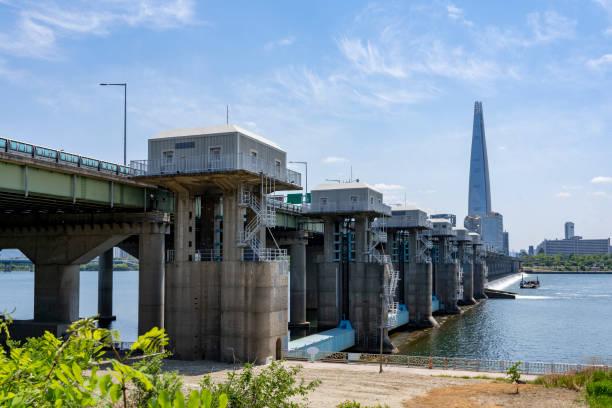
South Korea’s advanced urban economy depends on extensive water supply, sewerage, treatment, drainage, and industrial utility networks. As these systems age, public agencies and businesses are placing greater emphasis on equipment renewal, operational efficiency, and digital management. Pumps remain essential throughout this infrastructure, moving drinking water, wastewater, sludge, stormwater, cooling water, and industrial process fluids across increasingly automated facilities.
According to MarkNtel Advisors, South Korea’s water and wastewater pump sector was valued at approximately USD 361 million in 2025 and is expected to rise from USD 378 million in 2026 to USD 512 million by 2032. The projected CAGR of around 5.2% during 2026–2032 reflects infrastructure replacement, industrial treatment requirements, smart utility adoption, and stricter water-quality management.
Aging Infrastructure Encourages Equipment Renewal
South Korea has achieved broad access to drinking-water and sanitation services, but maintaining this coverage requires continuous investment. Pipelines, pumping stations, reservoirs, and treatment facilities built during earlier periods of rapid urbanization increasingly require rehabilitation or replacement.
The country’s Master Plan for National Water Management provides a coordinated framework covering water quantity, quality, and disaster management. Pump modernization supports these priorities by reducing breakdown risks, maintaining pressure, and improving the ability of utilities to respond to changing demand and emergency conditions.
Centrifugal Pumps Maintain the Leading Position
Centrifugal pumps represented the leading product category in 2025, supported by their suitability for transferring high volumes of water at moderate pressure. They are commonly used in drinking-water distribution, wastewater treatment, industrial circulation, drainage, irrigation, and flood-control infrastructure.
Their relatively straightforward design, broad capacity range, and compatibility with variable-speed drives make them practical for large municipal installations. Submersible centrifugal pumps are also widely suited to sewage lift stations and drainage facilities where equipment must operate directly within wet wells.
Smart Water Systems Improve Operational Visibility
South Korea’s established digital capabilities are contributing to greater use of sensors, connected controls, and data-based maintenance. Utilities can monitor pressure, flow, vibration, temperature, and power consumption across pumping stations without relying solely on physical inspections.
These systems help operators identify leakage, unusual energy use, and mechanical deterioration before major failure occurs. The OECD’s work on water governance emphasizes coordinated institutions, reliable information, and effective infrastructure management. Digital pumping networks can support these principles by improving operational transparency and enabling faster intervention.
Industrial Wastewater Creates Specialized Requirements
South Korea’s electronics, semiconductor, automotive, chemical, steel, food-processing, and shipbuilding industries require substantial water-management infrastructure. Pumps support cooling, cleaning, chemical dosing, filtration, ultrapure-water production, effluent transfer, and wastewater recycling.
Industrial applications may expose equipment to corrosive chemicals, suspended particles, high temperatures, or variable fluid characteristics. These environments increase the importance of application-specific designs, durable materials, and reliable sealing systems. The Korean Ministry of Environment’s water resources guidance describes the country’s controls for industrial and wastewater-treatment discharges, reinforcing the need for dependable treatment operations.
Water Reuse Supports Resource Efficiency
Reclaimed water is becoming more important as cities and industrial operators seek to reduce demand for freshwater. Treated wastewater can support landscaping, cleaning, process cooling, agriculture, and other non-potable uses when managed under appropriate quality controls.
Reuse systems require pumping at every stage, including wastewater collection, treatment circulation, membrane filtration, disinfection, storage, and redistribution. The United Nations water and sanitation framework highlights wastewater treatment, reuse, and improved water-use efficiency as central elements of sustainable resource management.
Energy Performance Influences Procurement
Pumping equipment can account for a meaningful share of electricity consumption at water and wastewater facilities. Oversized pumps, fixed-speed operation, worn components, and poor system design may result in unnecessary energy use.
Variable-frequency drives allow pump output to follow actual demand, while high-efficiency motors and predictive maintenance can reduce operating costs. The International Energy Agency’s efficiency guidance identifies efficient technologies and operational improvements as important tools for reducing energy demand across buildings, infrastructure, and industry.
Reliable Systems Protect Water Quality
Consistent pumping is necessary to maintain pressure, prevent contamination risks, and ensure that water moves through treatment processes correctly. Equipment failure can interrupt chemical dosing, filtration, biological treatment, sludge handling, or final distribution.
The World Health Organization’s drinking-water guidelines promote risk management throughout abstraction, treatment, storage, and distribution. Reliable and continuously monitored pumps support this approach by maintaining stable hydraulic conditions.
South Korea’s pumping landscape is consequently shifting from conventional equipment replacement toward intelligent system modernization. Municipal renewal, industrial compliance, water reuse, and energy efficiency will remain central influences, creating stronger demand for durable pumps that can integrate with automated and data-driven water-management networks.

 Arabic
 French
 Spanish
 Portuguese
 Deutsch
 Turkish
 Dutch
Dutch
 Italiano
 Russian
 Romaian
 Portuguese (Brazil)
 Greek
Greek