


The Biggest Hair Transplant Myths UAE Patients Still Believe and What the Facts Actually Say
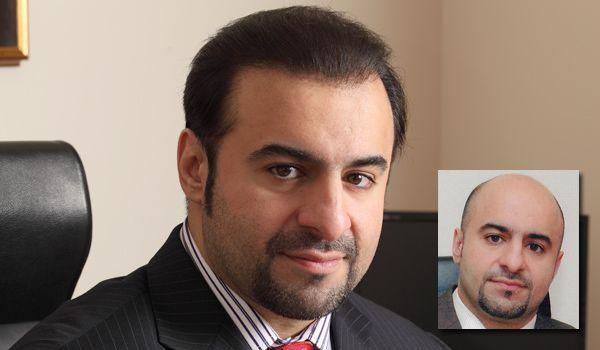
In October 2025, Dubai Police entered a residential apartment and found that one room had been turned into an illegal hair transplant clinic.
According to reports, a man had been promoting hair transplant procedures through social media even though he was not licensed to practise medicine. Officers found surgical instruments, medical devices, anaesthetics, disinfectants, and chemicals inside the apartment. The authorities closed the premises and confiscated the equipment.
The case matters because the setup may have looked convincing online. A professional video, attractive price, and dramatic before-and-after photos can make almost any provider appear trustworthy.
They do not prove that the person performing the procedure is qualified.
Many UAE patients spend hours of research comparing clinics, graft counts, techniques, prices, and recovery photos. Yet hair transplant myths still shape many decisions.
Some people believe FUE causes no scars. Others assume that more grafts always mean thicker hair. Many expect permanent results after one painless procedure.
A hair transplant can create a natural and long-lasting improvement for the right patient. However, it cannot stop every type of hair loss or give unlimited density. It is also a medical procedure that requires proper diagnosis, planning, and follow-up care.
Here is what the facts actually say.
Myth 1: A Hair Transplant Stops Hair Loss Forever
A hair transplant does not stop the condition that caused the hair loss.
During surgery, follicles are usually taken from the back or sides of the scalp. These areas are often more resistant to hereditary pattern hair loss. The follicles are then placed into areas where the hairline has receded or the scalp has become thin.
The transplanted follicles may continue growing for many years. However, the patient’s original hair can still become weaker.
Imagine that a surgeon restores the front hairline while the untreated hair behind it continues to thin. The transplanted section may remain, but a gap could slowly develop behind it.
This is why long-term planning matters.
The Dubai Health Authority Standards for Hair Transplant Services recognise that patients may need medical treatment before or after surgery. Treatment can help manage continued thinning and protect the natural hair surrounding the transplanted area.
A responsible doctor should look at the patient’s age, family history, donor density, current hair-loss pattern, and possible future changes.
The transplant replaces hair in selected areas. It does not cure hereditary baldness or guarantee that every natural follicle will remain forever.
Myth 2: Anyone With Thinning Hair Can Have Surgery
Not every person experiencing hair loss is a suitable transplant candidate.
The patient needs a healthy donor area with enough usable hair. General health, scalp condition, age, expectations, and the cause of the hair loss also matter.
The Dubai Health Authority states that a suitable candidate should have a good donor area, good general health, reasonable expectations, and pattern hair loss. Its standards also describe medical conditions that may require further assessment or make surgery unsuitable.
Hair can become thin for many reasons. These include genetics, illness, medication, hormonal changes, nutritional problems, stress, autoimmune disease, and scarring scalp conditions.
A transplant may help with some causes but not others.
Someone with an active scalp disease may need treatment first. A person losing hair rapidly may need to stabilise the condition before considering surgery. Someone with weak donor density may not have enough healthy follicles to produce meaningful coverage.
This is why a proper consultation should begin with diagnosis rather than price.
A medical history and scalp examination should happen before anyone promises a technique or graft count.
Myth 3: FUE Is Always Better Than FUT
FUE is widely promoted as the modern option. FUT is often treated as an outdated method that patients should avoid.
The difference is not that simple.
During follicular unit excision, known as FUE, small groups of hair follicles are removed one at a time using tiny punches.
During follicular unit transplantation, known as FUT, a narrow strip of scalp is removed from the donor area. That strip is then divided into individual follicular units.
Both are recognised surgical methods under the Dubai Health Authority Standards for Hair Transplant Services.
FUE does not create one long linear scar. This may suit patients who prefer shorter hairstyles. However, it produces many small extraction marks. Poor planning or excessive extraction can leave the donor area looking patchy.
FUT creates a linear scar. Still, it may allow the surgeon to collect grafts without spreading thousands of extraction points across the donor region.
The 2025 ISHRS Practice Census reported that FUE was used in 85.4% of male procedures and 68.2% of female procedures recorded by participating doctors. These were international figures rather than UAE-only numbers.
FUE is clearly popular, but popularity does not make it suitable for everyone.
The right choice depends on donor density, scalp flexibility, hairstyle, previous procedures, required coverage, and the likelihood of future hair loss.
Myth 4: FUE Does Not Leave Any Scars
FUE is sometimes advertised as scar-free surgery.
That claim is misleading.
Removing a follicular unit creates a tiny wound. As the skin heals, a small round mark may remain. These marks can be difficult to notice when the procedure is performed carefully and the surrounding hair is dense enough.
FUT normally leaves a linear scar.
The visibility of either scar depends on several factors. These include the patient’s healing response, skin type, punch size, extraction pattern, donor density, hairstyle, and the skill of the surgical team.
The more useful question is not whether there will be a scar. Some form of scarring is expected whenever tissue is removed.
Patients should ask where the scars will appear, how visible they may become, and what steps will be taken to protect the donor area.
Myth 5: More Grafts Always Produce Better Results
Large graft numbers are easy to sell.
A promise of 5,000 grafts may sound much better than a recommendation of 2,500 grafts. Patients may assume they are receiving more value and more density.
However, donor hair is limited.
When a follicular unit is removed, another follicle does not grow in the same extraction point. Taking too many grafts can permanently reduce density at the back and sides of the scalp.
The 2025 ISHRS Practice Census found that the average first procedure involved 2,347 grafts. A later procedure involved an average of 1,637 grafts. These global averages are not targets that every patient should follow. They show how much graft needs can vary.
The visual result also depends on hair thickness, curl, colour, placement, angle, survival, and the amount of contrast between the scalp and hair.
A person with thick or curly hair may appear to have strong coverage with fewer grafts. Fine and straight hair may require a different distribution.
The goal is not to remove the highest possible number. It is to create useful coverage while preserving enough donor hair for the future.
Myth 6: The Final Result Appears Quickly
A transplant does not reach its final result within days or weeks.
Soon after surgery, short hair shafts remain inside the implanted grafts. Many of those hairs fall out during the early healing stage.
This temporary shedding can worry patients. They may think the procedure has failed when the follicles are still resting beneath the skin.
New growth usually starts gradually. It does not appear across the entire scalp at the same time.
One section may develop faster than another. The crown may take longer than the frontal hairline. Full improvement often takes around a year and can take longer for some patients.
Social media can make the wait feel more confusing.
Different lighting, camera angles, styling products, hair fibres, wet hair, and changes in hair length can make the same result look much thicker or thinner.
Before-and-after photos are most useful when they show similar lighting, angles, distance, and hairstyle. Patients should also look for progress images from different stages rather than one carefully selected final photograph.
Myth 7: Hair Transplant Surgery Is Completely Painless
Local anaesthesia usually keeps pain under control during surgery. This does not mean the whole experience is painless.
The anaesthetic injections may cause brief discomfort. During the procedure, patients can still feel pressure, pulling, vibration, or movement.
After surgery, some people experience swelling, tightness, itching, tenderness, temporary numbness, or mild pain.
A 2025 scoping review on complications in modern hair transplantation examined 43 publications. Two large patient series reported overall complication rates of 1.2% and 4.7%. Reported problems included bleeding, infection, persistent numbness, scarring, and temporary hair shedding.
Those percentages should not be treated as a personal risk estimate for every patient. Procedures, patients, and reporting methods differed across the studies.
The research does show something important. Hair transplantation is generally considered safe when performed correctly, but it is not risk-free.
A trustworthy medical team should explain how pain will be managed, which symptoms are expected, and which warning signs require medical attention.
Myth 8: Patients Can Return to Normal Life the Next Day
Some people can return to laptop-based work within a few days.
That does not mean the scalp will look or feel normal the next morning.
Redness, crusting, swelling, tenderness, and a visible donor area may remain during early recovery. The implanted grafts also need protection while they settle.
Patients may be told to avoid rubbing the scalp, heavy exercise, strong sunlight, intense sweating, tight headwear, or direct pressure for a period advised by their doctor.
The UAE environment can make recovery more challenging.
High temperatures, strong sunlight, outdoor work, helmets, and frequent gym sessions may increase discomfort or make aftercare harder.
A person working from home may return sooner than someone who works outdoors or meets clients every day. Recovery plans should match the patient’s actual routine.
Clear guidance about washing, sleeping position, medication, exercise, and sun exposure should be provided before the operation rather than after the patient returns home.
Myth 9: Every Modern Transplant Looks Natural
Modern hair transplant techniques can produce results that are difficult to notice.
However, a natural result does not come automatically from labels such as FUE, DHI, sapphire, or micrograft.
The final appearance depends on planning and placement.
A hairline can look unnatural when it is too low, too straight, or too dense. Grafts inserted at the wrong angle may cause hair to stand upright or grow in an unusual direction.
Visible rows of grafts can also create an artificial pattern.
A natural design should consider facial shape, age, temple structure, hair direction, ethnic hair characteristics, and likely future thinning.
The hairline should not only look believable today. It should still suit the patient ten or twenty years later.
A very low hairline may look attractive on a younger patient. It can become difficult to maintain if the surrounding hair continues to recede and the donor supply becomes limited.
The technique is only one part of the result. Design decisions often determine whether the transplant looks natural.
Myth 10: Hair Transplants Are Only for Men
Men make up most hair transplant patients, but women can also benefit from surgery.
The 2025 ISHRS Practice Census reported that 84.7% of surgical patients were men and 15.3% were women. It also found that the number of female surgical patients treated in 2024 had increased by 16.5% compared with 2021. These figures were global rather than UAE-specific.
Women may consider a transplant for a naturally high hairline, traction-related loss, localised thinning, scars, or certain stable forms of pattern hair loss.
However, female hair loss can be more widespread. Thinning may affect the top of the scalp and the usual donor area at the same time.
This can make assessment more complex.
Women should not assume they are automatically unsuitable. They should also not assume that a transplant can correct every type of thinning.
The cause of hair loss and the quality of the donor area must be examined first.
Myth 11: The Cheapest Clinic Provides the Same Treatment
Price matters, especially when several providers appear to offer the same procedure.
However, two packages with similar graft numbers may involve very different levels of medical care.
The illegal apartment case in Dubai showed why patients cannot judge safety by social media content or price alone.
Under the Dubai Health Authority Hair Transplant Services Inspection Checklist, hair transplant services may be provided in hospitals, day surgery centres, and licensed outpatient facilities with an appropriate procedure room. The standards also cover patient selection, professional licensing, safety policies, and clinical responsibilities.
Before choosing a provider for a hair transplant UAE, patients should confirm that the facility and medical professionals are properly licensed.
They should also ask who will design the hairline, remove the grafts, create the recipient sites, and supervise each surgical stage.
A doctor’s photograph on a website does not prove that the same doctor will perform the important parts of the operation.
A cheap procedure becomes expensive when poor extraction damages the donor area or corrective surgery is required later.
Myth 12: One Procedure Always Fixes the Problem
Some patients achieve their main goal after one operation. Others need another session.
The size of the thinning area, donor supply, desired density, future hair loss, and graft survival all affect the number of procedures required.
The 2025 ISHRS Practice Census reported an average of 1.5 procedures per patient to achieve the desired result. This is a global average. It does not mean every patient will require one or two operations.
A careful surgeon may recommend a conservative first procedure.
The frontal hairline often receives priority because it frames the face. Crown coverage may be delayed or treated with lower density when donor hair is limited.
Trying to cover every area at maximum density in one session can use valuable grafts too quickly.
Hair restoration is often a long-term plan rather than a one-day transformation.
Make Your Decision With Facts, Not Promises
A well-planned hair transplant can improve a receding hairline and restore useful coverage. Still, the quality of the result depends on much more than a technique name or advertised graft number.
The cause of the hair loss must be understood. The patient must have a suitable donor area. The clinic and medical professionals must be licensed. The design must suit the face and account for future thinning.
Patients should be cautious when they hear promises of zero scars, guaranteed density, instant growth, painless surgery, or unlimited grafts.
Ask how the graft estimate was calculated. Confirm who will perform each stage. Check the medical licences. Review photographs taken under consistent conditions. Make sure the recovery plan fits your work and daily routine.
Most importantly, remember that donor hair is limited.
Once it has been removed badly or permanently damaged, replacing it may not be possible.
A safer decision begins when the promises stop and the medical facts become clear.

 Arabic
 French
 Spanish
 Portuguese
 Deutsch
 Turkish
 Dutch
Dutch
 Italiano
 Russian
 Romaian
 Portuguese (Brazil)
 Greek
Greek