Pink diamonds have always attracted attention because of their uncommon color and limited availability. For many years, owning one was out of reach for most buyers due to the high cost of naturally mined pink diamonds. Today, technology has changed that by making it possible to create genuine pink diamonds in a laboratory.
A lab grown pink diamond ring offers the same durability, beauty, and structure as a mined diamond while giving buyers more choices in design, size, and budget. Understanding how these diamonds are produced helps buyers appreciate the craftsmanship involved in every ring.
This guide explains each stage of the manufacturing process—from creating the diamond to designing the finished ring.
The Growing Demand for Lab-Grown Pink Diamonds
Colored diamonds have become increasingly popular among buyers looking for something different from traditional white diamonds. Pink diamonds, in particular, are chosen for engagement rings, anniversary gifts, and custom jewelry because of their distinctive appearance.
Laboratory-grown diamonds have made pink diamonds more accessible without changing what makes a diamond genuine. They are made from carbon and have the same physical, chemical, and optical properties as diamonds formed underground.
As more people learn about these diamonds, custom jewelry has become one of the fastest-growing categories in the jewelry industry.
What Is a Lab-Grown Pink Diamond?
A lab-grown pink diamond is a real diamond produced inside a controlled laboratory environment rather than deep within the earth.
Scientists recreate the natural conditions required for diamond growth using advanced equipment. The result is a genuine diamond that can be cut, polished, certified, and set into jewelry just like a mined diamond.
Unlike imitation stones such as cubic zirconia or colored crystals, laboratory-grown diamonds possess the same hardness and durability as natural diamonds.
Explore Lab Grown Pink Diamond Ring Manufacturing
Creating a lab grown pink diamond ring involves several highly controlled stages. Every step requires precision, specialized equipment, and experienced craftsmanship.
The process combines scientific innovation with traditional jewelry-making techniques to produce a finished ring that meets strict quality standards.
Step 1: Creating the Diamond Seed
Every laboratory-grown diamond begins with a tiny slice of an existing diamond called a seed crystal.
This seed provides the structure upon which carbon atoms will attach during the growing process.
Although small, this seed determines how the new diamond develops.
Scientists carefully inspect each seed before beginning production because imperfections at this stage can affect the finished stone.
Step 2: Growing the Diamond
There are two primary methods used to grow diamonds.
High Pressure High Temperature (HPHT)
This method recreates the intense heat and pressure found deep beneath the Earth's surface.
Carbon is subjected to extremely high temperatures and pressure until it forms a diamond around the seed crystal.
Chemical Vapor Deposition (CVD)
The CVD process grows diamonds inside a sealed chamber filled with carbon-rich gases.
Energy separates carbon atoms from the gas, allowing them to slowly build layer upon layer onto the seed crystal.
This method allows excellent control over clarity and overall diamond quality.
Both methods produce genuine diamonds that are virtually identical to those formed naturally.
Step 3: Producing the Pink Color
One of the most fascinating parts of the manufacturing process is developing the pink color.
Unlike white diamonds, pink diamonds require additional scientific techniques after growth.
Manufacturers may use carefully controlled heat and pressure treatments to alter the crystal structure in ways that produce shades of pink.
The process requires precise calibration because even slight adjustments can affect the final color intensity.
Depending on the desired result, diamonds may display:
- Soft blush pink
- Light pink
- Fancy pink
- Fancy intense pink
- Deep vivid pink
Every stone is individually evaluated throughout this process.
Step 4: Quality Inspection
Once the color has been achieved, the rough diamond undergoes detailed inspection.
Experts evaluate several characteristics before cutting begins.
These include:
- Crystal structure
- Internal clarity
- Color distribution
- Potential yield
- Surface quality
Advanced imaging equipment helps identify the best cutting plan for maximizing beauty and carat weight.
Step 5: Planning the Cut
Every rough diamond has unique characteristics.
Professional planners use computer software to determine the most suitable shape.
Their goal is to balance several factors:
- Light performance
- Color appearance
- Finished size
- Symmetry
- Overall value
Planning often takes hours before any cutting begins.
Step 6: Cutting the Diamond
Diamond cutting remains one of the most skilled stages in jewelry manufacturing.
Expert cutters use laser technology combined with traditional polishing techniques to create precise facets.
Popular shapes include:
- Round
- Oval
- Cushion
- Emerald
- Pear
- Radiant
- Princess
Each shape interacts differently with light and color.
For pink diamonds, cushion and oval cuts are especially popular because they emphasize color while maintaining excellent brilliance.
Step 7: Polishing Every Facet
After cutting, every facet is polished individually.
Polishing removes microscopic imperfections while improving light reflection.
Experienced polishers work carefully because removing too much material can reduce the diamond's value.
Each finished surface contributes to the overall appearance of the diamond.
Step 8: Certification
Before entering the jewelry market, many laboratory-grown diamonds receive independent grading.
Professional grading laboratories examine:
- Carat weight
- Color
- Clarity
- Cut quality
- Measurements
Certification provides buyers with confidence regarding the diamond's characteristics.
Step 9: Designing the Ring
Once the diamond is complete, jewelry designers begin creating the ring.
A custom design allows buyers to personalize nearly every detail.
Design decisions include:
- Ring style
- Band width
- Setting height
- Metal selection
- Side diamonds
- Hidden design features
Many jewelers create computer-generated previews before production begins.
Step 10: Choosing the Metal
The metal significantly influences the finished appearance.
Common choices include:
Platinum
Known for durability and naturally white color.
White Gold
Provides bright contrast against pink diamonds.
Rose Gold
Creates a warm appearance that complements pink tones.
Yellow Gold
Offers a classic style with rich color contrast.
Each metal produces a slightly different overall look.
Step 11: Crafting the Ring
Jewelry artisans carefully manufacture each component of the ring.
The process includes:
- Casting
- Filing
- Polishing
- Stone setting
- Final finishing
Every stage is completed with close attention to detail to ensure durability and comfort.
Step 12: Setting the Diamond
Setting the diamond is among the most delicate stages.
The jeweler secures the stone using carefully shaped prongs or alternative settings.
Common options include:
- Four-prong
- Six-prong
- Bezel
- Halo
- Cathedral
- Hidden halo
Each style offers different visual effects while protecting the center stone.
Final Inspection
Before shipping, every ring undergoes several quality checks.
Experts verify:
- Stone security
- Metal finish
- Ring size
- Symmetry
- Polish
- Overall craftsmanship
Only after passing inspection is the ring packaged for delivery.
Why More Buyers Choose Pink Diamond Engagement Rings
Today's buyers often want jewelry that reflects their personal style rather than following traditional designs.
Pink diamond engagement rings offer a distinctive alternative while remaining suitable for everyday wear.
The combination of color and customization allows couples to create something meaningful without compromising durability.
Why a Pink Diamond Ring Stands Out
A pink diamond ring attracts attention because of its uncommon appearance.
Whether paired with white diamonds or displayed as a solitaire, pink diamonds create a memorable centerpiece that suits many different styles.
Custom settings make every ring unique.
Combining White Diamonds with Pink Diamonds
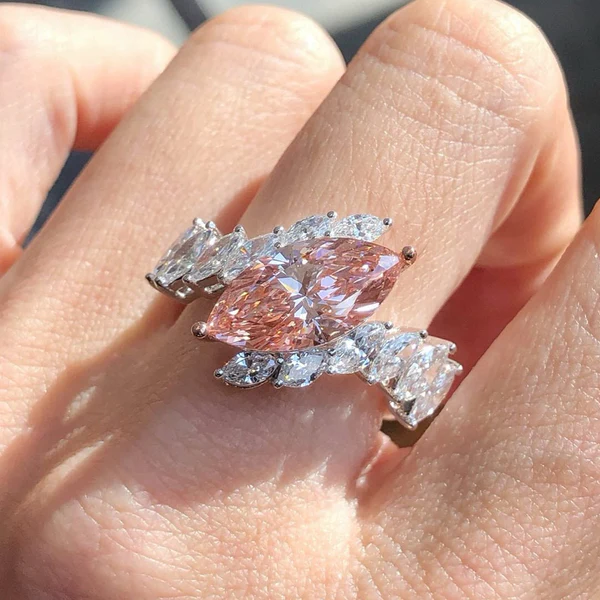
A diamond ring with pink diamond accents creates attractive contrast.
Popular combinations include:
- Pink center stone with white halo
- White side stones
- Three-stone settings
- Pavé bands
- Hidden accent diamonds
These combinations allow the pink center stone to remain the focus while adding additional brilliance.
Benefits of Choosing a Lab Created Pink Diamond Ring
A lab created pink diamond ring gives buyers several advantages.
These include:
- Greater affordability
- Larger diamond options
- Excellent clarity
- Wide range of custom designs
- Reliable quality
Because laboratory-grown diamonds cost less than comparable natural pink diamonds, buyers often invest more in custom craftsmanship.
Choosing Lab Grown Pink Diamond Engagement Rings
When comparing lab grown pink diamond engagement rings, buyers should pay attention to more than carat weight.
Important considerations include:
- Independent certification
- Color consistency
- Cut quality
- Ring craftsmanship
- Return policies
- Warranty coverage
Working with experienced jewelers helps ensure the finished ring meets expectations.
Creating the Perfect Pink Lab Diamond Engagement Ring
Designing a pink lab diamond engagement ring allows complete personalization.
Many buyers customize:
- Diamond shape
- Band thickness
- Prong style
- Metal finish
- Side stones
- Matching wedding band
Small design choices create a ring that reflects personal preferences rather than standard retail styles.
A Touch of Heritage in Contemporary Design
Some buyers appreciate vintage-inspired craftsmanship when designing their custom rings.
Incorporating an Antiquecut style into the overall design can introduce traditional character while complementing the soft appearance of a pink diamond.
This approach blends classic influences with today's diamond-growing technology.
Caring for Your Ring
Proper care helps maintain your ring for years.
Simple maintenance includes:
- Cleaning with warm water and mild soap
- Using a soft brush around the setting
- Removing the ring during heavy work
- Storing it separately from other jewelry
- Scheduling occasional professional inspections
These habits help preserve both the diamond and the setting.
Final Thoughts
A lab grown pink diamond ring represents the combination of advanced science and skilled jewelry craftsmanship. From growing a tiny diamond crystal in a laboratory to cutting, polishing, grading, and setting the finished stone, every stage requires precision and experience.
Whether you're considering pink diamond engagement rings, searching for a distinctive pink diamond ring, selecting a diamond ring with pink diamond accents, comparing a lab created pink diamond ring, or shopping for lab grown pink diamond engagement rings, understanding how these diamonds are made gives you greater confidence in your purchase.
A thoughtfully crafted lab grown pink diamond engagement ring or pink lab diamond engagement ring is more than a piece of jewelry—it reflects careful design, quality workmanship, and personal style that can be enjoyed for years to come.




 Arabic
 French
 Spanish
 Portuguese
 Deutsch
 Turkish
 Dutch
Dutch
 Italiano
 Russian
 Romaian
 Portuguese (Brazil)
 Greek
Greek