


What Every Contractor Should Know About Painting Estimates
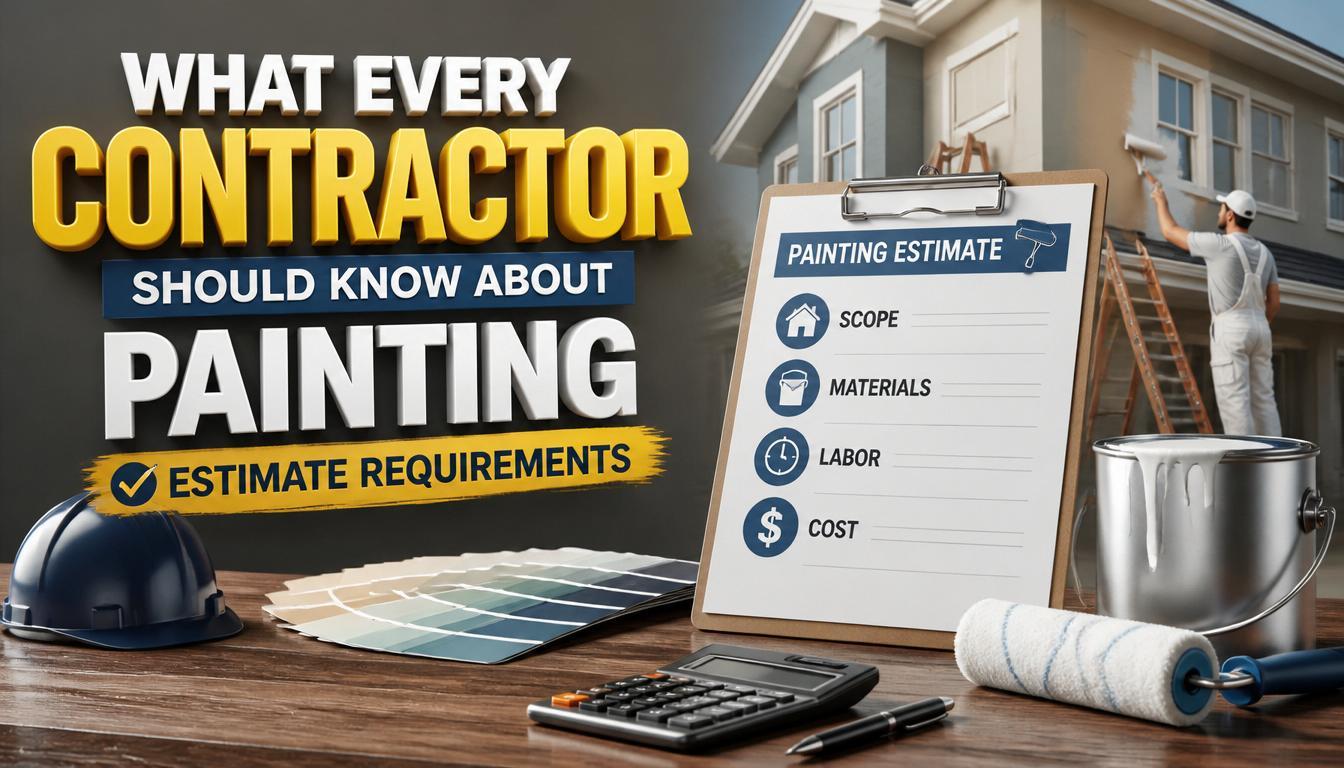
Accurate painting estimates come from a precise breakdown of material, labor, equipment, and overhead expenses. Estimation is an essential part of bid preparation. A contractor needs to prepare a comprehensive estimate for painting. This ensures:
-
Tight cost plans
-
Successful bids
-
Managed client expectations
What Is A Painting Estimate?
A contractor or an estimator prepares painting estimates to get an exact cost breakdown of a construction project. It could be a commercial, residential, or industrial-scale building. It typically covers:
-
Labor hours
-
Quantity and type of paint
-
Primer costs
-
Prep work
-
Any add-ons like drywall repair or trim detailing
For a contractor, an estimate holds legal and financial importance. Hurrying to get an estimate often results in either too much or too little being given on a project. This is a real problem for a contractor.
What Is The Cost Of A Painting Job?
A professional painting estimate usually costs around $2.00–$6.5 per square foot for interiors and $1.50–$4.00 per square foot for exteriors. This means an average single room can cost around $500–$1,450. This is an average painting estimate job in 2026.
Painting cost largely depends on square footage. But it is important to keep in mind that projects in the same area can cost differently. There is a very clear answer for why this happens:
-
Different labor prices across areas
-
Different material prices across areas
-
Condition of the wall
-
Ease of access
-
Ceiling height
Therefore, contractors who rely only on square footage often end up underbidding.
What Does a Complete Painting Estimate Look Like?
A defensible contractor painting estimate should include the following things:
-
Total square footage of the surface to be painted
-
Number of coats
-
Surface prep required (sanding, patching, priming)
-
Labor hours and crew size
-
Brand of paint
-
Cost of paint, primer, and supplies
-
Add-ons (drywall repair, popcorn ceiling removal, high-ceiling access)
It's important to account for every little thing, as leaving these out may cut into the profit margin.
How Is a Painting Estimate Calculated?
A painting cost estimate typically follows a standardized estimation process that starts with gathering information about the scope.
-
Measuring: Determine the total square footage of the walls and ceilings to which paint will be applied.
-
Surface analysis: Analyze the condition of the surfaces to see if any repairs need to be completed before the painting is done.
-
Performing take-off: In order to get accurate cost estimates on painting a surface, determine how many gallons of paint and other products will be required for the job.
-
Calculating labor costs: Estimate how many hours it will take the crew to prepare surfaces for painting and multiply the result by the labor rate.
-
Estimating material costs: Get the prices of the paint, primer and other products depending on their size.
-
Apply a target margin: Add markup to baseline cost to protect profitability.
-
Add scope-specific line items: Include ceiling height fees, repair packages, or rush charges as needed.
What Are the Costly Estimating Mistakes in Painting Estimation?
Rushing the Estimate: Rushing the estimation process mostly leads to mistakes and neglecting important factors.
Not Accounting for Waste: A usual thumb rule is to allow 5 to 10% as wastage of material to avoid underordering. This rule makes procurement more efficient.
Doing Everything Yourself: Overburdening oneself often leads to silly errors. The painting estimating services of Universe Estimating provide accurate estimates for contractors so they can win bids and bid on multiple projects at once.
No Contingency Fund: A contingency fund is important to protect estimates from any unforeseen or hidden expenses.
Final Words
The accuracy of painting estimates mostly depends on the competency of the contractor or estimator. A professional cost estimator can create spot-on financial plans for painting with as little as 2% variation. An accurate estimate leads to better flow of construction, increased teamwork, better decision-making, and a decrease in cost overruns. Therefore, it is an integral part of the construction process.

 Arabic
 French
 Spanish
 Portuguese
 Deutsch
 Turkish
 Dutch
Dutch
 Italiano
 Russian
 Romaian
 Portuguese (Brazil)
 Greek
Greek