


India’s Heat Exchanger Industry Advances with Industrial Modernization
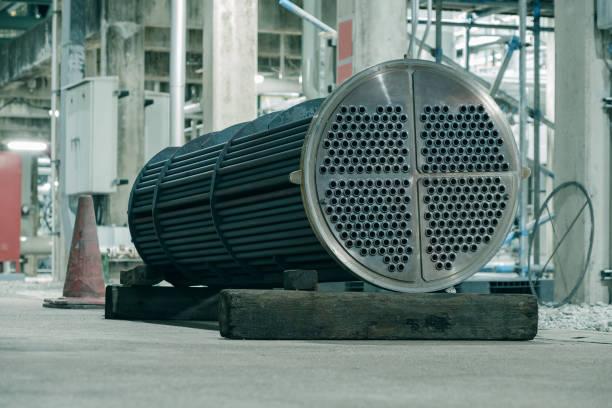
Heat exchangers enable thermal energy to move between fluids without requiring them to mix directly. They are essential across chemical processing, petroleum refining, power generation, food production, pharmaceuticals, refrigeration, steel, cement, and HVAC systems. As Indian industries expand production while seeking lower energy consumption, these systems are becoming increasingly important for heat recovery, process stability, equipment protection, and environmental performance.
According to MarkNtel Advisors, India’s heat exchanger industry was valued at USD 0.85 billion in 2025 and is projected to increase from USD 0.94 billion in 2026 to USD 1.4 billion by 2032. The sector is projected to expand at an estimated CAGR of 7.10% during 2026–2032, supported by industrialization, energy-efficiency requirements, manufacturing investment, and expanding process industries.
Energy Efficiency Strengthens Equipment Demand
Industrial facilities consume substantial energy for heating, cooling, evaporation, condensation, and temperature control. Heat exchangers can recover thermal energy from exhaust gases, hot process streams, wastewater, or cooling systems and reuse it elsewhere within the facility. This reduces the amount of additional electricity or fuel required to maintain production temperatures.
The Bureau of Energy Efficiency promotes efficient energy use across energy-intensive sectors under the Energy Conservation Act. Its industrial programmes encourage businesses to evaluate equipment performance, reduce avoidable energy losses, and adopt technologies capable of improving overall process efficiency.
Heat recovery can be particularly valuable in refineries, chemical plants, steel mills, cement facilities, food-processing units, and power stations. However, the benefit depends on suitable exchanger design, material selection, maintenance, and integration with the wider process.
Chemical and Petrochemical Expansion Creates Opportunities
Chemical and petrochemical facilities use heat exchangers for cooling reactions, condensing vapours, heating feedstock, recovering energy, and maintaining safe process conditions. India’s chemical sector has strong links with petroleum refining, natural gas processing, pharmaceuticals, agriculture, textiles, automotive production, and consumer manufacturing.
The Government of India’s Economic Survey findings noted that chemicals and petrochemicals contributed 8.1% of manufacturing gross value added during FY2023–24. Continued capacity additions in this sector are likely to support demand for shell-and-tube, plate, air-cooled, and specialized corrosion-resistant heat exchangers.
Equipment used in chemical processing must tolerate combinations of temperature, pressure, corrosive fluids, fouling, and continuous operation. Stainless steel, nickel alloys, titanium, and other specialized materials may be required where standard carbon-steel construction cannot provide sufficient durability.
Shell-and-Tube Systems Remain Widely Used
Shell-and-tube heat exchangers are frequently selected for refineries, power facilities, chemical plants, and other heavy industrial applications. Their robust design allows them to operate under high pressures and temperatures while accommodating a wide range of fluids.
Plate heat exchangers provide a compact alternative for applications requiring efficient heat transfer within limited space. They are commonly used in HVAC, food processing, refrigeration, pharmaceuticals, and water-heating systems. Their modular structure can also allow operators to increase capacity by adding plates, although gasket compatibility and fouling require careful consideration.
The Bureau of Indian Standards provides access to Indian standards supporting product quality, testing, performance, and safety. Compliance with relevant national and international standards helps improve consistency across equipment design, fabrication, installation, inspection, and operation.
Food and Pharmaceutical Production Require Hygienic Designs
Food, beverage, dairy, and pharmaceutical facilities require precise temperature control while maintaining strict hygiene. Heat exchangers are used for pasteurization, sterilization, fermentation, cooling, heating, and clean-in-place operations.
These applications often favour stainless-steel plate or tubular designs with smooth internal surfaces that reduce contamination risks and simplify cleaning. Equipment must also minimize product retention, prevent cross-contamination, and tolerate repeated cleaning cycles.
The Ministry of Food Processing Industries supports infrastructure development, processing capacity, cold-chain systems, and value addition across India’s food economy. Expansion in organized food processing can create sustained demand for reliable thermal-management equipment across production, storage, and distribution.
Power and Cooling Applications Broaden Adoption
Power plants rely on heat exchangers in condensers, boilers, feedwater systems, cooling circuits, and waste-heat recovery arrangements. Renewable-energy installations, data centres, commercial buildings, and district cooling systems also require efficient heat rejection and temperature management.
India’s Ministry of Power oversees national electricity-sector development and energy policy. As power demand rises and generation infrastructure expands, thermal efficiency will remain important for reducing fuel use, water consumption, and operating costs.
Air-cooled systems may gain relevance in water-stressed areas because they reject heat through ambient air rather than relying heavily on cooling water. Their performance, however, can decline during periods of high outdoor temperature, making application-specific design essential.
Maintenance Determines Lifecycle Performance
Scaling, corrosion, fouling, vibration, leakage, and blocked flow channels can reduce heat-transfer efficiency. Operators therefore need regular inspection, cleaning, pressure testing, and performance monitoring. Digital sensors can track temperature differences, pressure drops, flow rates, and energy recovery, helping maintenance teams identify deterioration earlier.
India’s heat exchanger landscape is expected to become increasingly focused on energy recovery, compact design, durable materials, and digitally supported maintenance. Long-term growth will depend on industrial investment, manufacturing quality, lifecycle cost, and the ability of suppliers to provide application-specific engineering and dependable technical support.

 Arabic
 French
 Spanish
 Portuguese
 Deutsch
 Turkish
 Dutch
Dutch
 Italiano
 Russian
 Romaian
 Portuguese (Brazil)
 Greek
Greek