


Welding Gases Support Precision Across Modern Manufacturing
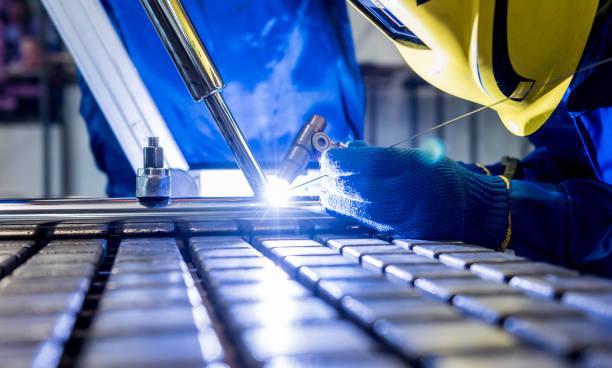
Welding gases play an essential role in joining, cutting, brazing, and fabricating metals across automotive production, construction, shipbuilding, aerospace, energy, machinery, and general manufacturing. Depending on the process, gases may protect molten metal from atmospheric contamination, generate heat, stabilize the welding arc, improve penetration, or influence the appearance and strength of the finished joint.
According to MarkNtel Advisors, the global welding gas industry was valued at approximately USD 3.5 billion in 2025 and is projected to rise from USD 3.68 billion in 2026 to USD 4.99 billion by 2032. The global demand forecast indicates an estimated CAGR of 5.2% during 2026–2032, supported by manufacturing growth, infrastructure development, vehicle production, metal fabrication, and the adoption of automated welding technologies.
Shielding Gases Protect Weld Quality
Molten metal reacts easily with oxygen, nitrogen, and moisture in the surrounding atmosphere. Without protection, these elements can contribute to porosity, oxidation, cracking, reduced strength, and an uneven weld surface.
Shielding gases create a controlled environment around the arc and weld pool. Argon, helium, carbon dioxide, oxygen, and their mixtures are selected according to the welding process, base metal, desired penetration, production speed, and finish requirements.
The ISO 14175 standard classifies shielding, backing, process, and assist gases according to their chemical properties and metallurgical behaviour. Standardized classifications help welders and engineers select suitable gas mixtures and maintain consistent procedures across different facilities.
Argon Maintains a Significant Position
Argon accounted for approximately 35% of global welding gas demand in 2026. As an inert gas, it provides stable arc characteristics and protects reactive metals from atmospheric contamination.
It is commonly used in gas tungsten arc welding and gas metal arc welding, particularly when working with aluminium, stainless steel, titanium, magnesium, and other non-ferrous materials. Argon-rich mixtures can produce smooth arc performance, reduced spatter, and a cleaner weld appearance.
Carbon dioxide is also widely used because it is relatively economical and can provide deep penetration in carbon-steel applications. However, pure carbon dioxide may generate more spatter and a less stable arc than argon-based mixtures. Manufacturers therefore select gases according to the required balance between productivity, quality, and cost.
Manufacturing and Fabrication Drive Consumption
Metal manufacturing and fabrication represented approximately 39% of global demand in 2026. Welding gases are required for producing structural components, pressure vessels, pipelines, machinery, appliances, storage tanks, industrial equipment, and fabricated assemblies.
The latest UNIDO manufacturing analysis reported that Asia and the Pacific recorded the strongest regional manufacturing-production growth in the first quarter of 2026. Expanding industrial output can increase demand for welding gases, particularly in countries investing in automotive, machinery, construction materials, and infrastructure.
Asia-Pacific held approximately 43.42% of the global welding gas landscape in 2026. China, India, Japan, South Korea, and Southeast Asia contain large manufacturing bases and extensive metal-processing supply chains.
Automation Requires Consistent Gas Delivery
Robotic and automated welding systems are becoming more common in automotive plants, machinery factories, and high-volume fabrication facilities. These systems can increase production speed and repeatability, but their performance depends on stable gas flow, pressure, purity, and mixture composition.
Inconsistent shielding can create defects across large production batches. Manufacturers are therefore adopting centralized gas-distribution systems, flow monitoring, leak detection, and automated controls. Sensors can track gas consumption and identify abnormal usage that may indicate damaged hoses, incorrect settings, or leaks.
Automation also increases the importance of standardized procedures. Welding parameters, wire feed, torch position, travel speed, and gas flow must remain coordinated to maintain quality.
Cylinder Safety Requires Strict Procedures
Welding gases are commonly supplied in high-pressure cylinders or bulk storage systems. Oxygen can intensify combustion, while fuel gases such as acetylene can create fire and explosion risks if handled improperly.
The OSHA oxygen-fuel standard establishes requirements for oxygen and fuel-gas systems, including piping, equipment placement, ventilation, and handling. Cylinders must remain secured, protected from damage, and separated from heat, sparks, and incompatible materials.
OSHA’s welding hazard guidance also identifies exposure to fumes, ultraviolet radiation, burns, electrical shock, and physical injuries as important workplace concerns. Suitable ventilation, protective clothing, eye protection, equipment inspection, and employee training are essential.
Skills Remain Central to Safe Performance
Advanced equipment cannot compensate for incorrect gas selection, poor torch technique, inadequate ventilation, or unsafe storage. The International Labour Organization emphasizes that welding work can involve exposure to fumes and gases and should incorporate occupational safety throughout training and operations.
The welding gas sector is expected to become increasingly connected to automation, precision fabrication, and digitally monitored supply systems. Future growth will depend on manufacturing investment, construction activity, gas availability, skilled labour, and compliance with safety and quality standards.
As industries require stronger, lighter, and more accurately fabricated components, welding gases will remain fundamental to achieving reliable joints and consistent production performance.

 English
 Arabic
 French
 Spanish
 Deutsch
 Turkish
 Dutch
Dutch
 Italiano
 Russian
 Romaian
 Portuguese (Brazil)
 Greek
Greek