


Balfour Retractor: A Complete Guide to Deep Abdominal Exposure

Every abdominal procedure depends on a clear, stable view of the surgical field, and the tools you trust to hold that field open shape the outcome of your work. The right balfour retractor gives you room to see, room to move, and the confidence to focus on precision rather than the mechanics of exposure. Whether you're performing a laparotomy, a pelvic procedure, or a complex abdominal repair, dependable retraction keeps your workflow steady from the first incision to the final suture.
Understanding the Purpose Behind the Instrument
Abdominal surgery demands wide, stable access, and that access begins with a reliable way to hold the incision open. The balfour retractor is a self-retaining instrument designed to spread and maintain the edges of an abdominal or pelvic incision, giving you an open, secure window into the surgical site. Its main purpose is to deliver broad, consistent exposure without requiring an assistant to hold tissue manually throughout the case. Surgeons rely on this instrument when deep, wide access matters most, especially in procedures where the working field is large and every centimeter of visibility supports safer technique. By keeping tissue parted evenly and firmly, it reduces the guesswork that comes with shifting sightlines, so you can maintain control across long or demanding operations. The value it brings is both practical and reassuring, because dependable exposure supports calmer decision-making and steadier hands at the table.
The Design That Makes It Work
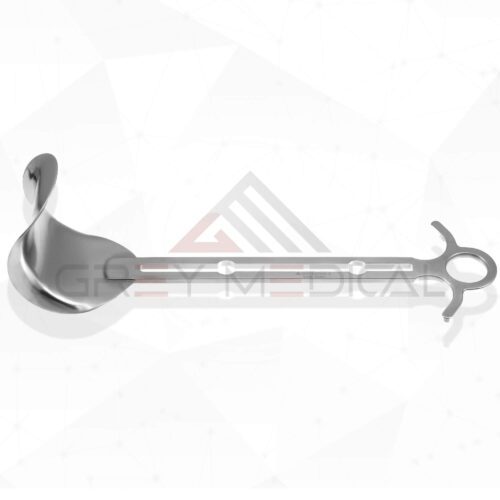
The design of a surgical tool tells you how it will perform under pressure, and this one is built for stability across a wide opening. The instrument features a horizontal frame with two adjustable lateral blades that slide along the bar, along with a central blade that retracts the lower wound margin. Those side blades move outward to spread the incision, while thumbscrews lock each blade firmly at the width your procedure calls for. This thoughtful engineering distributes force evenly across the wound margins, so tension stays balanced and the retractor holds its position throughout the case. The sliding blades let you tailor the opening to the size and depth of the field, which makes the tool adaptable across a range of body types and procedures. Whether you're working in a shallow opening or a deep abdominal cavity, the frame-and-blade structure gives you a predictable, repeatable hold that frees you to concentrate on the work itself.
How the Self-Retaining Function Supports Your Team
Every free hand in surgery is a genuine advantage, and self-retaining tools help you make the most of your team. Because the balfour retractor holds the wound open on its own, you no longer need an assistant dedicated solely to manual retraction across a long abdominal case. The thumbscrews lock the blades in place, so the instrument does the holding while your hands and your team stay available for the tasks that truly demand them. This st mark retractor independence streamlines roles, reduces crowding around the field, and keeps your movements uninterrupted through delicate steps. Whether you're operating with a full surgical staff or a leaner team, that kind of hands-free stability brings a steady rhythm to the procedure. It also means fewer adjustments mid-case, since the mechanism maintains consistent tension without drifting. The result is a smoother workflow, a clearer field, and a calmer environment where everyone can focus on what they do best.
The Role It Plays in Abdominal and Deep Surgical Exposure
Limited sightlines slow you down and raise the stakes for everyone in the room, so anything that improves deep exposure earns its place on the tray. A well-positioned balfour retractor spreads the abdominal wall cleanly and holds it apart, opening the cavity so you can see and reach the structures below with clarity. Deep, stable exposure means fewer surprises, steadier dissection, and a smoother path from incision to closure. When your view stays open and secure, you can concentrate on precision rather than repeatedly repositioning tissue or asking for another set of hands. This clarity supports safer handling of vessels and organs, more accurate placement of sutures, and a more efficient use of operating time. Good visibility also reduces the physical and mental fatigue that comes with straining to see, which helps you stay sharp through longer or more complex abdominal cases.
Common Procedural Applications and Material Quality
Certain instruments earn a place across many settings, and this one belongs firmly in abdominal and pelvic work. Surgeons reach for it during laparotomies, gynecological procedures, colorectal operations, and other cases where wide, deep exposure of the abdominal cavity is essential. Its adjustable blades make it well suited to procedures that vary in depth and width, giving you a single dependable tool that adapts to the field in front of you. Welcome to Grey Medical, your trusted partner in premium-quality surgical instruments. With decades of experience in the medical industry, we pride ourselves on delivering precision-crafted tools designed to meet the rigorous demands of surgeons, doctors, and medical professionals worldwide. A dependable balfour retractor made from high-grade surgical stainless steel resists corrosion, holds its shape, and locks the same way case after case, giving you confidence in every procedure you perform. Material quality directly affects how a tool feels in your hand, how it responds to repeated sterilization, and how long it serves before it needs replacement, so it is never a small detail.
Handling Precision and Maintenance Considerations
A precise instrument deserves careful handling, and a little attention to maintenance keeps it performing at its best for years. When you position the balfour retractor, seat the central blade against the lower wound margin, then slide the lateral blades outward and lock each thumbscrew at the width your procedure calls for. This controlled placement protects delicate structures and keeps the hold secure throughout the case. After the procedure, thorough cleaning matters just as much as careful use, so remove any debris from the sliding tracks and thumbscrew threads where residue tends to collect. Regular inspection helps you catch stiff slides, worn threads, or loose blades before they affect a live case, and prompt attention to these small issues extends the working life of the tool. Proper sterilization following your facility's protocol preserves both the material integrity and the safety of the instrument, so it stays ready whenever you reach for it.
Why Choosing Reliable Retractors Matters
The cost of a poor instrument is rarely just the price on the invoice — it shows up as slipped exposure, interrupted focus, and time lost to adjustments you shouldn't have to make. Investing in a well-built retractor pays you back in reliability, because a tool that holds its shape and locks predictably lets you plan your technique with certainty. Reliable instruments reduce the small frustrations that add up over a long day of cases, and they support the kind of steady, confident work that leads to better outcomes for your patients. When you know your tools will behave the same way every time, you free up mental energy to focus on judgment, timing, and precision. That peace of mind is worth a great deal in an environment where clarity and control shape everything you do, and choosing quality is really an investment in your own performance and in the safety of the people who trust you with their care.
Conclusion
Wide exposure, hands-free retraction, and dependable handling all come together in one thoughtfully designed instrument. A quality retractor gives you the visibility to work with precision, the stability to keep the abdominal wall open safely, and the consistency to perform the same way across every case, from a routine laparotomy to a complex pelvic procedure. Pair that reliability with careful handling and routine maintenance, and you have a tool that serves you well for years. The next step is simple: review the instruments on your tray and make sure each one meets the standard your work deserves. Explore the range of premium surgical instruments from Grey Medical and discover dependable tools built to work alongside you, procedure after procedure.

 Arabic
 French
 Spanish
 Portuguese
 Deutsch
 Turkish
 Dutch
Dutch
 Italiano
 Russian
 Romaian
 Portuguese (Brazil)
 Greek
Greek