


Vitamin D Fortified Foods in India (Vegetarian Guide): What to Eat, Why It Matters, and How to Choose Right
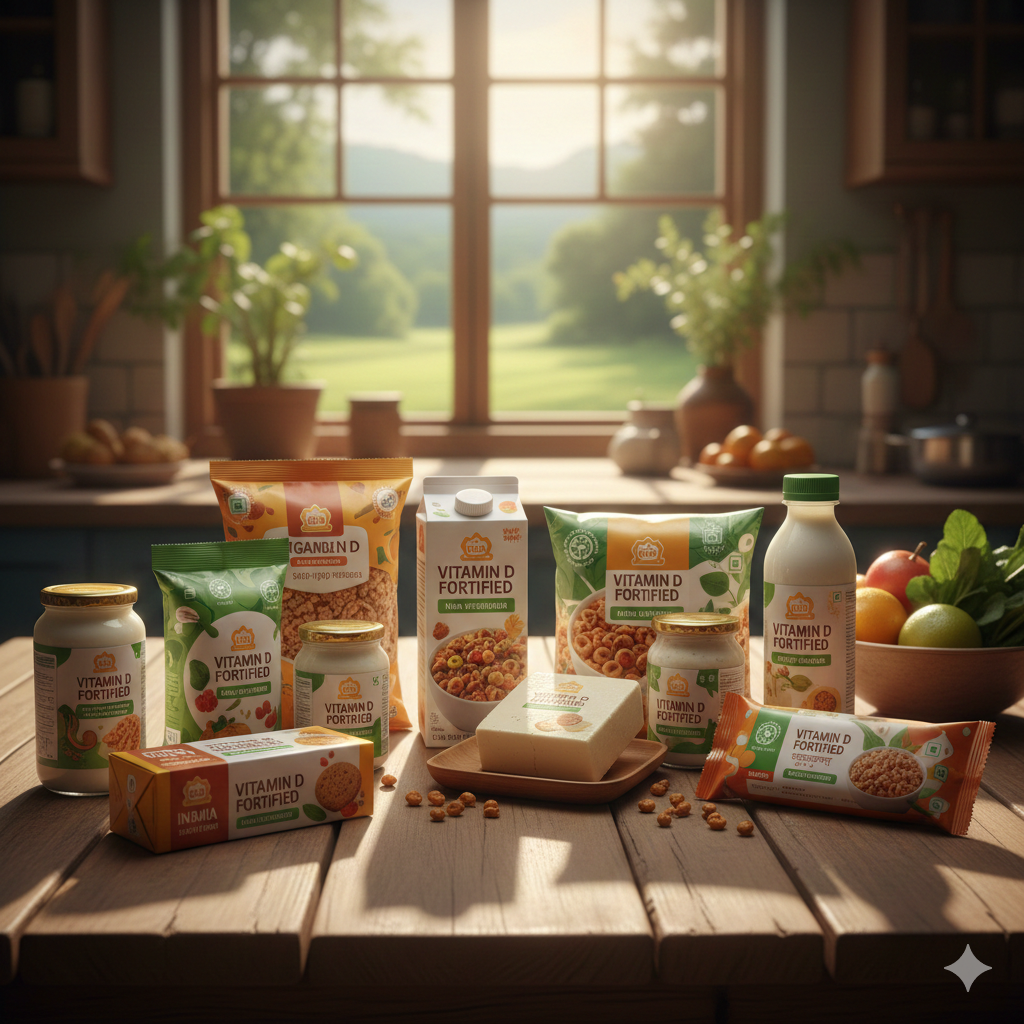
Vegetarians in India can meet their vitamin D needs through fortified foods like milk, curd, plant-based milks, breakfast cereals, edible oils, and fortified atta. Since natural vegetarian sources of vitamin D are extremely limited, fortified foods combined with sensible sunlight exposure are the most practical and effective solution.
Why Vitamin D Deficiency Is So Common in India
Here’s a paradox that surprises many people: India gets abundant sunlight, yet over 70–90% of Indians are vitamin D deficient, according to multiple nutrition surveys and hospital studies.
Why?
-
Indoor lifestyles and desk jobs
-
Air pollution blocking UVB rays
-
Sunscreen and covered clothing
-
Limited natural food sources
-
Vegetarian-heavy diets
Vitamin D isn’t just another vitamin. It affects bone strength, immunity, muscle function, mood, and even insulin sensitivity. Low levels are linked with fatigue, frequent infections, joint pain, and weak bones.
Why Vegetarians Need Fortified Foods for Vitamin D
Natural dietary sources of vitamin D are mostly animal-based:
-
Fatty fish
-
Fish liver oil
-
Egg yolk
For vegetarians in India, options are almost non-existent. Mushrooms exposed to UV light contain small amounts, but not enough to meet daily needs consistently.
That’s where vitamin D fortified foods become essential—not optional.
Think of fortification as nutritional seatbelts: you may not notice them daily, but they protect you long-term.
What Are Vitamin D Fortified Foods?
Fortified foods are everyday staples that have vitamin D added during processing to improve public health. In India, fortification is guided by standards from bodies like FSSAI.
The goal is simple:
Make commonly eaten foods quietly fill critical nutrient gaps.
Best Vitamin D Fortified Foods in India (Vegetarian)
1. Fortified Milk and Curd
Milk is the most reliable vegetarian source of vitamin D in India—when fortified.
-
Commonly fortified with vitamin D2 or D3
-
Widely consumed across age groups
-
Also provides calcium, which works synergistically with vitamin D
Tip: Check the label for “Vitamin D added” or “Fortified with Vitamin D.”
Curd and yogurt made from fortified milk usually retain vitamin D as well.
2. Plant-Based Milks (Soy, Almond, Oat)
With rising lactose intolerance and vegan diets, plant-based milks are gaining popularity.
Many brands fortify them with:
-
Vitamin D
-
Calcium
-
Vitamin B12
These are especially useful for:
-
Vegans
-
People avoiding dairy
-
Urban consumers
Important: Homemade plant milk is not fortified unless specified.
3. Fortified Breakfast Cereals
Breakfast cereals may not feel “Indian,” but they’re increasingly common in urban homes.
Why they help:
-
Often fortified with vitamin D, iron, and B vitamins
-
Easy daily consistency
-
Useful for children and working adults
Pair them with fortified milk to double the benefit.
4. Fortified Edible Oils
This is one of the smartest fortification strategies in India.
Why?
-
Almost every household uses edible oil daily
-
Vitamin D is fat-soluble, so oil enhances absorption
Common oils that may be fortified:
-
Mustard oil
-
Soybean oil
-
Sunflower oil
Since oil is used in small amounts, fortification levels are carefully controlled.
5. Fortified Atta and Flour
Some wheat flour brands now offer vitamin D fortified atta, targeting widespread deficiency.
This works well because:
-
Chapati is eaten daily across India
-
No change in taste or cooking method
-
Reaches rural and urban households alike
It’s a quiet upgrade to a staple food—nutritionally powerful without lifestyle disruption.
How Much Vitamin D Do You Actually Need?
General guidelines (approximate):
-
Adults: 600–800 IU per day
-
Older adults: Up to 800–1000 IU
-
Deficient individuals: Often need higher doses under medical guidance
Most fortified foods provide 10–30% of daily needs per serving, which is why variety and consistency matter.
How to Read Food Labels for Vitamin D Fortification
Don’t rely on front-of-pack claims alone. Flip the packet and look for:
-
“Vitamin D” in the nutrition table
-
Units listed as IU or mcg
-
%RDA per serving
Rule of thumb:
If it doesn’t list vitamin D in the nutrition panel, it probably isn’t fortified.
Fortified Foods vs Supplements: What’s Better?
This isn’t an either-or debate.
Fortified foods are ideal for:
-
Prevention
-
Mild deficiency
-
Long-term maintenance
Supplements are useful for:
-
Severe deficiency
-
Limited sun exposure
-
Doctor-diagnosed low levels
Many nutritionists recommend using fortified foods as the foundation, with supplements only when needed.
Common Myths About Vitamin D in Vegetarian Diets
Myth: “Morning sunlight is enough.”
Reality: UVB strength varies by time, season, pollution, and skin tone.
Myth: “Milk naturally has vitamin D.”
Reality: Only fortified milk does.
Myth: “I feel fine, so I’m not deficient.”
Reality: Vitamin D deficiency is often silent for years.
Practical Tips to Improve Vitamin D Absorption
-
Consume vitamin D foods with healthy fats
-
Avoid extremely low-fat diets
-
Get 15–25 minutes of midday sun when possible
-
Maintain gut health for better nutrient absorption
Small habits, big payoff.
Final Takeaway & Action Plan
If you’re a vegetarian in India, vitamin D fortified foods are not a trend—they’re a necessity.
Start simple:
-
Switch to fortified milk or plant milk
-
Choose fortified atta or edible oil
-
Check labels once, build the habit for life
You don’t need drastic changes—just smarter everyday choices.
If this guide helped you, share it with someone who still believes sunlight alone is enough. Sometimes, awareness is the first supplement we all need.

 English
 Arabic
 French
 Spanish
 Portuguese
 Deutsch
 Turkish
 Dutch
Dutch
 Italiano
 Russian
 Romaian
 Portuguese (Brazil)