


Why Your Next Canvas Bag Will Be A Masterpiece Instead of Just Grocery Gear
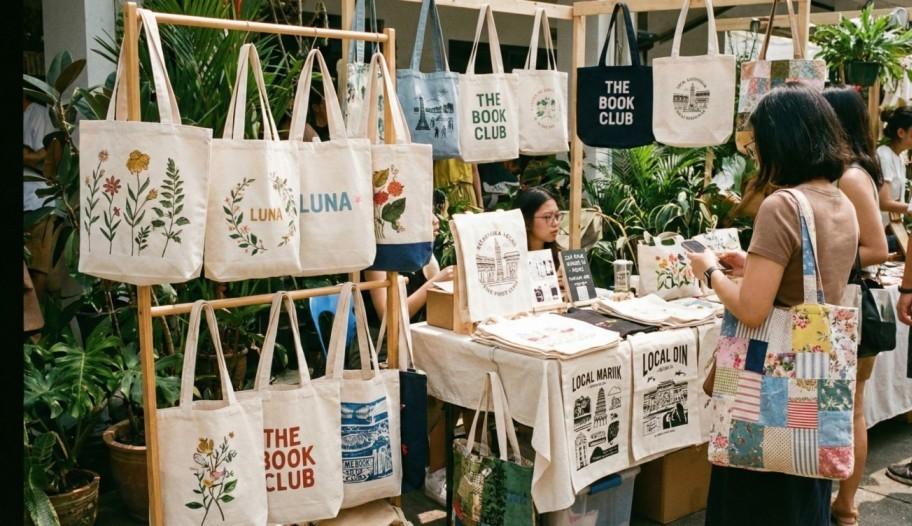
The humble tote bag has quietly graduated from the checkout aisle to the high-street fashion runway, but the latest evolution isn't just about the shape or the brand label—it is about the surface itself. We have entered an era where the fabric of our daily lives is becoming a high-definition canvas. For decades, the standard canvas bag was limited to simple block text or one-color logos that would crack and peel after a few washes. That narrative is changing rapidly as technology allows us to treat cotton and canvas with the same artistic respect as a painter treats their easel.
This shift is largely driven by the explosion of accessible, high-fidelity technology that allows for photorealistic designs on fabric. We are no longer limited to the constraints of screen printing screens or expensive setups for complex images. The rise of digital print tote bags has democratized fashion design, allowing for intricate gradients, millions of colors, and razor-sharp details that were impossible to achieve on coarse fabric just a few years ago. This technology means your bag isn't just carrying your groceries; it is carrying a literal piece of art that reflects your specific aesthetic without compromise.
This change is significant because it transforms the tote from a purely utilitarian object into a tool for hyper-personal expression. In the past, if you wanted a bag with a specific photo of your pet, a complex piece of AI-generated art, or a detailed landscape, the result would often look grainy or rubbery. Today, modern direct-to-garment tech infuses the ink directly into the fibers. This doesn't just look better; it feels better. The fabric remains breathable and soft to the touch, rather than having a heavy layer of plastic sitting on top of it. This "soft hand" feel is what is pushing the tote bag into the realm of premium accessories rather than just swag bag throwaways.
The Rise of the "Walking Gallery"
We are witnessing a cultural phenomenon that some trend forecasters are calling the "Walking Gallery." As people become more protective of their digital privacy, they are paradoxically becoming more expressive with their physical accessories. A tote bag offers a large, flat surface area—much larger than a t-shirt chest pocket or a hat—making it the perfect vehicle for visual storytelling.
Artists and illustrators are increasingly skipping traditional paper prints and moving straight to merchandise. Why buy a print that sits in a frame at home when you can carry your favorite artwork with you? This has led to a surge in "merch drops" where the value isn't in the brand name, but in the exclusivity and complexity of the art printed on the bag. It is a way to signal membership in a niche community, whether that is a specific fandom, a local art scene, or a political movement. The bag becomes a conversation starter, a mobile billboard for the things you actually care about, rendered in stunning clarity.
Sustainability Meets High-Definition
Another fresh angle on this topic is the intersection of high-tech printing and deep sustainability. For a long time, "eco-friendly" meant "boring." It meant unbleached cotton with maybe a single green leaf printed on it. But the new wave of tote bag manufacturing proves that you don't have to sacrifice vibrancy for values.
Modern digital printing techniques are surprisingly water-efficient compared to traditional industrial dyeing methods. Because the printers operate on demand, there is significantly less waste. You aren't mixing up gallons of custom-colored ink for a screen print run where half of it goes down the drain. You are jetting the exact amount of ink needed for the image directly onto the fabric. Furthermore, these inks are often water-based and biodegradable, moving away from the plastisol inks of the past that contained PVC and phthalates.
This creates a product that appeals to the "Conscious Maximalist"—someone who wants bold, colorful, loud patterns but doesn't want to contribute to fast fashion pollution. It is a guilt-free way to enjoy trends. You can have a tote bag that looks like a neon explosion from the 1980s, but it’s made from organic cotton and printed with eco-certified inks. This duality is new to the market and is driving a massive amount of interest from younger consumers who scrutinize labels closely.
The Death of the Boring Corporate Gift
Let’s be honest: nobody wants another cheap, scratchy bag with a bank logo on it. The corporate gifting world is finally catching up to the "retail quality" standard. Companies are realizing that if they give away a low-quality item, it ends up in the trash, which hurts their brand image more than it helps.
The trend is shifting toward "retail-grade" promotional items. Businesses are now commissioning local artists to create designs that incorporate their brand themes without being obnoxious logo-slaps. They are using the full capabilities of digital printing to create bags that employees and clients actually want to use on the weekend.
Imagine a tech conference giving away a tote featuring a complex, futuristic cityscape illustration rather than just the conference name in Arial font. The branding might be subtle, perhaps on a sewn-in tag or a small corner element, but the bag itself is desirable. This approach extends the lifecycle of the product significantly. When a promotional item becomes a genuine fashion accessory, the return on investment for the business skyrockets because the ad impressions continue for years, not just for the duration of the event.
Texture and Material Innovation
While the print is the star, the canvas itself is undergoing a makeover. We are seeing a move away from the standard light beige "calico" fabric toward heavy-duty, structured materials. 12-ounce and 15-ounce canvas options are becoming the standard for premium totes. These heavier weights provide a better surface for digital printing because the weave is tighter, allowing for finer detail resolution.
Moreover, colored canvases are having a moment. It used to be that digital printing worked best on white. Now, with advancements in white under-base technology (laying down a layer of white ink before the colors), vibrant designs can be printed on black, navy, or forest green canvas without losing their pop. This opens up a darker, moodier aesthetic that works well for winter fashion or evening events, breaking the stereotype that tote bags are only for summer farmers' markets.
Designers are also experimenting with mixed materials—canvas bodies with leather handles, or bags that incorporate zippers and internal pockets for laptops. This hybridization is blurring the line between a "shopper" and a legitimate handbag or briefcase. When you combine this elevated construction with a high-definition digital print, you get a hybrid accessory that fits into a professional workplace just as easily as it fits a beach trip.
Styling the New Wave Tote
How are people wearing these new, art-heavy totes? The styling has shifted from "slouchy utility" to "curated accessory." Because the prints are so high-quality, the bag often acts as the centerpiece of an outfit.
Fashion influencers are pairing monochromatic outfits—all beige, all black, or all denim—with a hyper-colorful, digitally printed tote. The bag provides the pop of color and texture that ties the look together. It’s a low-risk way to experiment with wild patterns. You might not be ready to wear a jacket covered in psychedelic swirls, but a tote bag with that design? That is easy to pull off.
We are also seeing the "double bag" trend, where a micro-purse is worn for essentials like keys and cards, while the heavy lifting is done by a graphic tote. This allows for practicality without sacrificing the aesthetic of a cute, small handbag. The tote in this scenario is almost treated like a garment, a layer of the outfit that adds volume and visual interest.
The Future is Custom and Collaborative
As we look toward the next few years, the barrier between the creator and the consumer will continue to dissolve. We are moving toward a world where you don’t just buy what is on the shelf; you participate in the creation. The technology is fast enough now that "live printing" at events is becoming a reality, where you can design a bag on a tablet and watch it get printed in minutes.
This creates a sense of ownership and connection to the object that mass-produced fashion can never replicate. It turns a simple purchase into a memory and a story. Whether you are an artist looking to sell your work, a business owner wanting to elevate your brand, or just someone who wants a bag that no one else has, the technology is finally ready to say "yes" to your ideas.
If you are looking to make a statement, launch a brand, or simply upgrade your event swag with this new level of quality, you don't need to be a massive corporation to do it. The flexibility of modern manufacturing means you can bring these ideas to life at scale. Whether you are equipping a team or stocking a boutique, investing in customized tote bags bulk ensures that you are getting that perfect intersection of durability, art, and economy. The tote bag is no longer just a bag; it is a blank slate waiting for your masterpiece.
Final Thoughts
The evolution of the tote bag is a testament to how technology can refresh even the most basic items in our lives. By combining high-definition digital printing with heavy-duty, sustainable materials, we have turned a simple carry-all into a powerful medium for self-expression. As we move forward, we can expect to see even more innovation—perhaps textured 3D prints or smart fabrics—but for now, the ability to carry a high-fidelity piece of art on your shoulder is a trend that is here to stay. It is practical, it is sustainable, and most importantly, it is uniquely yours.

 English
 Arabic
 French
 Spanish
 Portuguese
 Deutsch
 Turkish
 Dutch
Dutch
 Italiano
 Russian
 Romaian
 Greek
Greek