


Automating User Provisioning with ServiceNow RPA and Document Intelligence
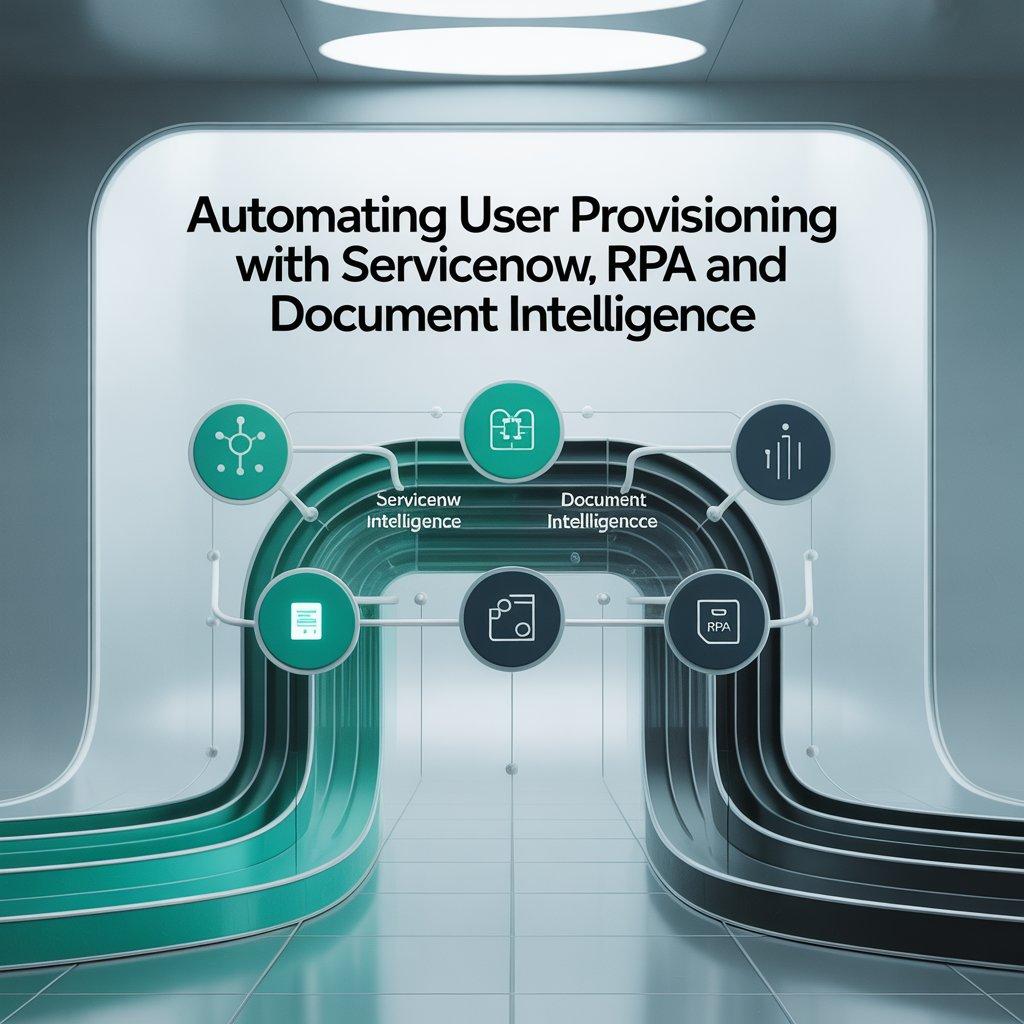
User provisioning is a critical but often time-consuming process for IT and HR teams. It involves creating, modifying, and deactivating user accounts, assigning roles, and granting system access based on job functions. When handled manually, user provisioning is prone to delays, errors, and security risks. This is where ServiceNow RPA and Document Intelligence come together to transform traditional provisioning into a faster, smarter, and more reliable automated process.
ServiceNow RPA (Robotic Process Automation) enables organizations to automate repetitive, rule-based tasks by using software bots that mimic human actions across systems. Document Intelligence, on the other hand, uses AI and machine learning to extract, classify, and validate data from structured and unstructured documents such as onboarding forms, ID proofs, offer letters, and access requests. Together, these technologies create a powerful automation framework for end-to-end user provisioning.
In a typical onboarding scenario, user information often arrives in multiple formats—emails, PDFs, scanned documents, or forms submitted through HR systems. Manual data entry from these sources slows down the process and increases the risk of inconsistencies. With ServiceNow RPA and Document Intelligence, documents are automatically analyzed, key data fields are extracted, and validated information is passed directly into ServiceNow workflows. This eliminates manual intervention at the very first step.
Once the required data is captured, ServiceNow RPA takes over the execution layer. RPA bots can automatically create user accounts in Active Directory, email systems, ERP platforms, and other enterprise applications. They can assign roles, permissions, and licenses based on predefined business rules and job roles. This ensures users receive the right access at the right time, improving productivity from day one.
Security and compliance are major drivers for automating user provisioning. Manual processes often lead to over-provisioning or delayed de-provisioning, which can expose organizations to compliance risks. By leveraging ServiceNow RPA and Document Intelligence, organizations can enforce standardized access policies consistently. Bots can automatically revoke access when employees leave the organization or change roles, while Document Intelligence validates termination or transfer documents to trigger the correct workflows.
Another key benefit of this automation approach is improved audit readiness. Every action performed by RPA bots is logged and traceable within the ServiceNow platform. This creates a clear audit trail for user access changes, approvals, and exceptions. Compliance teams can easily demonstrate adherence to internal controls and regulatory requirements without relying on manual records or spreadsheets.
ServiceNow RPA and Document Intelligence also enhance the employee experience. New hires no longer have to wait days for system access, and managers don’t need to follow up repeatedly with IT teams. Automated provisioning ensures faster turnaround times, fewer errors, and a smoother onboarding journey. For HR and IT teams, this means reduced workload and more time to focus on strategic initiatives rather than repetitive administrative tasks.
From a scalability perspective, automation is essential for growing organizations. As businesses expand, onboard contractors, or support remote workforces, provisioning volumes can increase rapidly. Manual processes struggle to scale, but ServiceNow RPA and Document Intelligence can handle high volumes without compromising accuracy or performance. Automation ensures consistent service delivery even during peak hiring periods.
Looking ahead, the combination of RPA and Document Intelligence positions organizations for more intelligent and autonomous operations. As AI models continue to improve, Document Intelligence will become more accurate at understanding complex documents, while RPA bots will evolve to handle more dynamic scenarios. This will further reduce human dependency and drive operational efficiency across IT and HR functions.

 Arabic
 French
 Spanish
 Portuguese
 Deutsch
 Turkish
 Dutch
Dutch
 Italiano
 Russian
 Romaian
 Portuguese (Brazil)
 Greek
Greek