


AI Facial Recognition Applications in Business Operations
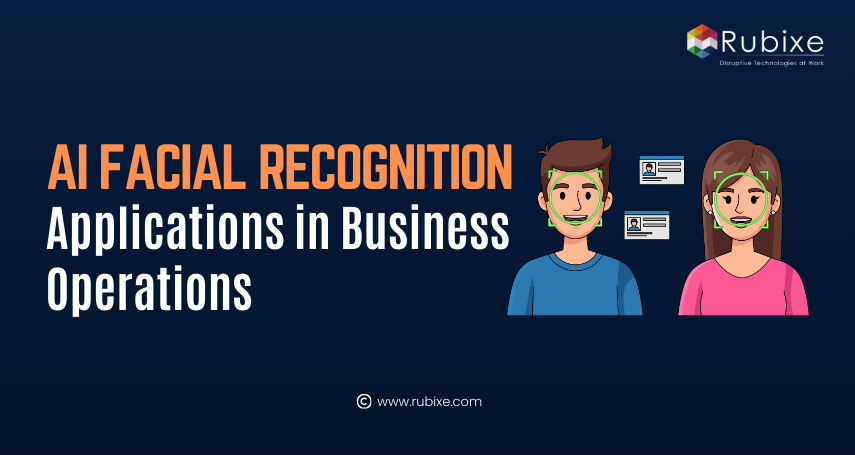
A few years ago, facial recognition was primarily used in airports or high-security zones.
Inside regular businesses, it felt distant and unnecessary. That perception has shifted quietly. Not because of trends or hype, but because daily operations started demanding better control, accuracy, and speed.
Many businesses now use facial recognition without making noise about it.
Employees walk in without cards. Attendance logs update on their own. Restricted areas stay restricted without constant supervision. The system works in the background, handling tasks that once needed manual effort and constant checking.
This is how AI facial recognition fits into business operations today.
What AI facial recognition Does Inside Organizations
AI facial recognition identifies a person by analyzing facial features and matching them with stored data. Unlike cards or passwords, faces cannot be borrowed, forgotten, or passed around.
For businesses, this creates a practical shift:
-
Identity checks become automatic
-
Manual verification steps reduce
-
Accuracy improves across systems
Instead of adding another tool for employees to manage, facial recognition removes steps from existing workflows. When implemented carefully, it supports operations without interrupting them.
Managing Workplace Entry With Better Control
Access control is one of the earliest and most effective uses of AI facial recognition.
Traditional access systems depend on badges, PINs, or biometric scanners. These systems fail when cards are shared, PINs are leaked, or devices stop working. Facial recognition reduces these gaps.
Businesses apply it to:
-
Control entry into offices, plants, and warehouses
-
Restrict access to sensitive departments
-
Track entry and exit automatically
Employees do not need to stop or authenticate manually. Entry remains quick, while access rules stay enforced consistently.
Attendance Tracking Without Manual Errors
Attendance management often creates disputes. Manual registers, card swipes, and app-based check-ins allow errors and misuse. Payroll teams then spend time correcting issues that should not exist.
AI facial recognition simplifies this process.
It helps organizations:
-
Record attendance accurately
-
Prevent proxy attendance
-
Generate real-time attendance data
-
Sync records with HR and payroll systems
The focus stays on accuracy, not surveillance. When attendance data is reliable, internal trust improves and administrative workload drops.
Supporting Security Teams More Effectively
Security operations depend on awareness and response speed. Cameras record footage, but reviewing hours of video after an incident adds little value.
AI facial recognition adds context to security systems.
It allows teams to:
-
Detect unauthorized individuals
-
Receive alerts when access rules are violated
-
Track movement across monitored areas
-
Respond faster to real situations
Security staff stop watching screens endlessly. They act only when the system identifies something that needs attention.
Improving Customer-Facing Operations
In retail, hospitality, and service environments, facial recognition supports smoother interactions when used responsibly.
Businesses use it to:
-
Identify returning customers
-
Support loyalty and VIP recognition
-
Reduce identity fraud
-
Speed up verification processes
The key lies in consent and transparency. When customers understand how the system works and what data is used, the experience feels helpful rather than intrusive.
Reducing Fraud and Identity Misuse
Identity-related fraud affects financial services, healthcare, and enterprise platforms. Manual verification methods struggle at scale.
AI facial recognition strengthens identity checks by:
-
Verifying users during sensitive transactions
-
Preventing impersonation
-
Supporting secure onboarding
-
Assisting compliance processes
By reducing false approvals and unauthorized access, businesses protect both users and internal systems.
Turning Visual Data Into Operational Insight
Facial recognition systems generate more than access logs. Over time, they provide operational insights.
Businesses can analyze:
-
Entry and exit patterns
-
Workforce movement trends
-
Visitor frequency
-
Areas with repeated security alerts
These insights help improve layouts, staffing schedules, and access policies based on actual behavior rather than assumptions.
Why Responsible Implementation Matters
Problems begin when facial recognition is treated as just another tool to deploy quickly.
Responsible implementation requires:
-
Clear consent policies
-
Secure data storage
-
Limited access to sensitive information
-
Regular audits and system reviews
Without governance, even accurate systems can create compliance and trust issues. Control and clarity must come before expansion.
How AI Consulting Supports These Projects
Facial recognition setups differ across industries. A manufacturing unit, corporate office, and retail chain each need a different approach.
AI consulting helps businesses:
-
Identify suitable use cases
-
Select compliant technologies
-
Design privacy-aware systems
-
Integrate facial recognition with existing tools
-
Monitor performance and risks
Instead of experimenting internally, organizations move forward with structure and clarity.
Aligning Facial Recognition With Business Goals
AI facial recognition delivers value only when it supports operational needs.
It should:
-
Reduce manual workload
-
Improve data accuracy
-
Strengthen access control
-
Support informed decisions
When aligned with broader AI services and AI automation strategies, facial recognition becomes part of a stable operational system rather than a standalone feature.
AI facial recognition is not about replacing people or adding complexity. It handles repetitive identity checks so teams can focus on meaningful work.
Businesses that apply it thoughtfully gain cleaner data, stronger control, and smoother operations. The technology stays in the background, doing its job quietly.
That is where its real value lies.

 English
 Arabic
 French
 Spanish
 Portuguese
 Deutsch
 Turkish
 Dutch
Dutch
 Italiano
 Russian
 Romaian
 Portuguese (Brazil)