


Global Neuromodulation Devices Market Outlook: Growth, Trends, and Future Forecast to 2034
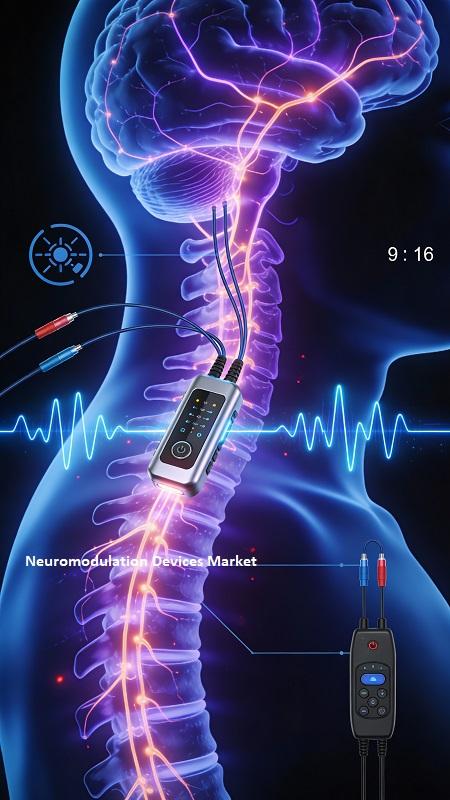
Neuromodulation devices deliver targeted electrical or chemical stimulation to modulate nervous system activity, offering relief for neurological and neuropsychiatric disorders. These advanced tools treat conditions like Parkinson's disease, epilepsy, chronic pain, stroke, and obsessive-compulsive disorder through implantable and noninvasive methods.
Neuromodulation Devices Market Size
The Neuromodulation Devices Market, valued at US$ 7.46 billion in 2025, is projected to reach US$ 16.51 billion by 2034, expanding at a CAGR of 9.2% during 2026-2034.
Core Technologies Driving Adoption
Internal neuromodulation devices, such as deep brain stimulators and spinal cord stimulators, provide precise, long-term therapy for movement disorders, epilepsy, and incontinence by targeting specific neural pathways. External options like transcranial magnetic stimulation and transcranial direct current stimulation enable noninvasive treatment for headaches, depression, and tinnitus, appealing to patients seeking minimal intervention. These technologies, including intracranial cortical stimulation, demonstrate promising outcomes in clinical settings, expanding therapeutic applications across diverse disorders.
Primary Market Drivers
Rising geriatric populations heighten vulnerability to neuropathy, Alzheimer's, dystonia, and Parkinson's, fueling demand for neuromodulation solutions amid growing awareness of neurological burdens. Increasing prevalence of epilepsy, stroke, chronic pain, and lifestyle-related issues like depression prompts adoption of advanced devices, particularly in regions with high incidences such as the US and Canada. Enhanced global focus on neuroscience accelerates innovation, addressing disorders like multiple sclerosis and spasticity while countering spinal cord injury cases.
Competitive Landscape
Key players like
- Abbott
- LivaNova PLC
- Boston Scientific
- Medtronic
- Nevro
- NeuroPace
Recent advancements include Medtronic's Inceptiv closed-loop spinal cord stimulator, adapting to biological signals in real-time, and Abbott's Proclaim Plus with FlexBurst360 for multi-area pain coverage. These firms prioritize product upgrades, expansions, and novel therapies to capture shares across hospitals and home care.
Segmentation Insights
By type, internal devices lead due to their efficacy in sustained neural modulation for neurovascular and pain management, while external variants gain traction for faster growth through accessibility. End-user segments include hospitals dominating via infrastructure expansions and chronic pain care, alongside clinics and emerging home healthcare for patient-centric delivery. Applications span movement disorders, sensory disabilities, bladder control, and minimally conscious states, with biomaterials enhancing device biocompatibility.
Regional Dynamics
North America spearheads adoption, propelled by neurological disease prevalence, robust R&D investments, FDA approvals, and technological prowess. Europe advances through regulatory frameworks in countries like Germany, France, and the UK, while Asia Pacific surges with healthcare builds in China, India, Japan, and South Korea. Middle East & Africa and South & Central America focus on oil-related neuromodulation and infrastructure growth in Saudi Arabia, Brazil, and beyond.
Challenges in Expansion
Skilled neurosurgeon shortages limit access, especially in rural areas, despite urban facilities boasting advanced neurology tech. Training gaps hinder scaling, underscoring needs for workforce development to match rising demand.
Related Reports-

 Arabic
 French
 Spanish
 Portuguese
 Deutsch
 Turkish
 Dutch
Dutch
 Italiano
 Russian
 Romaian
 Portuguese (Brazil)
 Greek
Greek