


PVC Banner Printing Isn’t Dying — It’s Just Becoming More Disciplined

Every few years, the same claim resurfaces: printed banners are finished. Digital screens are cheaper. Online advertising is more measurable. Sustainability pressures are mounting. Attention has moved on.
And yet, PVC banner printing continues to occupy streets, construction sites, retail fronts, event venues, and public spaces across the UK.
The contradiction disappears once the conversation shifts away from trends and towards discipline. PVC banner printing has not survived by standing still. It has survived by becoming more selective, more regulated, and more deliberate in how it is specified, produced, and deployed.
The banners that fail today are not victims of decline. They are victims of misuse.
The Myth of Decline vs the Reality of Use
PVC banners are no longer impulse purchases in most professional settings. That alone has changed how they are perceived.
Ten years ago, banners were ordered quickly, often with minimal discussion about lifespan or exposure. Today, even modest banner projects tend to involve questions about wind load, installation method, environmental impact, and compliance.
This is not decline. It is maturity.
Printed banners are no longer assumed to be disposable. They are assessed.
Why Digital Never Replaced Physical Banners
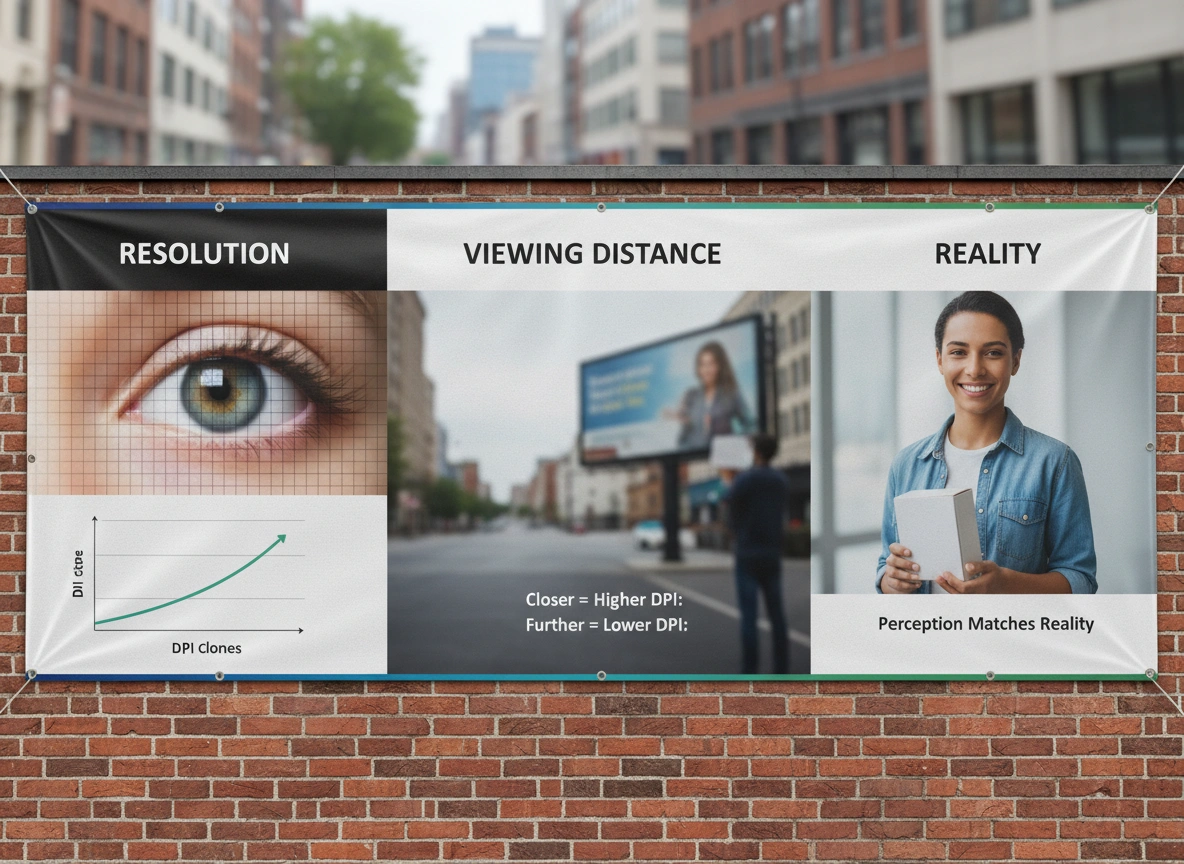
Digital media excels at targeting, tracking, and rapid iteration. It struggles with permanence, presence, and independence from infrastructure.
PVC banners persist because they:
-
Remain visible without power
-
Function in areas with no digital infrastructure
-
Communicate without interaction
-
Satisfy regulatory and navigational requirements
Construction sites, roadworks, public consultations, safety notices, temporary wayfinding, and physical brand presence cannot rely solely on screens or mobile devices. They require something static, legible, and always on.
Digital did not replace banners because it was never designed to do that job.
Discipline Begins at Specification
The most significant change in PVC banner printing is not technology. It is specification discipline.
Buyers now differentiate between:
-
Indoor vs outdoor use
-
Short-term vs extended display
-
Fixed vs high-wind locations
-
Promotional vs regulatory signage
This has reduced misuse but increased expectations. A banner that fails today is less likely to be dismissed as “one of those things” and more likely to trigger supplier review.
Materials Are Chosen With Intent, Not Habit
PVC banner materials have not changed dramatically in composition, but they are used more carefully.
Standard PVC Is No Longer Universal
Standard PVC banners remain common, but they are increasingly confined to:
-
Indoor retail
-
Short-term promotions
-
Low-exposure environments
They are no longer defaulted into outdoor use without consideration.
Mesh and Heavy-Duty PVC Have Clear Roles
Mesh PVC banner printing has become the baseline for exposed outdoor locations. Heavy-duty PVC is now expected where banners will be reused, transported, or displayed long-term.
This clarity has reduced failure rates and improved trust in the medium.
Finishing Has Become a Structural Decision
One of the clearest signs of discipline is how finishing is treated.
Eyelets, hems, and reinforcement are no longer cosmetic afterthoughts. They are risk controls.
Poor finishing was once tolerated because banners were assumed to be short-lived. That assumption no longer holds. Today, finishing decisions are tied directly to:
-
Installation method
-
Exposure level
-
Lifespan expectation
-
Liability
Welded hems, correct eyelet spacing, and reinforced edges are now standard practice in professional PVC banner printing, not premium extras.
Procurement Pressure Has Changed the Conversation
PVC banners are increasingly purchased through structured procurement rather than ad-hoc ordering.
This introduces:
-
Supplier accountability
-
Documentation requirements
-
Environmental disclosures
-
Performance expectations
In local authorities and large organisations, banners must now justify their presence. That pressure has removed casual, poorly specified output from the market.
What remains is more robust.
Sustainability Has Forced Better Decisions, Not Abandonment
PVC has been under environmental scrutiny for years. That scrutiny has not eliminated PVC banners. It has narrowed how they are used.
The Shift Towards Recyclable PVC
Recyclable PVC substrates are now widely adopted in the UK. This does not make banners impact-free, but it aligns them with waste management frameworks and reduces unnecessary landfill.
Why PVC-Free Alternatives Haven’t Taken Over
PVC-free materials exist, but many fail under UK weather patterns or repeated handling. The result is more frequent replacement, which undermines environmental intent.
In practice, disciplined use of recyclable PVC has proven more sustainable than repeated failure of less durable alternatives.
Banner Printing Is Now Measured by Outcome
Success is no longer defined by how a banner looks on delivery.
It is defined by:
-
Whether it remains legible
-
Whether it stays intact
-
Whether it fulfils its purpose for the intended duration
This outcome-based thinking has raised standards across the industry.
Printers are expected to advise, not just produce. Buyers expect guidance, not options lists.
Same-Day Printing Reflects Discipline, Not Panic
Same-day PVC banner printing is often misunderstood as rushed or careless.
In reality, it exists because workflows have become more controlled. Faster curing inks, better stock management, and streamlined finishing allow urgent jobs to be produced without sacrificing integrity — when limits are respected.
Disciplined printers refuse same-day requests when conditions make failure likely. That refusal is part of the evolution.
The Market Has Lost Tolerance for Failure
A decade ago, a torn banner was inconvenient. Today, it is reputational.
Retailers see it as brand damage. Event organisers see it as a safety risk. Councils see it as public scrutiny.
This intolerance has not reduced banner use. It has eliminated careless banner use.
Why PVC Banner Printing Still Scales
Few physical media scale as efficiently as PVC banners.
From a single shopfront to a nationwide rollout, the same material system can be specified, produced, and installed with predictable results.
That scalability keeps PVC relevant in a fragmented media landscape.
Discipline Has Reduced Noise, Not Presence
There are fewer pointless banners now.
What remains tends to be:
-
Purpose-driven
-
Better positioned
-
More robust
-
More accountable
This makes banners feel less intrusive and more intentional, even as their numbers remain high.
Final Perspective
PVC banner printing is not declining. It is narrowing.
The industry has moved away from casual production and towards informed deployment. Materials are chosen deliberately. Finishing is treated structurally. Environmental impact is weighed against performance, not ignored.
Banners that fail today do so because discipline was absent, not because the medium is obsolete.
PVC banners endure because they continue to solve problems that digital tools cannot — quietly, visibly, and without infrastructure.
I YOU PRINT operates within this disciplined landscape, producing PVC banner printing shaped by specification, context, and real-world performance rather than nostalgia or volume-driven output.

 Arabic
 French
 Spanish
 Portuguese
 Deutsch
 Turkish
 Dutch
Dutch
 Italiano
 Russian
 Romaian
 Portuguese (Brazil)
 Greek
Greek