


Bike Cargo Trailer vs. Cargo Bike: Which Is Better?
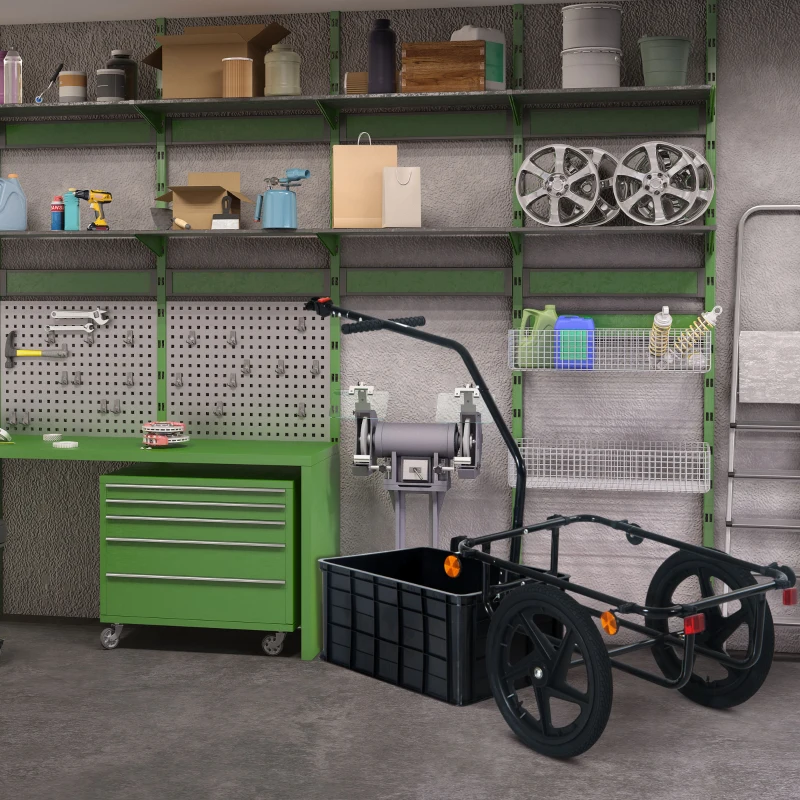
Bike cargo trailers and cargo bikes both serve the purpose of allowing cyclists to carry extra gear, groceries, or other heavy items that might not fit on a regular bike. Whether you are an urban commuter, a cyclist who enjoys long-distance tours, or someone who simply wants to use their bike as a more functional vehicle, both bike cargo trailers and cargo bikes have distinct advantages. But which one should you choose? This article will explore the pros and cons of each option, taking into account factors such as price, storage capacity, ease of use, and overall performance.
What is a Bike Cargo Trailer?
A bike cargo trailer is a small, towable unit designed to be attached to a bicycle to carry cargo. Typically, bike trailers have two or sometimes one wheel, and they hitch to the rear of the bicycle. The cargo area can vary in size depending on the model, from small baskets to large enclosed spaces that can carry large amounts of gear. Trailers are commonly used for grocery shopping, transporting camping gear, and even carrying kids or pets on longer trips.
What is a Cargo Bike?
A cargo bike, on the other hand, is a type of bicycle specifically designed to carry large loads. Cargo bikes come with an extended frame and a larger, reinforced cargo area, often located either in the front (as in a longtail bike) or at the back (as in a box bike). They are built to handle heavy loads and come with heavy-duty tires, strong frames, and specific gearing for carrying weight. Cargo bikes are commonly used in urban environments for deliveries, or by parents who want to transport children or groceries.
Comparison: Bike Cargo Trailer vs Cargo Bike
1. Storage Capacity
When it comes to carrying capacity, cargo bikes typically have an edge. A cargo bike's built-in storage area is designed to hold large and heavy loads. Whether it's a large box at the back or an open platform, the bike itself is constructed to handle substantial weight, making it ideal for long trips or carrying bulky items. Cargo bikes can handle up to 400 pounds or more, depending on the model, with many designs allowing for even more capacity with the addition of baskets or cargo boxes.
Bike cargo trailers, however, offer a similarly spacious cargo area, but the amount of weight a trailer can carry depends on the design and size. Many bike trailers have the capacity to carry between 50 and 150 pounds, though larger models designed for heavier loads may exceed that. Because they are separate from the bike, trailers can be attached to a bike for longer trips, but the actual load capacity may still be less than that of a cargo bike. The trailer's storage capacity can also vary depending on the design, whether it’s an enclosed box, an open platform, or a fabric bag.
Verdict: If you need to carry bulky or heavier loads, a cargo bike might be a better choice. However, for lighter and more varied hauling needs, a bike cargo trailer can still be very practical.
2. Maneuverability and Handling
In terms of maneuverability, cargo bikes generally offer better control because the weight is distributed evenly between the rider and the bike. The bike itself becomes the carrying vehicle, and this allows for more direct handling, especially when navigating urban environments with tight spaces. Cargo bikes, especially the longtail type, offer a smoother ride with the added advantage of being able to keep your cargo close to you. However, riding a cargo bike with a heavy load can be more difficult to handle, especially when it comes to uphill climbs.
On the other hand, bike cargo trailers can sometimes be more challenging to maneuver. Although they provide extra storage, trailers can sway or become unstable, particularly when turning sharply or riding on uneven terrain. However, many modern bike trailers are designed with stability in mind, with larger wheels and low-slung frames that improve handling. Attaching a bike cargo trailer requires extra attention, as it can shift the balance of the bicycle. With practice, most cyclists can learn to handle trailers with ease, but it can take some time to get used to their behavior on the road.
Verdict: Cargo bikes are generally easier to control and more stable, particularly when carrying a large amount of weight. Bike cargo trailers, while functional, may take a bit more effort to master, especially when making turns.
3. Cost
When considering cost, bike cargo trailers generally come out as the more affordable option. You can find quality bike cargo trailers at a lower price point than a cargo bike. Basic trailers can range from $100 to $500, depending on the design and features, with some premium options going higher. However, the low cost of a trailer does come with some trade-offs in terms of additional weight, maneuverability, and overall build quality.
In contrast, cargo bikes tend to be much more expensive. Depending on the brand and design, prices for cargo bikes can range from $1,000 to over $5,000. The higher cost is due to the bike’s specialized frame, reinforced cargo area, and generally higher-quality construction. Cargo bikes also tend to have electric versions, which can push the cost up significantly.
Verdict: If budget is a primary concern, bike cargo trailers are more affordable. However, if you're willing to make a larger investment and need a more integrated and specialized solution for hauling heavy loads, a cargo bike could be a better choice.
4. Flexibility and Convenience
In terms of flexibility, bike cargo trailers have the advantage. Since a trailer can be detached and used separately, they provide more versatility in terms of when and how you use them. If you’re using your bike for commuting or other activities that don’t require extra cargo, you can simply detach the trailer and ride your bike normally. Additionally, bike cargo trailers can easily be hitched to different bikes, providing greater convenience for multiple users.
Cargo bikes, being a more permanent solution, offer less flexibility. Once you purchase a cargo bike, you’re stuck with the specific design and size, and it's difficult to convert it back into a regular bike.
Verdict: Bike cargo trailers are the more flexible option as they can be attached and detached from your bike, while cargo bikes are more permanent and specialized.
Conclusion
When deciding between a bike cargo trailer and a cargo bike, the choice depends largely on your needs and budget. If you want a more affordable and flexible solution that allows you to carry lighter loads, a bike cargo trailer is likely the better option. However, if you need a more heavy-duty, permanent solution for carrying heavy or bulky loads on a daily basis, a cargo bike would be a wise investment. Ultimately, both options provide a sustainable and practical way to transport goods by bike, and the best choice will depend on your individual cycling habits and preferences.

 English
 Arabic
 Spanish
 Portuguese
 Deutsch
 Turkish
 Dutch
Dutch
 Italiano
 Russian
 Romaian
 Portuguese (Brazil)
 Greek
Greek