


Modern Data Analysis Tools Employers Look for Today
Modern Data Analysis Tools employers prefer today, explained simply—skills, trends, and career value, plus how certification and ATP support long-term growth.
Companies hire people who can translate raw data into clear answers. They are not just looking for degrees. They look for practical skills, real-world projects, and evidence that a candidate is capable of meeting modern job demands. This is why data analysis tools have become an important factor in hiring decisions across industries.
Check out what tools employers value, why they are important, and how students can prepare for real-world jobs.
Why Employers Focus on Practical Tools
Employers manage large amounts of data every day. They need professionals who can:
-
Clean messy data
-
Find patterns quickly
-
Share insights in a clear way
-
Support business decisions with facts
Many candidates understand theory but struggle to apply it to real-world datasets. This gap frequently leads to missed job opportunities. Employers now screen resumes based on tool knowledge, followed by experience and education.
What Employers Notice First
-
Hands-on experience with modern tools
-
Ability to explain results clearly
-
Understanding of business problems
-
Proof of learning through projects or certification
This change explains why tool-based skills have more weight than ever before.
What Makes a Tool “Modern” in Data Analysis
Not every tool used in the past fits current needs. Employers prefer tools that help teams work faster and smarter.
Modern tools usually offer:
-
Automation for repeated tasks
-
Easy handling of large datasets
-
Visual reports for quick decisions
-
Integration with cloud systems
-
Support for teamwork and sharing
These features save time and reduce errors, which is why hiring managers ask about them during interviews.
Categories of Data Analysis Tools Employers Prefer
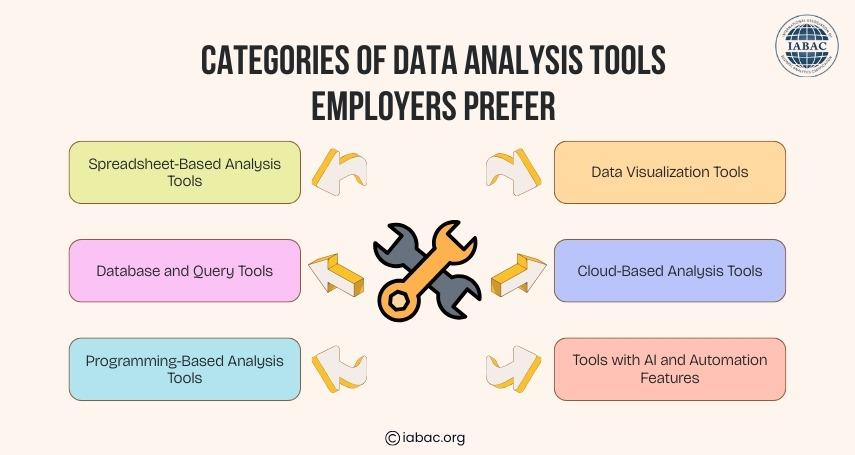
Instead of focusing on brand names, employers consider skill categories. A strong candidate understands tools in all of these areas.
1. Spreadsheet-Based Analysis Tools
Spreadsheets remain useful, particularly in entry-level positions. Employers expect candidates to go beyond simple formulas.
Common employer expectations include:
-
Data cleaning using functions
-
Sorting and filtering large datasets
-
Pivot tables for summaries
-
Charts that explain trends clearly
These tools are frequently used as a starting point for more advanced systems.
2. Database and Query Tools
Most business data is stored in databases. Employers want analysts who can work directly with this data.
Skills that matter here:
-
Writing clear queries
-
Joining multiple tables
-
Filtering data for specific needs
-
Understanding structured data
These tools allow analysts to work independently rather than waiting for technical teams.
3. Programming-Based Analysis Tools
Programming skills show employers that a candidate can handle complex tasks and automation.
Employers value:
-
Code for data cleaning
-
Scripts for repeated analysis
-
Handling large datasets efficiently
-
Building simple models
These tools allow faster analysis and reduce manual effort, which companies value highly.
4. Data Visualization Tools
Insights are meaningless if decision-makers don't understand them. Visualisation tools help to close this gap.
Employers look for analysts who can:
-
Create clear dashboards
-
Choose the right charts
-
Highlight key insights
-
Tell a data story
Strong visualisation skills often set candidates apart during interviews and presentations.
5. Cloud-Based Analysis Tools
Many companies now store their data in the cloud. Employers prefer analysts who can work in these settings.
Main benefits include:
-
Access to real-time data
-
Easy collaboration with teams
-
Scalable storage and computing
-
Secure data handling
Understanding cloud-based analysis shows readiness for modern workplaces.
6. Tools with AI and Automation Features
Automation reduces repetitive tasks. Employers value analysts who can use smart features to increase productivity.
These tools help with:
-
Automated data cleaning
-
Pattern detection
-
Predictive insights
-
Faster reporting
Candidates who understand automation tend to advance faster into senior roles.
Skills Employers Expect Along with Tools
Knowing the tools is not enough. Employers also evaluate how candidates use them.
Important supporting skills include:
-
Logical thinking
-
Clear communication
-
Business understanding
-
Attention to detail
When tools and thinking skills work together, analysts deliver better results.
Why Many Candidates Feel Stuck Without the Right Tools
Some learners face challenges such as:
-
Learning outdated tools
-
Too much theory, not enough practice
-
No proof of skill level
-
Confusion about employer expectations
These issues slow career progress. Employers often reject resumes not because of lack of effort, but because the skill set does not match current needs.
How Employers Check Tool Knowledge
Hiring teams use several methods to test skills:
-
Practical assignments
-
Case study interviews
-
Tool-based questions
-
Portfolio reviews
Candidates who have worked on real datasets perform better in these stages.
The Role of Data Analytics Certification
Certification helps employers trust a candidate’s skills. It shows structured learning and verified knowledge.
A strong data analytics certification:
-
Covers modern tools
-
Includes hands-on projects
-
Follows industry standards
-
Is supported by ATP networks
Employers see certified candidates as lower-risk hires because their skills are already validated.
How ATP Support Strengthens Career Readiness
Authorised Training Partners (ATP) play a large role in skill development. They fill the gap between learning and industry needs.
ATP-backed learning offers:
-
Updated tool-focused curriculum
-
Practical assignments
-
Guided learning paths
-
Alignment with certification standards
This structure helps learners stay relevant and confident during job searches.
How Modern Data Analysis Tools Shape Career Growth
Tool knowledge affects long-term career paths. Professionals who keep their skills updated often experience:
-
Faster job placement
-
Better salary growth
-
More role flexibility
-
Stronger professional confidence
Employers reward analysts who adapt as tools evolve.
Industries Actively Hiring Tool-Skilled Analysts
Data analysis skills apply across sectors, including:
-
Finance and banking
-
Healthcare
-
Retail and e-commerce
-
Manufacturing
-
Technology services
Each industry values slightly different tools, but the core skill set remains similar.
Common Mistakes Learners Should Avoid
Many learners delay progress by:
-
Focusing only on theory
-
Ignoring hands-on practice
-
Learning tools without context
-
Skipping certification validation
Avoiding these mistakes helps build a stronger professional profile.
How to Build Confidence with Data Analysis Tools
Confidence grows through practice and guidance.
Helpful steps include:
-
Working on real datasets
-
Practicing problem-solving
-
Reviewing business cases
-
Completing structured certification programs
These steps help learners perform better in interviews and real jobs.
Why Employers Trust Certified Skill Paths
Employers value:
-
Experience shown through projects
-
Expertise validated by assessments
-
Authority supported by certification bodies
-
Trust built through consistent performance
When learning paths follow these principles, candidates stand out naturally.
Preparing for the Future of Data Roles
Tools will continue to evolve. Employers will keep updating expectations. Professionals who commit to learning stay ahead.
Future-ready analysts:
-
Adapt to new tools
-
Strengthen core analysis skills
-
Validate learning through certification
-
Learn through ATP-supported pathways
This approach supports steady career growth.
Modern workplaces value professionals who can work confidently with data analysis tools and explain insights clearly. Employers prefer candidates who combine tool knowledge, practical experience, and verified skills. A structured learning path supported by data analytics certification and ATP guidance helps learners meet these expectations and grow with confidence. Build job-ready skills with industry-aligned data analytics certification and ATP-supported learning. Start your journey today and move closer to roles employers truly value.

 English
 Arabic
 French
 Spanish
 Portuguese
 Deutsch
 Turkish
 Dutch
Dutch
 Italiano
 Russian
 Romaian
 Greek
Greek