


The Subtle Charm of Papa's Pizzeria and Casual Cooking Games
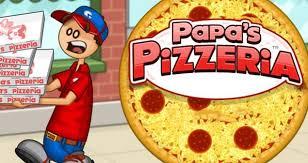
There’s something quietly compelling about Papa’s Pizzeria. At first glance, it’s just a casual browser game: take orders, roll dough, add toppings, bake, and serve. But spend a few minutes, and you notice the rhythm it builds—the subtle push and pull between urgency and precision that keeps you coming back. It’s simple, yet deeply engaging in ways that aren’t immediately obvious.
Finding Focus in Small Tasks
One of the reasons games like Papa’s Pizzeria resonate is their ability to focus attention without overwhelming. Each order is a small, contained challenge. A thin-crust pizza with pepperoni, a thick-crust veggie pie, or a complicated combo with extra cheese—each requires a slightly different process.
The game teaches players to prioritize, plan, and switch tasks efficiently. It’s not about complex mechanics; it’s about noticing patterns, predicting needs, and keeping the workflow smooth. That combination of simplicity and subtle complexity creates a surprisingly satisfying sense of control.
The Joy and Stress of Time Pressure
Managing multiple orders brings its own tension. The oven timer ticks down, customers grow impatient, and you juggle ingredients with precision. There’s a mild stress that keeps you engaged, but it’s paired with immediate feedback: a perfectly baked pizza, a happy customer, a satisfying “cha-ching” as the cash register rings.
This micro-feedback loop—stress followed by small wins—is a hallmark of addictive gameplay. The game rewards both attention and skill, making players feel competent and accomplished even after short sessions. And the best part? That tension never feels punitive; it’s energizing rather than discouraging.
Nostalgia Woven into Gameplay
For many, Papa’s Pizzeria taps into nostalgia. It harks back to the era of Flash and browser games—quick, casual experiences that were easy to jump in and out of. There’s a comforting simplicity in dragging toppings, sliding pizzas into boxes, and seeing customer satisfaction bars fill.
Playing the game today, that nostalgia mixes with the present challenge. It’s comforting yet engaging—a rare combination that makes it feel familiar without being boring. It reminds players why they loved simple, focused games in the first place.
How Tiny Systems Create Big Engagement
The game’s addictive quality comes from small, interconnected systems. Customer impatience, oven timers, and topping indicators guide your attention and create habits. Over time, you develop routines: preparing ingredients in advance, baking multiple pizzas at once, or sequencing orders for maximum efficiency.
These habits feel natural because they’re reinforced through gameplay rather than imposed. Players internalize strategies, notice patterns, and improve almost without thinking. It’s subtle design, but incredibly effective. A few small mechanics shape how players think, act, and stay engaged.
The Quiet Satisfaction of Mastery
Mastery in Papa’s Pizzeria isn’t about beating a level or unlocking achievements. It’s about timing, precision, and flow. Completing orders flawlessly, juggling multiple customers, and maintaining consistent quality produces a quiet sense of accomplishment.
The game encourages self-improvement. Each session builds on the last: learning which toppings take longer, which customers are impatient, and how to optimize task order. That steady progression feels satisfying, even if it’s never explicitly celebrated in-game.
Why We Return Again and Again
At its heart, Papa’s Pizzeria succeeds because it’s simple, consistent, and satisfying. Players return for the rhythm, the challenge of managing multiple orders, and the subtle rewards of doing things well. The game loops are short, but meaningful, and even small victories feel significant.
In a world of sprawling, complex games, there’s a rare charm in something small, focused, and well-tuned. A few minutes spent rolling dough, layering toppings, and monitoring timers can feel more engaging than hours in some modern titles. It’s a reminder that compelling games don’t need to be flashy—they just need to capture attention and deliver satisfaction.

 Arabic
 French
 Spanish
 Portuguese
 Deutsch
 Turkish
 Dutch
Dutch
 Italiano
 Russian
 Romaian
 Portuguese (Brazil)
 Greek
Greek