


History and Development of IQ Tests
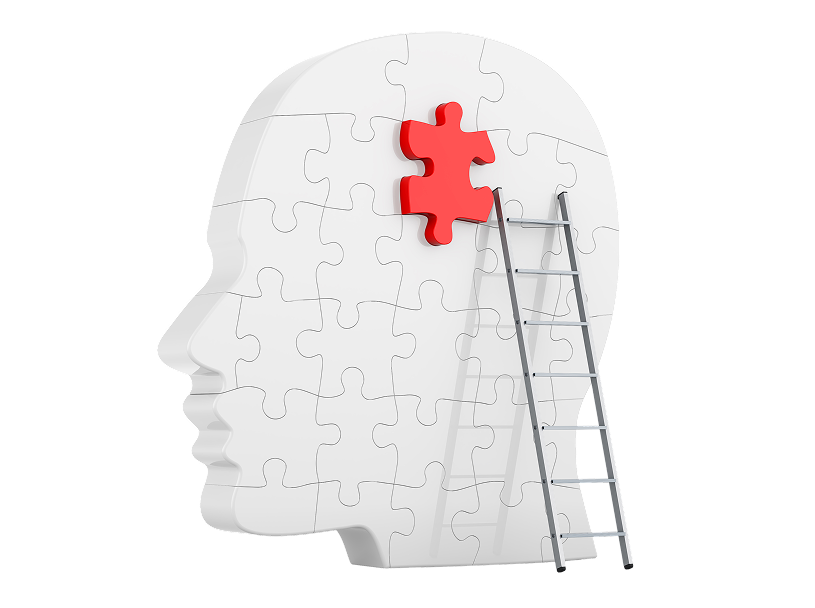
Intelligence has always fascinated humans. From ancient philosophers to modern psychologists, people have tried to understand what makes individuals think, learn, and solve problems differently. One of the most widely known methods of measuring intelligence is through IQ tests. Before exploring their history, it is important to answer a basic question: what does IQ stand for? IQ stands for Intelligence Quotient, a term used to describe a score derived from standardized tests designed to measure human intelligence.
The development of IQ tests has a long and complex history, shaped by scientific progress, educational needs, and sometimes controversial social ideas. Understanding this evolution helps us appreciate both the value and limitations of these tests today.
Early Ideas About Intelligence
Long before formal IQ testing, thinkers in ancient civilizations tried to define intelligence. Philosophers like Plato and Aristotle believed intelligence was linked to reasoning ability and knowledge. However, these ideas were mostly theoretical and lacked systematic measurement.
In the 19th century, interest in measuring human abilities grew alongside advances in science. Researchers began to explore whether intelligence could be quantified. Early attempts focused on physical traits such as head size and reaction time, but these methods failed to accurately reflect intellectual ability.
The Birth of Modern IQ Testing
The modern concept of IQ testing began in the early 20th century with the work of French psychologist Alfred Binet. The French government asked Binet to develop a method to identify students who needed extra academic support.
Binet, along with his colleague Theodore Simon, created the first practical intelligence test in 1905. This test assessed skills such as memory, attention, and problem solving. Instead of focusing on physical characteristics, Binet emphasized cognitive abilities.
One of Binet’s key contributions was the idea of mental age. He suggested that a child’s performance could be compared to the average performance of children at different ages. This concept became the foundation for later IQ calculations.
The Introduction of the Intelligence Quotient
The term Intelligence Quotient was later introduced by German psychologist William Stern. He proposed calculating IQ by dividing mental age by chronological age and multiplying the result by 100.
For example, if a child had a mental age of 10 and a chronological age of 10, their IQ would be 100, which represented average intelligence. This formula made it easier to compare individuals and standardize scores.
At this stage, the idea behind what does iq stand for became widely recognized, and IQ testing started gaining popularity in educational and psychological settings.
Expansion in the United States
IQ testing gained significant attention in the United States during World War I. Psychologists developed group intelligence tests to assess large numbers of military recruits quickly. These tests helped determine roles and responsibilities within the army.
After the war, IQ tests became widely used in schools, workplaces, and research. One of the most influential developments was the Stanford Binet Intelligence Scale, an adaptation of Binet’s original test by American psychologist Lewis Terman.
The Stanford Binet test standardized IQ scoring and became a widely accepted tool for measuring intelligence. It also contributed to the widespread understanding of what does IQ stand for and how IQ scores are interpreted.
Development of Modern IQ Tests
Over time, psychologists recognized that intelligence is complex and cannot be fully captured by a single number. This led to the development of more sophisticated tests.
One major advancement was the creation of the Wechsler Adult Intelligence Scale by psychologist David Wechsler. Unlike earlier tests, it measured different aspects of intelligence, including verbal comprehension, working memory, and processing speed.
Wechsler also introduced the concept of deviation IQ. Instead of comparing mental age to chronological age, scores were based on how an individual performed relative to others in the same age group. This method is still used in modern IQ testing.
Standardization and Reliability
As IQ tests evolved, researchers focused on improving their accuracy and fairness. Standardization became an essential part of test development.
Standardization involves administering the test to a large, diverse group of people to establish average scores. This ensures that results are consistent and meaningful.
Reliability and validity are also important. A reliable test produces consistent results over time, while a valid test accurately measures what it is intended to measure. Modern IQ tests undergo rigorous evaluation to meet these standards.
Controversies and Criticism
Despite their widespread use, IQ tests have been the subject of criticism and controversy.
One major concern is cultural bias. Early IQ tests were often designed based on specific cultural and educational backgrounds, which could disadvantage individuals from different environments.
Another issue is the misuse of IQ scores. In the past, IQ tests were sometimes used to justify discriminatory practices, including eugenics and unequal access to education.
Critics also argue that intelligence is too complex to be reduced to a single number. Skills such as creativity, emotional intelligence, and practical problem solving are not always captured by traditional IQ tests.
Modern Perspectives on Intelligence
Today, psychologists view intelligence as a multifaceted concept. While IQ tests remain useful, they are no longer seen as the sole measure of a person’s abilities.
Theories such as Howard Gardner’s multiple intelligences suggest that people have different types of intelligence, including linguistic, logical, musical, and interpersonal abilities.
Emotional intelligence, which involves understanding and managing emotions, has also gained recognition as an important aspect of human capability.
Even with these broader perspectives, the question what does IQ stand for continues to be relevant, as IQ tests still play a significant role in education and psychology.
Current Uses of IQ Tests
In modern times, IQ tests are used in various fields, including:
-
Education, to identify learning disabilities and giftedness
-
Psychology, for cognitive assessment and diagnosis
-
Research, to study human intelligence and behavior
These tests are often combined with other assessments to provide a more comprehensive understanding of an individual’s abilities.
The Future of IQ Testing
The future of IQ testing is likely to involve more holistic approaches. Advances in technology and neuroscience are providing new insights into how the brain works.
Computer based testing allows for more adaptive assessments, where questions adjust to the test taker’s ability level. This can provide more accurate and personalized results.
Researchers are also exploring ways to include a wider range of cognitive and emotional skills in assessments. This may lead to more comprehensive measures of intelligence in the future.
Conclusion
The history and development of IQ tests reflect both scientific progress and changing views about human intelligence. From early philosophical ideas to modern standardized assessments, IQ testing has evolved significantly over time.
Understanding what does IQ stand for is just the beginning. IQ tests have played an important role in education, psychology, and research, but they are not without limitations.
As our understanding of intelligence continues to grow, IQ tests will likely adapt and improve. While they remain a valuable tool, it is important to remember that intelligence is complex, diverse, and cannot be fully defined by a single score.
In the end, IQ tests are best seen as one piece of a larger puzzle that helps us understand the human mind.

 English
 Arabic
 French
 Spanish
 Portuguese
 Turkish
 Dutch
Dutch
 Italiano
 Russian
 Romaian
 Portuguese (Brazil)
 Greek
Greek