


How Are Hyaluronic Acid Injections Processed by the Body?
How Are Hyaluronic Acid Injections Processed by the Body? is a commonly searched topic among individuals exploring aesthetic treatments and understanding how dermal fillers integrate naturally within human tissue. Hyaluronic Acid Injections in Dubai are widely chosen for skin rejuvenation and facial contouring due to their compatibility with the body’s natural structure, with clinics such as Dynamic life Clinic offering insights into how these treatments align with modern aesthetic goals.
Hyaluronic acid is not a foreign substance to the human body; it is already present in the skin, joints, and connective tissues. Its primary role is to retain moisture and support elasticity, making it a key component in maintaining youthful skin texture. When introduced through injections, it works in harmony with the body’s existing hyaluronic acid rather than disrupting biological balance.
Understanding Hyaluronic Acid in Human Biology
Hyaluronic acid is a naturally occurring glycosaminoglycan, a type of molecule responsible for binding water and maintaining hydration in tissues. In youthful skin, it is abundant, which contributes to volume, smoothness, and elasticity.
As the body ages, natural production decreases gradually, leading to visible changes such as:
- Reduced skin plumpness
- Formation of fine lines and wrinkles
- Loss of facial volume in key areas
- Decreased skin hydration levels
Injected hyaluronic acid temporarily restores these properties by attracting and holding water molecules within the treated areas, creating a volumizing and hydrating effect that mimics natural skin structure.
What Happens After Hyaluronic Acid Injection
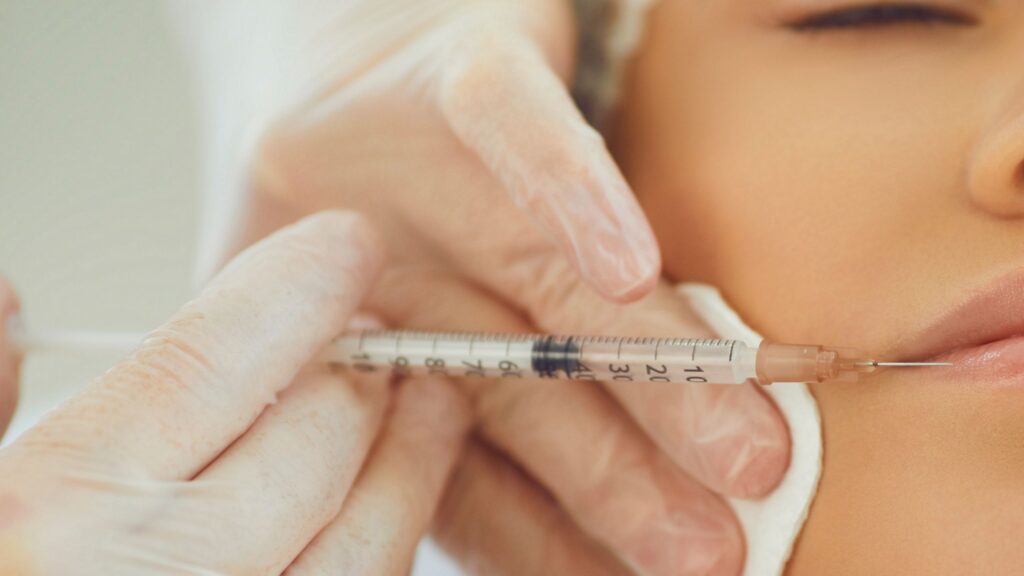
Once hyaluronic acid is injected into the skin, the body begins a gradual and highly regulated interaction with the substance. The gel integrates into the extracellular matrix, where it binds water and supports surrounding tissue.
The immediate process includes:
- Placement within dermal or subdermal layers depending on treatment goals
- Binding with water molecules to create volume
- Integration with surrounding collagen and elastin fibers
- Stabilization within tissue through cross-linked molecular structure
This integration is not abrupt but occurs progressively, allowing the treated area to settle naturally over a few days as hydration levels stabilize.
How the Body Breaks Down Hyaluronic Acid
The body processes injected hyaluronic acid through a natural enzymatic breakdown system. The primary enzyme responsible is hyaluronidase, which gradually degrades hyaluronic acid into smaller molecular fragments.
The breakdown process follows a predictable biological pathway:
- Enzymes begin fragmenting hyaluronic acid chains over time
- Smaller molecules are absorbed into the body’s metabolic pathways
- Water-binding capacity gradually decreases as structure weakens
- The treated area slowly returns to its original state
This process is continuous and varies depending on individual metabolism, lifestyle, and the treated area. Areas with more movement, such as lips, typically metabolize hyaluronic acid faster compared to less active regions like the cheeks.
Factors That Influence How Long It Lasts in the Body
The longevity and processing speed of hyaluronic acid injections are influenced by several internal and external factors. While the substance is biodegradable, its duration in the body is not fixed.
Key influencing factors include:
- Metabolic rate: Faster metabolism can accelerate breakdown
- Injection area: High-movement areas break down fillers more quickly
- Product formulation: Cross-linked gels last longer due to structural stability
- Lifestyle habits: Physical activity levels and hydration can influence duration
- Individual enzyme activity: Natural variations in hyaluronidase levels affect absorption speed
These factors collectively determine how efficiently the body processes and eliminates hyaluronic acid over time.
Biological Compatibility and Safety Mechanism
One of the primary reasons hyaluronic acid is widely used in aesthetic medicine is its high biocompatibility. Since it naturally exists in the human body, the immune system does not recognize it as a harmful substance.
The body’s response includes:
- No immune rejection or allergic reaction in most cases
- Gradual enzymatic breakdown rather than sudden elimination
- Natural integration with tissue hydration systems
- Predictable metabolic processing without toxic byproducts
This compatibility makes hyaluronic acid one of the most studied and widely accepted dermal filler materials in aesthetic treatments.
What Patients Typically Experience During the Process
After injection, the body begins its adaptation phase where hyaluronic acid settles into the tissue. During this time, minor and temporary changes may be observed as part of the natural adjustment process.
Common experiences include:
- Mild swelling as the gel attracts water
- Slight firmness in the treated area initially
- Gradual softening as the product integrates
- Progressive improvement in texture and volume balance
These responses are part of the normal biological adjustment and reflect how the body interacts with a hydrating substance introduced beneath the skin surface.
Misconceptions About Hyaluronic Acid Processing
There are several misunderstandings about how the body handles hyaluronic acid injections, particularly regarding permanence and safety.
Common misconceptions include:
- “It stays permanently in the body”
In reality, it is fully biodegradable and gradually broken down over time. - “The body treats it as a foreign object”
Since hyaluronic acid is naturally occurring, it is processed without immune rejection. - “It immediately dissolves after injection”
The breakdown process is slow and enzymatically controlled, not instant. - “It blocks natural skin functions”
Instead, it works alongside natural hydration mechanisms before being metabolized.
Understanding these points helps create realistic expectations of how the body processes injectable treatments.
The Role of Hydration and Skin Health in Processing
Hydration levels and overall skin health play an indirect role in how hyaluronic acid behaves within the body. Well-hydrated skin supports better integration of the injected material, allowing it to bind more efficiently with surrounding tissues.
Healthy lifestyle factors that support optimal outcomes include:
- Maintaining consistent water intake
- Following a balanced nutrition plan
- Avoiding excessive sun exposure
- Supporting skin health with proper skincare routines
These elements do not alter the breakdown mechanism itself but can influence how well the skin responds during the treatment duration.
Conclusion
The way the body processes hyaluronic acid injections is a controlled and natural biological function involving integration, hydration binding, and gradual enzymatic breakdown. Since hyaluronic acid is already a native component of human tissue, the body handles it efficiently without stress or rejection. Its temporary nature and predictable metabolism make it a widely preferred option in aesthetic treatments, especially for individuals seeking non-permanent enhancements with natural results.

 Arabic
 French
 Spanish
 Portuguese
 Deutsch
 Turkish
 Dutch
Dutch
 Italiano
 Russian
 Romaian
 Portuguese (Brazil)
 Greek
Greek