



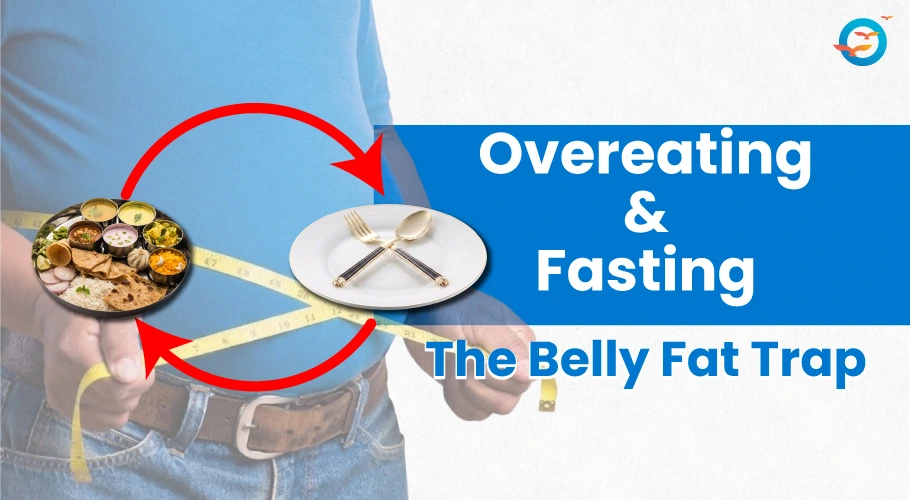
Overeating & Fasting: The Belly Fat Trap
Many people follow a familiar pattern overeating one day and then using fasting to “correct” it the next. This cycle of overeating and fasting feels logical, especially with the popularity of intermittent fasting for weight loss. But in reality, this approach often backfires.
Instead of improving health, it can increase belly fat, slow metabolism, and disrupt how the body uses energy. The problem is not just overeating or fasting it is the way they are combined without structure.
What Happens When You Overeat?
When you overeat, especially foods high in sugar and refined carbohydrates, your insulin levels rise sharply. This pushes excess energy into fat storage.
The body prioritizes storing this energy in the abdominal area, leading to gradual fat accumulation. Over time, repeated overeating becomes one of the main psychological reasons for overeating and drives long-term metabolic imbalance.
Why Fasting Alone Doesn’t Fix Overeating?
There is a common belief that fasting can cancel out overeating. However, this is not how the body works.
The combination of intermittent fasting and binge eating creates instability. After overeating, fasting does not simply “burn off” excess calories. Instead, the body shifts into a conservation mode, protecting fat stores.
This is why fasting for weight loss without correcting eating patterns often fails to deliver sustainable results.
The Real Problem: Feeding Fat and Starving Muscle
The biggest issue with the overeating and fasting cycle is how it affects body composition.
During overeating, excess calories are stored as fat
During fasting (without exercise), the body breaks down muscle for energy
This creates a harmful pattern: you are feeding fat while starving muscle.
Over time, this leads to reduced muscle mass, slower metabolism, and increased belly fat even if body weight does not change significantly.
Browse full blog-
https://www.freedomfromdiabetes.org/blog/post/overeating-and-fasting-belly-fat-trap/5210
Contact us :-
Mob : +91-7776077760
Email-Id : info@freedomfromdiabetes.org
Also connect with us on our website , Facebook page, and youtube
Many people follow a familiar pattern overeating one day and then using fasting to “correct” it the next. This cycle of overeating and fasting feels logical, especially with the popularity of intermittent fasting for weight loss. But in reality, this approach often backfires.
Instead of improving health, it can increase belly fat, slow metabolism, and disrupt how the body uses energy. The problem is not just overeating or fasting it is the way they are combined without structure.
What Happens When You Overeat?
When you overeat, especially foods high in sugar and refined carbohydrates, your insulin levels rise sharply. This pushes excess energy into fat storage.
The body prioritizes storing this energy in the abdominal area, leading to gradual fat accumulation. Over time, repeated overeating becomes one of the main psychological reasons for overeating and drives long-term metabolic imbalance.
Why Fasting Alone Doesn’t Fix Overeating?
There is a common belief that fasting can cancel out overeating. However, this is not how the body works.
The combination of intermittent fasting and binge eating creates instability. After overeating, fasting does not simply “burn off” excess calories. Instead, the body shifts into a conservation mode, protecting fat stores.
This is why fasting for weight loss without correcting eating patterns often fails to deliver sustainable results.
The Real Problem: Feeding Fat and Starving Muscle
The biggest issue with the overeating and fasting cycle is how it affects body composition.
During overeating, excess calories are stored as fat
During fasting (without exercise), the body breaks down muscle for energy
This creates a harmful pattern: you are feeding fat while starving muscle.
Over time, this leads to reduced muscle mass, slower metabolism, and increased belly fat even if body weight does not change significantly.
Browse full blog-
https://www.freedomfromdiabetes.org/blog/post/overeating-and-fasting-belly-fat-trap/5210
Contact us :-
Mob : +91-7776077760
Email-Id : info@freedomfromdiabetes.org
Also connect with us on our website , Facebook page, and youtube
Overeating & Fasting: The Belly Fat Trap
Many people follow a familiar pattern overeating one day and then using fasting to “correct” it the next. This cycle of overeating and fasting feels logical, especially with the popularity of intermittent fasting for weight loss. But in reality, this approach often backfires.
Instead of improving health, it can increase belly fat, slow metabolism, and disrupt how the body uses energy. The problem is not just overeating or fasting it is the way they are combined without structure.
What Happens When You Overeat?
When you overeat, especially foods high in sugar and refined carbohydrates, your insulin levels rise sharply. This pushes excess energy into fat storage.
The body prioritizes storing this energy in the abdominal area, leading to gradual fat accumulation. Over time, repeated overeating becomes one of the main psychological reasons for overeating and drives long-term metabolic imbalance.
Why Fasting Alone Doesn’t Fix Overeating?
There is a common belief that fasting can cancel out overeating. However, this is not how the body works.
The combination of intermittent fasting and binge eating creates instability. After overeating, fasting does not simply “burn off” excess calories. Instead, the body shifts into a conservation mode, protecting fat stores.
This is why fasting for weight loss without correcting eating patterns often fails to deliver sustainable results.
The Real Problem: Feeding Fat and Starving Muscle
The biggest issue with the overeating and fasting cycle is how it affects body composition.
During overeating, excess calories are stored as fat
During fasting (without exercise), the body breaks down muscle for energy
This creates a harmful pattern: you are feeding fat while starving muscle.
Over time, this leads to reduced muscle mass, slower metabolism, and increased belly fat even if body weight does not change significantly.
Browse full blog-
https://www.freedomfromdiabetes.org/blog/post/overeating-and-fasting-belly-fat-trap/5210
Contact us :-
Mob : +91-7776077760
Email-Id : info@freedomfromdiabetes.org
Also connect with us on our website , Facebook page, and youtube
0 Reacties
0 aandelen
19 Views
0 voorbeeld


 English
 Arabic
 French
 Spanish
 Portuguese
 Deutsch
 Turkish
 Italiano
 Russian
 Romaian
 Portuguese (Brazil)
 Greek
Greek