


HMRC Tax Investigation Triggers | What Puts You at Risk
The Ultimate Guide to HMRC Tax Investigation Triggers UK: Protect Your Financial Standing
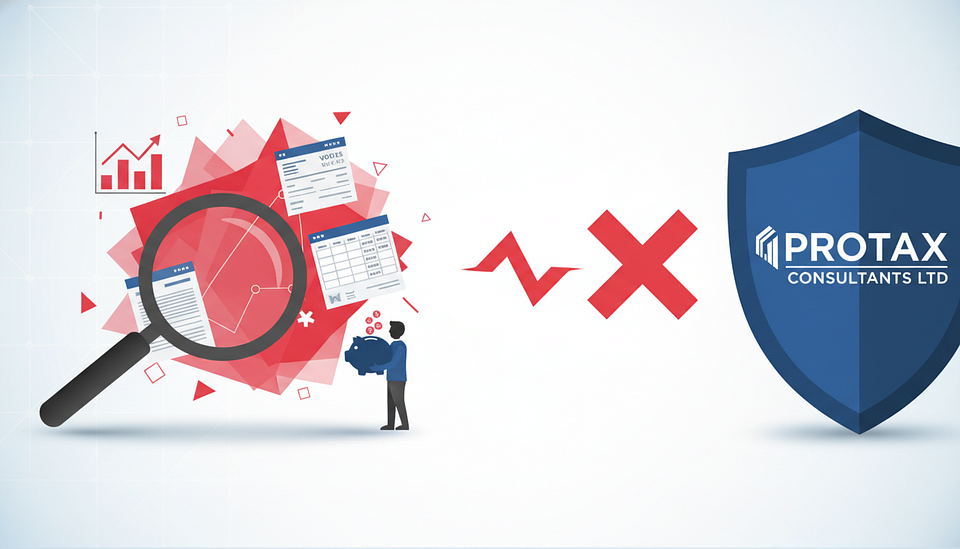
For UK business owners and individual taxpayers, understanding HMRC tax investigation triggers UK is not merely a matter of compliance — it is a critical strategy for financial preservation. Her Majesty’s Revenue and Customs (HMRC) has become increasingly sophisticated in its ability to identify discrepancies through the use of advanced data-matching technology. This guide explores the primary red flags that prompt an inquiry and how you can mitigate your risk.
The Power of the HMRC Connect System
At the heart of modern tax enforcement lies the ‘Connect’ system. This powerful database cross-references billions of data points from banks, building societies, the Land Registry, and even social media. If your lifestyle or asset purchases do not align with your declared income, the system automatically flags your profile for a manual review. This digital scrutiny is one of the most frequent HMRC tax investigation triggers UK in the current landscape.
Common Discrepancies and Inconsistencies
HMRC looks for patterns. A sudden drop in profit margins while turnover remains high, or vice versa, can signal internal issues or suppressed income. Similarly, if your tax returns consistently differ from others in your specific industry, you may be selected for a bench-marking audit. Inconsistencies between your VAT returns and your end-of-year accounts are also major red flags that investigators look for during their preliminary screenings.
High-Risk Industries and Cash-Handling Businesses
Certain sectors are under constant surveillance due to the ease with which income can be under-reported. Businesses that handle large volumes of cash — such as restaurants, bars, and retail outlets — are often subjected to ‘aspect inquiries.’ HMRC pays close attention to these sectors to ensure that every transaction is recorded accurately and that the business is not operating in the ‘shadow economy.’
Late Filings and Chronic Non-Compliance
Filing your self-assessment or corporation tax returns late is an invitation for scrutiny. A history of late submissions suggests a lack of professional record-keeping or, worse, a deliberate attempt to delay the disclosure of financial data. Compliance is your best defense; ensuring that all documents are submitted well ahead of deadlines reduces the likelihood of being placed on HMRC’s high-risk register.
The Role of Tip-offs and Offshore Assets
HMRC receives thousands of reports from ‘informants’ — disgruntled employees, ex-partners, or competitors. While not every tip-off results in a full-scale audit, they are often used as the catalyst for an initial check. Furthermore, with the Global Common Reporting Standard, HMRC now receives automated data regarding offshore bank accounts and international assets. Failing to declare these through the appropriate channels is a guaranteed trigger for a comprehensive investigation.
Conclusion: Proactive Tax Management
Staying ahead of an investigation involves meticulous record-keeping and professional oversight. By understanding the common HMRC tax investigation triggers UK, you can ensure your filings are robust and defensible. If you are concerned about your current status or have received a compliance letter, professional intervention is essential.
CONTACT BUSINESS
Business Name: Protax Consultants Ltd
Website: Protax Consultants Ltd
Phone: +44 20 8545 7451
Address: Lombard Business Park, 8 Lombard Rd, London SW19 3TZ, United Kingdom
GMB Profile: View our Google Profile
Map Location: Find us on the Map
Knowledge Graph: Protax Consultants Ltd Official Search

 Arabic
 French
 Spanish
 Portuguese
 Deutsch
 Turkish
 Dutch
Dutch
 Italiano
 Russian
 Romaian
 Portuguese (Brazil)
 Greek
Greek