


Top AI Voice Bot Solutions Trends Transforming the Customer Experience Landscape
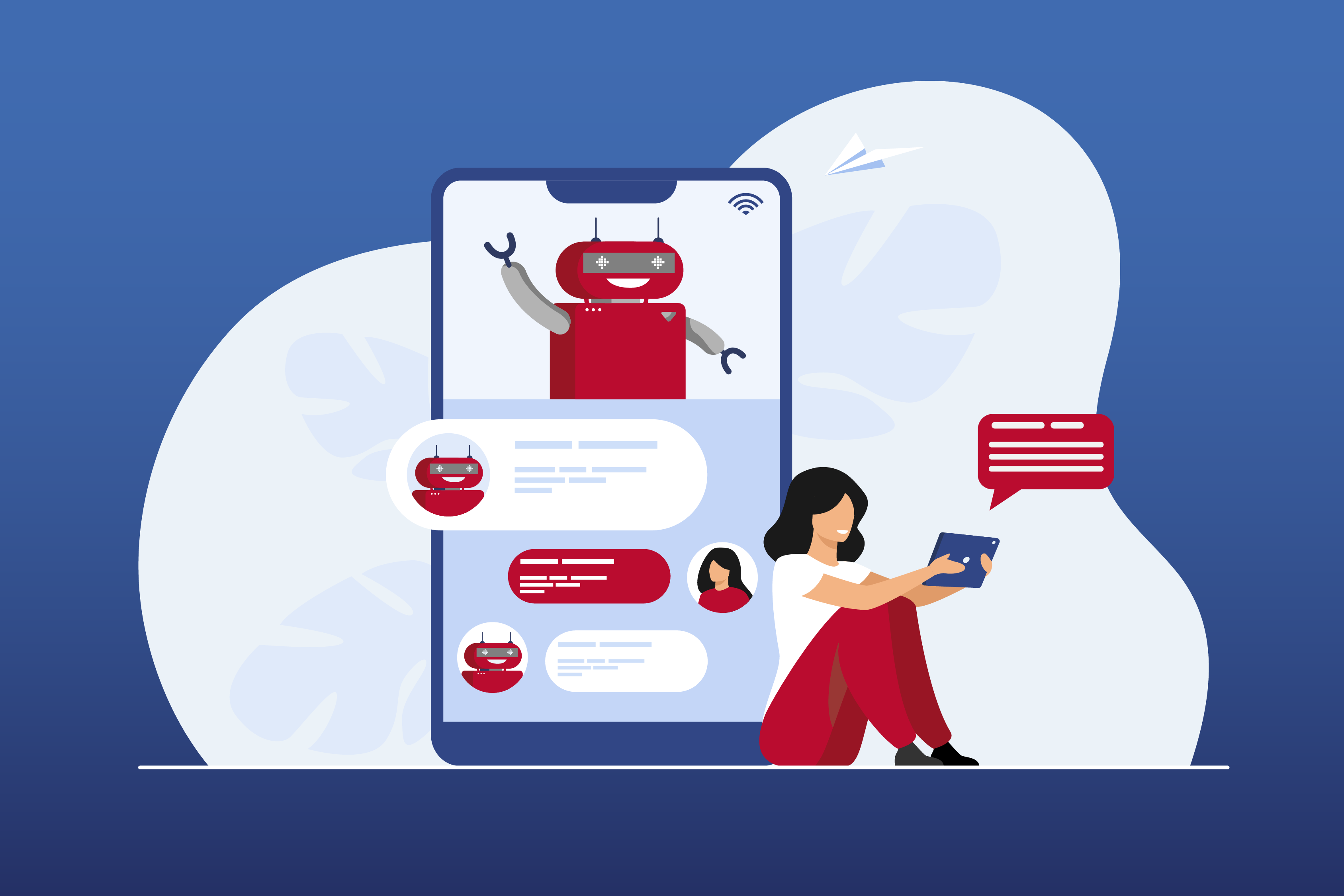
Customer experience is increasingly becoming the key differentiator for brands, especially in industries where products and pricing are highly competitive. Organizations across banking, insurance, retail, healthcare, travel, and telecom sectors are now turning toward AI-driven automation to improve customer engagement, streamline support operations, and deliver always-on service. Among all customer service automation innovations, AI voice bot solutions are emerging as one of the most influential technologies shaping the future of interaction between businesses and consumers.
AI voice bots today are no longer limited to rigid, scripted responses. Modern voice bot architectures integrate deep neural networks, natural language processing, real-time speech synthesis, sentiment detection, and contextual memory. The result is an experience where interacting with a voice bot feels more human, more personalized, and more efficient. As consumers seek convenience and faster solutions, enterprises are adopting AI voice bots to enhance responsiveness, reduce operational costs, and deliver instant multilingual support at scale.
This blog explores the top trends shaping the evolution of AI voice bot solutions and how they are transforming the customer experience landscape across industries.
1. Shift from Scripted IVRs to Conversational Voice AI
Traditional call centers relied heavily on Interactive Voice Response (IVR) menus that forced customers to navigate predefined options. These experiences often resulted in frustration, long wait times, and high call abandonment rates. With conversational AI voice bots, enterprises are transitioning from rigid menus to natural, free-flowing conversations.
Modern AI Voice Bot Solutions understand open-ended customer queries, extract intent, and deliver meaningful responses without requiring the caller to follow structured menu paths. They can interpret slang, colloquial language, and incomplete sentences, making interactions feel natural and intuitive. This shift is reducing friction, enabling faster resolution, and improving first-contact resolution rates.
For businesses, the transition away from legacy IVRs is not just a technological upgrade but a customer experience transformation. It allows organizations to provide service that is personalized, real-time, and uninterrupted, without the limitations of scripted workflows.
2. Real-Time Speech Recognition and Processing at Scale
One of the foundational advancements enabling next-generation AI voice bots is real-time speech recognition. These systems are now capable of processing voice input and generating responses almost instantly, reducing delays that previously made automated systems feel unnatural.
The ability to understand human speech in noisy environments, differentiate between accents, and identify context improves accuracy and clarity. Many enterprises now deploy AI voice bots that auto-adapt to different speaking patterns based on demographics, location, or prior interaction history.
Additionally, real-time speech processing allows voice bots to support complex customer service tasks such as:
-
Booking or modifying appointments
-
Processing support ticket requests
-
Resetting passwords
-
Providing billing and payment support
-
Handling emergency service escalation
This capability is making voice AI a preferred channel for high-volume customer service operations, where time and accuracy significantly impact satisfaction scores.
3. Integration with Enterprise Systems for End-to-End Task Automation
Early customer service bots often required human agent intervention to complete tasks. However, the latest trend in AI voice bot adoption is the integration with enterprise systems such as CRM, ERP, billing, HRMS, logistics, and healthcare EMR platforms.
This integration allows voice bots to directly access customer records, transaction histories, product information, authentication databases, and service workflows. As a result, voice bots can complete full end-to-end tasks without needing to transfer the call to a human agent.
Examples include:
-
A telecom voice bot activating a new plan instantly
-
A banking bot retrieving the last 10 transactions securely
-
A retail bot tracking an order and initiating returns
-
A healthcare bot verifying patient identity and scheduling consultations
This level of system connectivity allows brands to deliver seamless service while reducing workload on human support teams.
4. Multilingual and Regional Language Support for Global Scalability
One of the most significant growth drivers for AI voice bots is their ability to communicate in multiple languages and dialects. With businesses expanding globally and customer demographics becoming more diverse, multilingual voice AI capabilities are essential for personalized service experiences.
Modern AI voice bots can be trained to understand and respond in dozens of languages, while adjusting for accents, tone, and cultural nuances. This is especially impactful in regions with high linguistic diversity such as India, Southeast Asia, the Middle East, and parts of Africa.
By enabling customers to interact in their preferred language, enterprises improve trust, reduce communication barriers, and increase engagement levels. This is leading to higher customer satisfaction and stronger brand loyalty in both urban and rural markets.
5. Emotional Intelligence and Sentiment-Aware Customer Interactions
The next evolution of AI voice bots is the ability to interpret and respond to emotions. Sentiment analysis algorithms can detect frustration, confusion, urgency, or satisfaction based on vocal patterns, pitch, speaking pace, and word choice.
For instance:
-
If a user sounds frustrated, the bot can switch to a more empathetic tone.
-
If confusion is detected, the bot can simplify the conversation.
-
If urgency is identified, the bot can escalate the call to a human agent immediately.
Sentiment-aware bots create a sense of emotional understanding that helps reduce customer churn. This trend reflects a broader shift in customer experience strategy, where empathy and relationship-building are prioritized alongside efficiency.
6. Voice Biometrics for Secure and Frictionless Authentication
Security and authentication are critical challenges in high-trust industries like banking, insurance, and healthcare. Traditional authentication methods such as OTPs, security questions, or passwords often slow down the support process and introduce friction.
Voice biometrics is emerging as a key solution. It allows AI voice bots to authenticate users based on unique vocal patterns that are nearly impossible to replicate. This creates a smooth and secure verification process while reducing the risk of fraud.
Benefits of voice biometric integration include:
-
Faster authentication without manual input
-
Higher protection against identity theft
-
Reduced customer effort during verification
-
Compliance with data protection standards
This trend is quickly increasing adoption of voice bots for critical functions such as account access, financial transactions, and medical record requests.
7. Hybrid Workforce Models That Blend AI Bots with Human Agents
Contrary to the misconception that automation replaces human jobs, the future of customer service is shaping into a hybrid workforce. AI voice bots handle routine and repetitive tasks, while human agents manage complex interactions requiring reasoning, empathy, negotiation, or creativity.
This division of labor enables:
-
Higher agent productivity
-
Lower operational costs
-
Faster query resolution
-
Reduced call wait times
Human agents are increasingly supported by real-time AI suggestions, summarized conversation histories, and next best action prompts. This collaboration improves both efficiency and service quality, creating a balanced model where AI amplifies human capability rather than replacing it.
8. Personalized Customer Experiences Driven by AI Memory and Context
Another major trend reshaping voice bot interactions is the ability to remember context from previous conversations. Contextual memory allows the bot to acknowledge past pain points, purchase history, preferences, and ongoing service issues.
For example:
-
If a customer recently reported delivery damage, the bot can automatically check claim progress.
-
If the customer prefers concise responses, the bot adapts communication style accordingly.
-
If the customer frequently orders a product, the bot can proactively recommend reorder timing.
Personalization transforms customer experiences from transactional to relationship-oriented. It deepens trust, accelerates resolution, and enhances brand perception.
9. Industry-Specific Voice Bot Solutions
As voice AI adoption expands, industry-specific voice bot models are becoming increasingly common. These pre-trained solutions are tailored to the vocabulary, compliance needs, workflows, and customer interaction patterns of specific sectors.
Examples include:
| Industry | Voice Bot Applications |
|---|---|
| Banking & Insurance | Loan inquiries, claim filing, fraud alerts |
| Healthcare | Appointment booking, patient verification, prescription reminders |
| Retail & E-commerce | Order updates, returns, product recommendations |
| Telecom | Plan activations, outage reporting, account upgrades |
| Travel & Hospitality | Ticket booking, itinerary changes, real-time flight updates |
Such specialization reduces deployment time and increases efficiency since the bot already understands industry terminology and support scenarios.
10. The Rise of Voice AI in Omni-Channel Customer Experience
Customer engagement is no longer limited to phone support. Customers interact through mobile apps, chat platforms, social media, virtual assistants, and kiosks. AI voice bots are now being integrated into these omni-channel ecosystems, allowing users to seamlessly switch channels without repeating information.
For example:
-
A conversation started on a smart speaker can continue in a mobile app.
-
A support ticket raised via voice bot can be tracked through web chat.
-
A payment dispute explained via phone bot can auto-populate documentation for email follow-up.
This consistent communication flow enhances convenience and reduces redundancy, improving overall customer satisfaction.
Conclusion
AI voice bot solutions have evolved from experimental technologies to core components of modern customer experience strategies. As speech recognition, natural language understanding, contextual memory, and system integration capabilities continue to advance, AI voice bots will become increasingly capable of delivering service experiences that are efficient, empathetic, personalized, multilingual, and secure.
The organizations that successfully adopt these trends will be able to:
-
Deliver 24/7 customer support across global markets
-
Reduce operational costs and call volumes
-
Improve first-contact resolution and satisfaction ratings
-
Strengthen brand loyalty through more humanized interactions
As the customer experience landscape undergoes its next phase of transformation, AI voice bots will play a crucial role in enabling businesses to scale service quality without compromising personalization or connection.
The future of customer interaction is conversational, intelligent, and voice-driven. Enterprises investing in AI voice bot solutions today are positioning themselves to lead in a market where customer experience defines competitive advantage.

 English
 Arabic
 French
 Portuguese
 Deutsch
 Turkish
 Dutch
Dutch
 Italiano
 Russian
 Romaian
 Portuguese (Brazil)
 Greek
Greek