


Building a Strong Earth Science Curriculum for Homeschool Learning
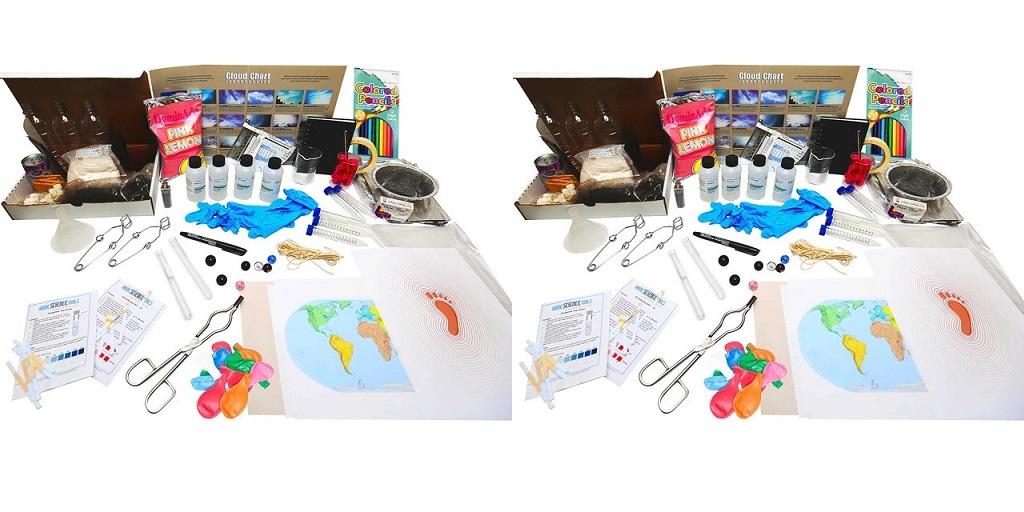
A quality Earth Science Curriculum helps students understand how the natural world works through direct experience and observation. In a homeschool setting, learning can extend beyond books into everyday environments. You can turn simple moments, like watching clouds or examining rocks, into lessons that connect theory with reality.
Earth science invites kids to exploration. It encourages curiosity about the ground beneath your feet and the sky overhead. With the right structure, lessons feel active and engaging rather than repetitive.
What Defines Earth Science in Homeschool Education
Earth science includes several connected fields that explain how the planet functions and how it interacts with space. These areas work well together, where subjects can blend naturally.
Geology focuses on rocks, minerals, and Earth’s structure. Meteorology examines weather patterns and atmospheric behavior. Oceanography explores oceans and water systems. Astronomy looks at stars, planets, and the wider universe.
Instead of separating these topics, you can present them as parts of a larger system. This helps students understand how land, water, air, and space influence each other.
Why Hands-On Learning Matters
Students retain information more effectively when they interact with materials. Touching, testing, and building create stronger connections than reading alone.
Simple activities can make abstract ideas easier to understand. Testing mineral hardness shows how classification works. Building a solar system model clarifies planetary relationships. Growing crystals demonstrates formation processes over time. Simulating a volcanic eruption illustrates pressure and release.
These experiences give students a clear sense of how scientific principles apply in real situations.
Supporting Homeschool Structure with Flexible Resources
Homeschool learning benefits from materials that adapt to different ages and skill levels. Flexible resources allow you to adjust lessons without losing consistency.
Earth and Space Kits for Applied Learning
Earth and space kits provide guided experiments that make scientific concepts tangible. They offer structure while still allowing independent exploration.
Common activities include building planetary models, classifying rocks, examining glowing minerals, and observing weather patterns through simple tools. These tasks support an Earth Science Curriculum while allowing students to learn at their own pace.
Project-Based Exploration
Projects encourage deeper thinking and creativity. They also help students connect multiple ideas within a single activity.
You might build a model that demonstrates convection currents or create a solar-powered water purification system. Making fossil casts can explain preservation, while studying cave formations introduces erosion and mineral deposits. Projects extend learning beyond individual lessons and give students a sense of accomplishment.
Encouraging Curiosity Through Real-World Connections
Earth science fits naturally into daily life. Many concepts can be observed without special equipment. Outdoor exploration offers valuable learning opportunities. You can track weather patterns in a journal, identify rocks during a walk, or observe the night sky. These activities help students see science as part of their surroundings. This connection strengthens understanding and keeps learning relevant.
Structuring an Effective Homeschool Science Plan
A clear structure supports steady progress while leaving room for flexibility. Consistency helps students build knowledge over time.
A balanced plan might include weekly experiments to reinforce concepts and monthly projects for deeper study. Seasonal topics can focus on weather and environmental changes. Regular reviews help connect different subjects and reinforce understanding. This structure keeps learning organized without limiting curiosity.
Integrating Earth and Space Science
Earth science and space science naturally connect. Studying one often leads to questions about the other.
You can explore how the Sun affects Earth’s climate or how planetary motion influences seasons. Comparing atmospheres across planets helps explain Earth’s conditions. Gravity also provides a useful link between planetary systems. An integrated strategy helps students develop a broader understanding of how Earth fits within the universe.
At Home Science Tools, resources are designed to support hands-on science learning in homeschool environments. Earth and space kits, experiments, and project guides help bring lessons to life while maintaining a clear educational structure.
For more information about Rock Tumbler and Science Projects For Kids Please visit: Home Science Tools.

 English
 Arabic
 Spanish
 Portuguese
 Deutsch
 Turkish
 Dutch
Dutch
 Italiano
 Russian
 Romaian
 Portuguese (Brazil)
 Greek
Greek