


Navigating Car Diminished Value: A Comprehensive Guide for Car Owners
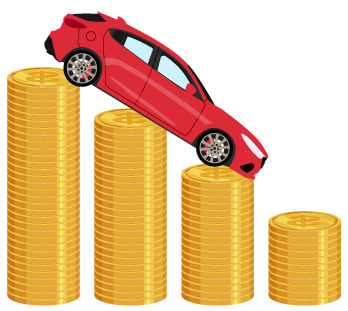
What Is Diminished Value?
Types of Diminished Value
There are three commonly recognized types of diminished value:
Immediate Diminished Value
This refers to the loss in value immediately after the accident but before repairs are made. While real, it’s rarely used in insurance claims.
Inherent Diminished Value
This is the most common and widely accepted form. It represents the loss in value that remains after a vehicle is properly repaired. Despite ideal repairs, the accident's history still impacts how the market perceives it.
Repair-Related Diminished Value
This takes place when repairs are not fully completed or are of inferior quality, causing further loss in value. Examples of this situation are paint that is mismatched, aftermarket components, or structural problems.
Why Diminished Value Matters
Many car owners fail to recognize their potential to recover diminished value following a third-party claim due to damage from another party's negligence. In the context of an insurance claim, the only thing the insurance carrier typically looks at are the costs incurred in repairing the car. The diminished value of your vehicle is real money lost, and the diminished value will directly impact your future negotiation of selling or trading in your vehicle.
Vehicles that are newer, luxury models, and have low mileage without any accident records usually exhibit the most significant diminished value. As cars age and their value diminishes, the diminished value will also reduce after an accident takes place.
How Is Diminished Value Calculated?
Although no one-size-fits-all solution exists, most insurance providers use formulas similar to 17c that include devaluation multipliers based on property condition and distance driven on the car. Alternatively, independent appraisers may implement a market-based analysis, comparing vehicles with and without accident histories to establish a more exact diminished value figure.
How to Protect Yourself
Should your vehicle have been in an accident for which you are not responsible, it may be wise to seek a diminished value appraisal. Collecting documentation such as repair invoices, images, vehicle history reports, and professional evaluations can bolster your claim. Being knowledgeable helps guarantee that you are not forfeiting any financial recovery.
Final Thoughts
After a vehicle collision, one of the often-overlooked aspects of car ownership is diminished value. Knowing what diminished value means, and how to recover from diminished value will help you protect your financial investment; and, will also help you make better decisions following a vehicle accident. Even when repairs restore a car’s appearance and performance, its market value may never fully recover—and knowing that can make all the difference.

 English
 Arabic
 French
 Spanish
 Portuguese
 Turkish
 Dutch
Dutch
 Italiano
 Russian
 Romaian
 Portuguese (Brazil)
 Greek
Greek