


Asia-Pacific Leads Automotive Climate Control Market Expansion with Strong EV Production and Smart Vehicle Adoption
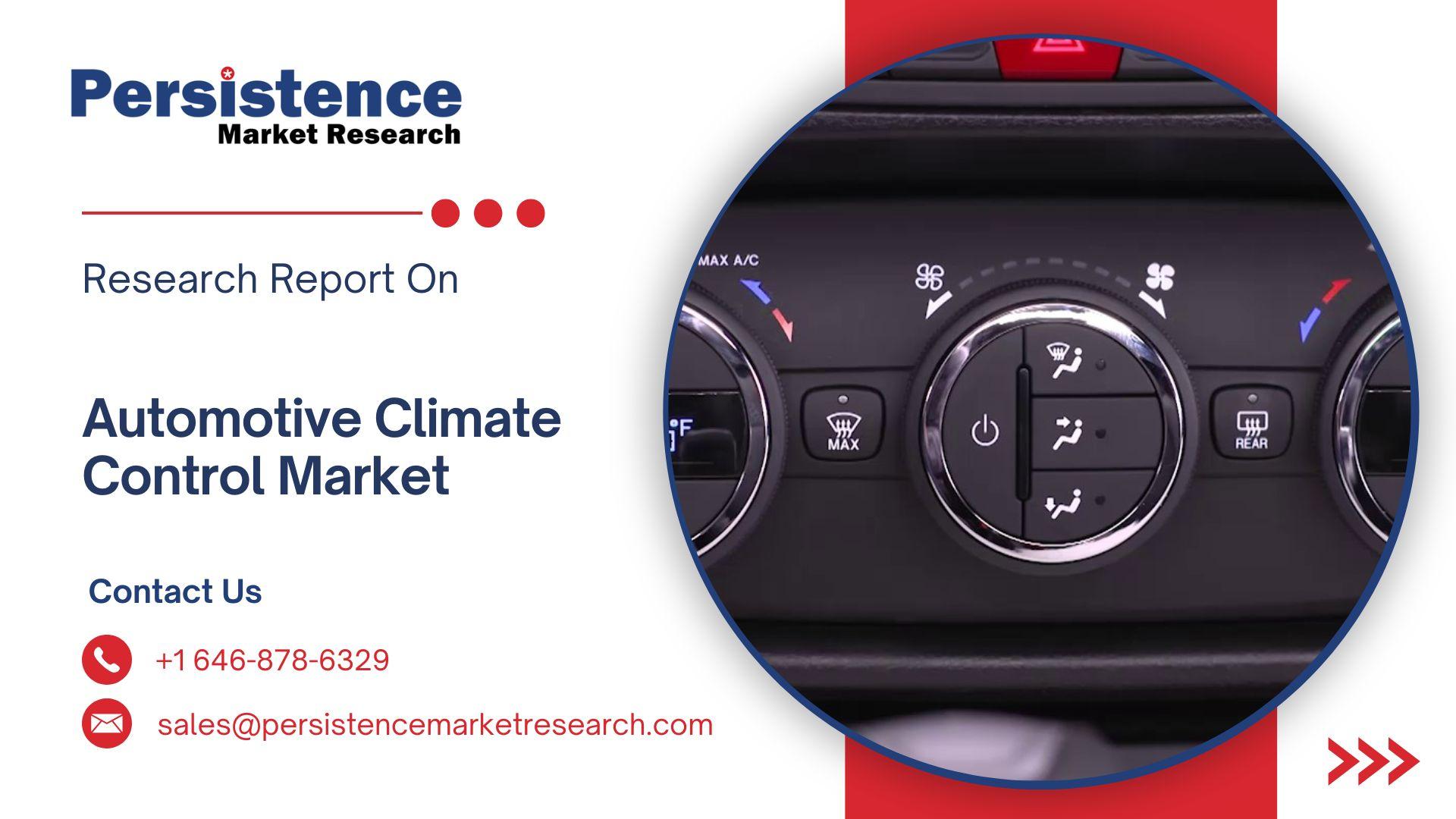
The global automotive climate control market is witnessing substantial growth as vehicle manufacturers increasingly focus on passenger comfort, cabin air quality, energy efficiency, and intelligent thermal management systems. According to recent industry analysis, the global automotive climate control market size is expected to be valued at US$ 11.6 billion in 2026 and is projected to reach US$ 17.6 billion by 2033, expanding at a CAGR of 6.1% during the forecast period of 2026–2033.
The market is benefiting from the rapid integration of advanced heating, ventilation, and air conditioning (HVAC) technologies in passenger and commercial vehicles. Growing consumer preference for enhanced in-vehicle comfort, rising sales of premium vehicles, and stricter environmental regulations regarding emissions and energy efficiency are among the primary factors accelerating market growth. Automotive manufacturers are increasingly adopting intelligent climate control systems that optimize temperature, humidity, and airflow while reducing energy consumption.
The emergence of electric vehicles (EVs) and connected mobility ecosystems is also reshaping the automotive climate control landscape. EV manufacturers are investing heavily in energy-efficient thermal management systems to extend battery range and improve cabin comfort. In parallel, advancements in sensor technology, artificial intelligence, and IoT-enabled vehicle systems are enabling next-generation climate control platforms capable of predictive and adaptive functionality.
Key Highlights from the Report
➤ The global automotive climate control market is projected to grow from US$ 11.6 billion in 2026 to US$ 17.6 billion by 2033, registering a CAGR of 6.1% during the forecast period.
➤ Growing adoption of electric and hybrid vehicles is significantly increasing demand for energy-efficient thermal management systems.
➤ Automatic climate control systems continue to dominate the market due to enhanced passenger comfort and intelligent temperature regulation capabilities.
➤ Asia-Pacific remains the leading regional market owing to strong automotive production in China, Japan, South Korea, and India.
➤ Integration of AI, IoT, smart sensors, and connected vehicle technologies is transforming modern automotive HVAC systems.
➤ Rising consumer focus on cabin air quality, sustainability, and premium driving experiences is accelerating innovation across the industry.
Segmentation Analysis
By Type
Based on type, the automotive climate control market is segmented into manual climate control systems and automatic climate control systems. Among these, automatic climate control systems hold the dominant market share and are expected to maintain strong growth momentum throughout the forecast period.
Automatic climate control systems are gaining popularity due to their ability to automatically regulate cabin temperature, airflow distribution, and humidity levels with minimal driver intervention. These systems enhance passenger comfort while improving energy efficiency and operational convenience. Increasing penetration of premium and mid-range vehicles equipped with advanced HVAC technologies is further driving segment expansion.
Manual climate control systems continue to witness demand in entry-level and budget-friendly vehicles, particularly in developing economies where affordability remains a key purchasing factor. However, technological advancements and declining sensor costs are gradually encouraging automakers to shift toward automated systems across a broader vehicle range.
By Vehicle Type
On the basis of vehicle type, the market is categorized into passenger vehicles, light commercial vehicles, and heavy commercial vehicles. Passenger vehicles account for the largest market share due to rising global vehicle ownership, increasing disposable income, and growing consumer demand for enhanced cabin comfort.
The passenger vehicle segment is also benefiting from the rapid expansion of electric vehicles and luxury automotive categories, where climate control systems play a critical role in enhancing driving experience and maintaining battery performance. Advanced dual-zone and multi-zone climate control systems are becoming standard features in premium vehicles.
Meanwhile, the commercial vehicle segment is expected to witness considerable growth due to increasing demand for driver comfort during long-distance transportation and logistics operations. Fleet operators are increasingly adopting advanced climate systems to improve operational efficiency and driver productivity.
By Technology and Propulsion
From a technology perspective, the market includes conventional HVAC systems, automatic HVAC systems, smart climate control systems, and heat pump-based thermal management systems. Smart climate control technologies are anticipated to register the fastest growth owing to increasing integration with connected vehicle platforms.
Electric and hybrid vehicles are significantly accelerating the adoption of heat pump systems that provide efficient cabin heating while minimizing battery drain. Automakers are increasingly investing in thermal management innovations to improve vehicle range and energy utilization.
Connected climate systems integrated with smartphone applications and voice-enabled controls are also gaining traction. These technologies enable remote cabin pre-conditioning, predictive temperature adjustments, and personalized comfort settings, enhancing the overall user experience.
Regional Insights
Asia-Pacific Leads Global Market Expansion
Asia-Pacific dominates the global automotive climate control market and is expected to maintain its leadership position during the forecast period. The region benefits from strong automotive manufacturing capabilities, rising vehicle sales, expanding EV production, and growing urbanization.
China remains the largest contributor to regional growth due to the presence of major automotive manufacturers and aggressive investments in electric mobility. Government incentives supporting EV adoption and domestic vehicle production are further strengthening market demand.
Japan and South Korea continue to play a pivotal role through technological innovation and the development of intelligent automotive systems. Indian automotive manufacturers are also increasingly integrating advanced climate control technologies into mid-range and premium vehicle categories.
North America Shows Strong Technological Adoption
North America represents a significant market for automotive climate control systems due to high demand for premium vehicles and technologically advanced automotive solutions. The region is witnessing strong adoption of connected vehicle technologies, smart HVAC systems, and advanced cabin air filtration solutions.
Stringent fuel efficiency standards and environmental regulations are encouraging manufacturers to develop lightweight and energy-efficient thermal management systems. The increasing penetration of electric vehicles across the United States and Canada is also creating new growth opportunities.
Europe Emerges as a Sustainability-Focused Market
Europe is expected to witness robust market growth driven by strict emission regulations, strong EV adoption rates, and increasing focus on sustainable automotive technologies. European automakers are heavily investing in eco-friendly climate control systems designed to minimize energy consumption and reduce environmental impact.
Germany, France, and the United Kingdom remain major contributors due to the strong presence of luxury vehicle manufacturers and advanced automotive engineering capabilities.
Middle East & Africa and Latin America Gain Momentum
Emerging economies across Latin America and the Middle East & Africa are gradually witnessing increased demand for automotive climate control systems due to improving living standards and rising vehicle ownership. Harsh climatic conditions in several Middle Eastern countries are particularly driving the need for efficient cooling technologies in automobiles.
Key Players and Competitive Landscape
The automotive climate control market remains highly competitive, with leading manufacturers focusing on technological innovation, strategic partnerships, and global expansion initiatives.
✦ Denso Corporation is emphasizing energy-efficient HVAC systems and advanced thermal technologies tailored for electric and hybrid vehicles.
✦ Valeo continues to strengthen its market presence through smart thermal management systems and sustainable climate technologies designed for next-generation mobility.
✦ Hanon Systems is investing heavily in EV-focused thermal management platforms and integrated heat pump technologies.
✦ MAHLE GmbH is focusing on compact and lightweight climate control solutions aimed at improving energy efficiency and vehicle performance.
✦ Sanden Holdings Corporation is expanding its portfolio of eco-friendly automotive air-conditioning systems and electric compressors.
✦ Johnson Electric Holdings Limited is strengthening its automotive HVAC component offerings through advanced motor technologies and precision engineering solutions.
✦ BorgWarner Inc. is accelerating innovation in battery thermal management systems to support the growing electric vehicle ecosystem.
✦ Calsonic Kansei Corporation continues to focus on integrated cockpit and climate technologies for connected vehicles.
Leading companies are increasingly prioritizing research and development activities aimed at reducing emissions, improving passenger comfort, and enhancing energy efficiency. Strategic collaborations with electric vehicle manufacturers and software technology providers are also becoming central to long-term growth strategies.
Future Opportunities and Growth Prospects
The future of the automotive climate control market appears highly promising as automotive electrification, connected mobility, and autonomous driving technologies continue to evolve. Demand for intelligent thermal management systems is expected to accelerate significantly as automakers prioritize energy optimization and passenger experience.
The expansion of electric vehicle infrastructure worldwide is likely to create substantial opportunities for advanced heat pump systems, battery cooling technologies, and energy-efficient HVAC solutions. Manufacturers capable of delivering lightweight, compact, and environmentally sustainable climate systems are expected to gain a competitive advantage.
Artificial intelligence, machine learning, and predictive analytics will continue to reshape the market by enabling personalized climate experiences and proactive system maintenance. Integration with smart mobility ecosystems and connected transportation platforms is anticipated to unlock new business opportunities across both passenger and commercial vehicle segments.
Furthermore, evolving environmental regulations and sustainability initiatives are expected to drive continued innovation in refrigerant technologies, thermal efficiency, and low-emission climate systems. As consumers increasingly prioritize comfort, health, and sustainability, the automotive climate control market is positioned for sustained long-term expansion through 2033.

 English
 French
 Spanish
 Portuguese
 Deutsch
 Turkish
 Dutch
Dutch
 Italiano
 Russian
 Romaian
 Portuguese (Brazil)
 Greek
Greek