


Which Public APIs Are Best for Startup API Development?
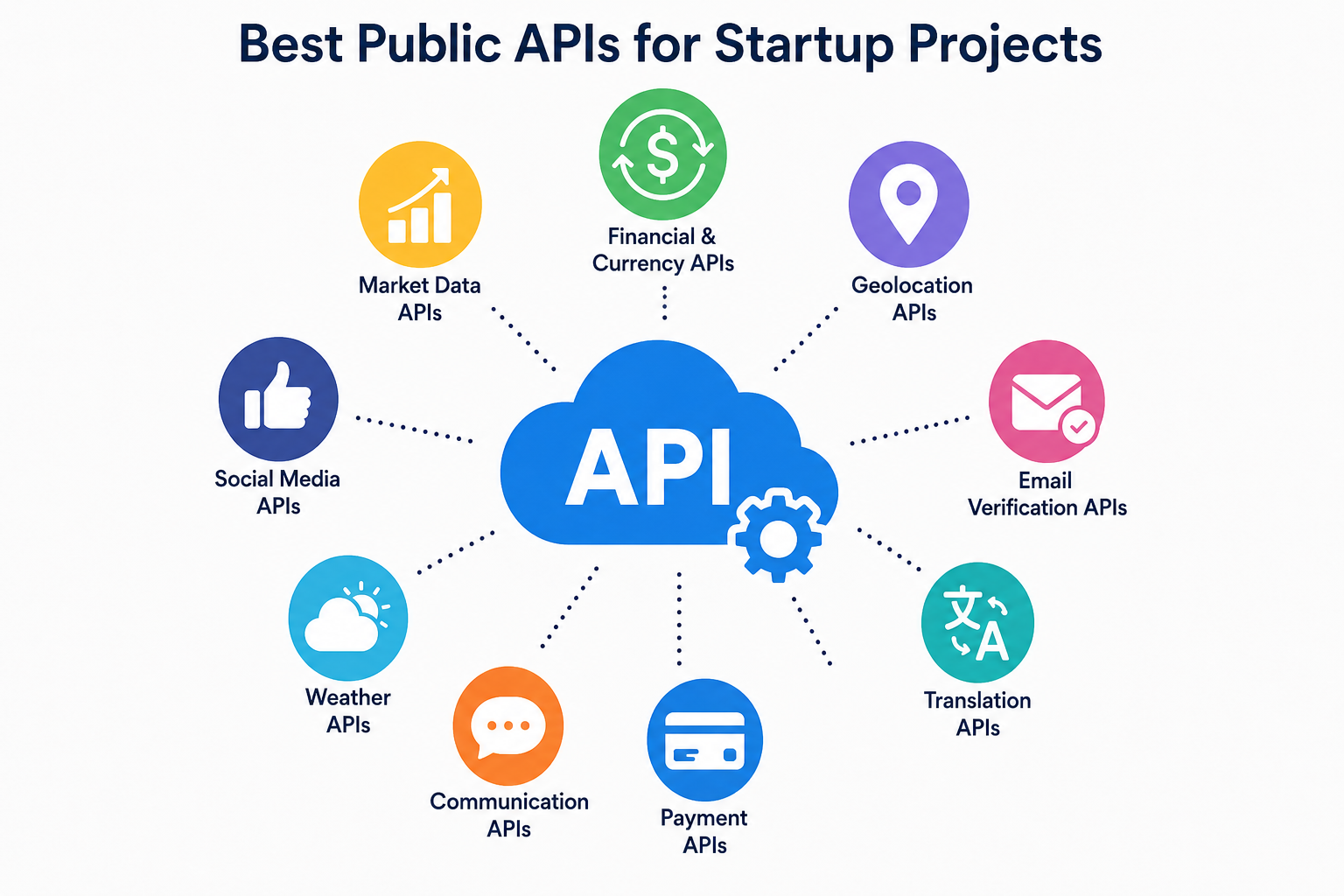
Building a startup product often starts with one important decision: choosing the right tools that help you launch faster without increasing development costs. For many modern platforms, applications, and SaaS products, APIs have become the backbone of digital services. From payments and geolocation to market data and communication systems, startups rely on external services to speed up innovation and improve user experience.
Strong API development strategies allow startups to focus on their core product instead of rebuilding services that already exist. The challenge, however, is choosing reliable and scalable public APIs that can support growth from the early stages to long-term expansion.
This guide explains which APIs are worth considering, how they help startups, and what factors matter most before integration.
Why Startups Depend on APIs
A startup usually operates with limited time, limited developers, and limited budgets. APIs help remove many technical barriers by providing ready-to-use infrastructure and data services.
Instead of building everything from scratch, teams can integrate APIs for:
- Currency conversion
- Weather information
- Market data
- Email verification
- Translation services
- Geolocation tracking
- Payment systems
- Communication tools
This approach shortens development cycles and helps businesses launch products much faster.
APIs also improve scalability. A startup can begin with a small product and later expand features without redesigning the entire system architecture.
What Makes a Public API Good for Startups?
Not every API is suitable for startup environments. Some services look attractive initially but become difficult to scale later because of pricing, documentation, or performance issues.
A good startup-friendly API should include:
Easy Documentation
Clear documentation saves development time. Startups often work with small engineering teams, so APIs should include straightforward endpoints, code examples, and quick-start guides.
Reliable Performance
Downtime can damage user trust. Stable uptime and fast response times are important for customer-facing applications.
Flexible Pricing
Many startups begin with free or low-cost plans. APIs that offer scalable pricing models help businesses grow without sudden infrastructure costs.
Strong Security
Security matters even during early-stage development. APIs should support HTTPS encryption, authentication methods, and proper access control.
Developer Support
Responsive support and active communities make integration easier when technical issues appear.
Best Public APIs for Startup Projects
Different startups require different types of APIs depending on their product goals. Below are some of the most valuable API categories for modern startup applications.
Financial and Currency APIs
Financial APIs are essential for fintech startups, eCommerce platforms, SaaS dashboards, and international business tools.
Services like apilayer and Fixer API provide exchange rate data that helps businesses support global transactions and real-time currency conversion.
These APIs are useful for:
- International payment systems
- Subscription platforms
- Financial dashboards
- Travel applications
- Online marketplaces
Startups using financial APIs can deliver live exchange data without maintaining their own banking infrastructure.
Market Data APIs
Stock and financial market APIs are increasingly popular among startups building trading apps, analytics platforms, or investment dashboards.
Platforms such as Marketstack offer real-time and historical market data through REST APIs.
This type of API can support:
- Trading applications
- Financial research tools
- Portfolio management systems
- Stock alert platforms
- Investment analytics dashboards
Real-time market access allows startups to build valuable tools without purchasing expensive enterprise data systems.
Geolocation APIs
Location intelligence has become important for logistics, marketing, fraud prevention, and personalization.
Geolocation APIs help businesses identify user regions, detect suspicious activity, and improve customer targeting.
Common startup use cases include:
- Delivery tracking
- Regional content personalization
- Fraud detection
- Location-based analytics
- Customer segmentation
IP-based location APIs can also improve onboarding and security processes.
Email Verification APIs
User registration systems often suffer from fake or invalid email submissions. Email verification APIs help maintain clean databases and improve communication performance.
Services like Mailboxlayer help startups validate email addresses during signup.
Benefits include:
- Reduced bounce rates
- Better email marketing performance
- Cleaner customer databases
- Protection against spam registrations
- Improved lead quality
This becomes especially valuable for SaaS startups and subscription-based businesses.
Translation APIs
Global startups frequently need multilingual support. Translation APIs simplify localization without building large internal language systems.
Translation services can help startups:
- Translate customer messages
- Localize mobile apps
- Support international audiences
- Improve customer engagement
- Expand into new markets faster
Multilingual support often improves user trust and accessibility for global users.
Payment APIs
Payment infrastructure is one of the most important integrations for digital businesses.
Payment APIs allow startups to process:
- Credit card payments
- Subscription billing
- Recurring transactions
- International payments
- Digital wallet transactions
Instead of building payment systems manually, startups can integrate secure solutions quickly and reduce compliance challenges.
Communication APIs
Communication APIs support messaging, notifications, customer verification, and support systems.
These APIs power features such as:
- SMS verification
- OTP systems
- Push notifications
- Voice communication
- Customer support messaging
Reliable communication tools improve user experience and account security.
Weather APIs
Weather APIs are valuable beyond simple forecast applications. Many industries use environmental data to improve operational decisions.
Startups in sectors like travel, logistics, agriculture, and transportation often integrate weather APIs to provide smarter services.
Weather data can support:
- Delivery planning
- Travel recommendations
- Farming insights
- Event management
- Transportation forecasting
Social Media APIs
Social integrations help startups improve marketing and user engagement.
Social APIs can support:
- Login authentication
- Content publishing
- Analytics tracking
- Social listening tools
- Marketing automation
These integrations help businesses connect products with existing digital ecosystems.
How Startups Should Choose an API Provider
Choosing an API should involve more than checking feature lists. Founders and developers should evaluate long-term compatibility with their business goals.
Understand Rate Limits
Some free APIs have strict usage restrictions. Make sure the provider can support increasing traffic as your product grows.
Review Documentation Quality
Good documentation reduces development mistakes and integration delays.
Check Scalability
An API that works for 1,000 users may not work efficiently for 1 million users. Scalability should always be considered early.
Compare Pricing Carefully
Some APIs become expensive after traffic increases. Analyze pricing tiers before committing to long-term integration.
Evaluate Security Standards
Customer trust depends heavily on secure systems. APIs should follow modern security practices and authentication methods.
Common Mistakes Startups Make With APIs
Many early-stage businesses rush into integration without proper planning. This can create technical debt later.
Common mistakes include:
Choosing APIs Only Because They Are Free
Free plans are helpful initially, but startups should also examine performance, support, and scalability.
Ignoring API Downtime History
Reliability matters for customer experience. Frequent downtime can negatively affect user trust.
Overcomplicating Integrations
Using too many APIs too early can create unnecessary complexity. Startups should focus on essential integrations first.
Not Monitoring Usage
Tracking API usage helps businesses avoid unexpected billing and performance issues.
Why API-First Startups Grow Faster
Many successful digital products were built using API-first strategies. Instead of spending months building infrastructure internally, founders focused on user experience and product-market fit.
API-driven development offers several advantages:
- Faster product launches
- Lower infrastructure costs
- Easier scaling
- Better feature expansion
- Reduced engineering workload
This allows startups to remain flexible while adapting to changing market demands.
The Future of Public APIs for Startups
The API economy continues to expand rapidly. More businesses are exposing services through APIs, creating opportunities for startups to innovate faster than before.
Modern APIs now support:
- Real-time automation
- Advanced analytics
- Financial services
- AI-powered tools
- Global communication systems
- Cloud-native applications
As startup competition increases, access to reliable APIs will continue to play a major role in product success.
Businesses that choose scalable API partners early often reduce development friction and improve long-term operational efficiency.
For startups planning long-term growth, investing in reliable API infrastructure is no longer optional. It is a practical step toward building flexible and competitive digital products through smarter API development using trusted public APIs.
FAQs
Which public APIs are best for startup projects?
The best APIs depend on your startup category. Financial APIs, payment APIs, email verification APIs, geolocation APIs, and communication APIs are among the most useful for scalable digital products.
Why do startups prefer public APIs instead of building services internally?
Public APIs reduce development time, lower infrastructure costs, and help startups launch products faster. They also allow small teams to add advanced features without creating everything from scratch.
How can startups choose the right API provider?
Startups should evaluate pricing, scalability, uptime reliability, documentation quality, support availability, and security standards before selecting an API provider.

 English
 Arabic
 French
 Spanish
 Portuguese
 Deutsch
 Turkish
 Dutch
Dutch
 Russian
 Romaian
 Portuguese (Brazil)
 Greek
Greek