Some industrial particles are surprisingly difficult to control.
And honestly, the problem is not always the amount of contamination.
Sometimes the real challenge is the particle size itself.
Large particles usually settle faster or become easier to separate through standard filtration systems. But extremely fine airborne contaminants behave very differently.
They remain suspended longer.
Travel further through airflow.
Spread rapidly across production areas.
And once these fine particles mix with fumes, vapor, or high-temperature gases, industrial air treatment becomes much more complicated.
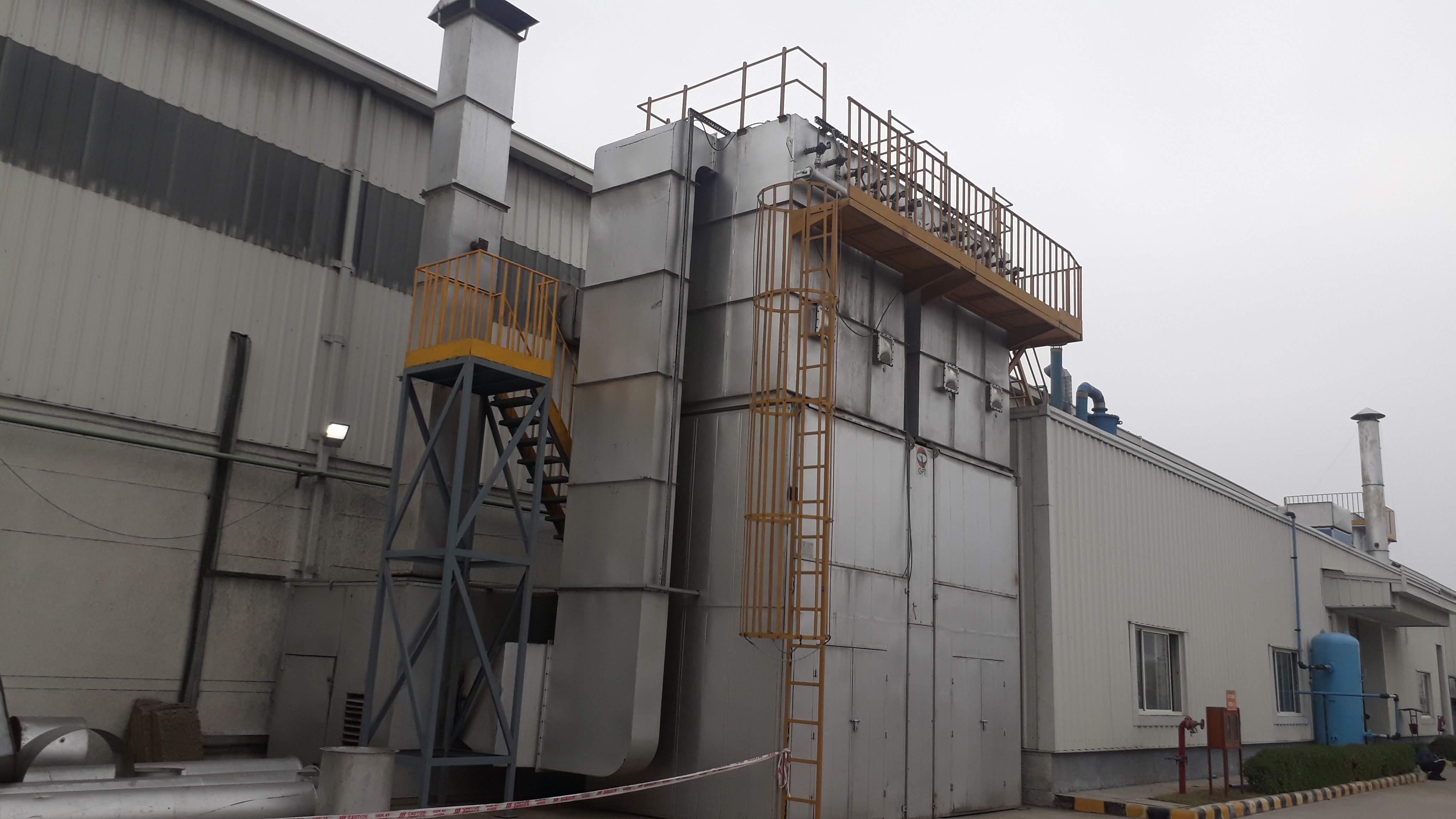
This is exactly where a Venturi Scrubber becomes extremely important.
Because certain industrial environments require much stronger particle-contact efficiency than traditional scrubbing systems alone can provide.
Now let’s understand why.
A Venturi Scrubber works by accelerating contaminated air through a narrow throat section at very high velocity while introducing liquid into the airflow stream.
As air speed increases, particles collide aggressively with water droplets, becoming trapped and separated from the airflow.
Simple principle—but highly effective for fine airborne contaminants.
And honestly, this high-energy mixing process is one reason Venturi Scrubbers perform especially well in industries handling extremely small particulate matter or mixed gas contamination.
Now here’s something important:
Fine particles behave differently from heavier industrial dust.
Large contaminants can often be removed efficiently through a Cyclone Dust Collector or Multicyclone Dust Collector because centrifugal separation works well on heavier material.
But fine particles have very little mass.
They stay airborne easily and resist mechanical separation methods more aggressively.
That’s why industries handling smoke, combustion particles, chemical fumes, or extremely fine dust often require advanced wet scrubbing systems.
A Venturi Scrubber increases particle-to-liquid contact intensity dramatically, improving capture efficiency for difficult airborne contaminants.
And honestly, many factories only realize the need for advanced scrubbing after traditional filtration systems begin struggling with fine particle control.
Now let’s talk about airflow pressure.
Every industrial Air pollution control system depends on maintaining stable airflow movement throughout operation.
Centrifugal Blowers create the pressure required to move contaminated air through ducts, separators, scrubbers, and filtration stages.
But Venturi Scrubbers operate differently from low-resistance filtration systems.
Because airflow accelerates through the venturi throat section, pressure drop becomes higher during operation.
This means airflow balancing becomes extremely important.
If blower performance remains unstable, scrubbing efficiency changes too.
And honestly, many industries underestimate how strongly airflow stability affects fine-particle capture performance inside wet scrubbing systems.
Now consider traditional dry filtration.
A standard Dust collection system captures airborne contamination through filters and airflow separation stages.
Systems using Bag filter and Filter bags technology perform extremely well for dry particulate control under stable conditions.
A Pulse jet Bag filter further improves efficiency by automatically cleaning filtration surfaces during operation.
But fine particles mixed with moisture, fumes, or sticky gases may overload dry filtration systems much faster.
This is where Venturi Scrubbers provide a major advantage.
Instead of depending entirely on dry filtration media, the system captures contaminants through liquid interaction directly inside the airflow stream.
That creates much more effective control for certain industrial processes.
Now let’s discuss fumes and gases.
Industries involving chemical reactions, coating operations, combustion processes, or thermal manufacturing often generate mixed airborne contamination.
Not only dust—but also vapor, smoke, and process gases simultaneously.
A Fume Exhaust System or Fume extraction system captures contaminated air near production equipment before it spreads throughout the factory.
Additional systems like a Wet Scrubber or Venturi Scrubber then help treat the airborne contaminants before release.
This layered airflow strategy becomes extremely important in high-temperature industrial operations.
And honestly, integrated airflow planning almost always creates more stable environmental conditions than relying on one technology alone.
Now let’s look at woodworking industries for a moment.
A Wood Dust Collector captures fine airborne wood particles generated during sanding or cutting operations.
Most woodworking environments rely heavily on dry filtration systems because wood particles remain primarily dry contaminants.
But in facilities involving thermal processing, coating, or smoke generation alongside wood dust, airflow conditions become more complex.
Additional wet scrubbing stages may help stabilize environmental air quality more effectively under those mixed conditions.
Localized contamination control matters too.
Certain machines or production points generate extremely concentrated airborne pollution near the source.
Using a Portable Dust Collector or localized Dust extractor helps reduce contamination spread before particles enter the larger airflow network.
That early-stage control reduces pressure on the overall scrubbing and filtration system significantly.
And honestly, localized extraction often improves overall environmental performance much more than factories initially expect.
Now here’s something many industries overlook:
Fine airborne contamination affects visibility and worker comfort differently from heavier dust.
Even small concentrations of suspended particles can make factory air feel hazy or uncomfortable during long shifts.
Workers may notice the environmental change before airflow measurements reveal major contamination increases.
Again—not immediate operational failure.
Just gradually worsening air quality conditions.
Venturi Scrubbers help reduce those fine airborne particles much more aggressively than traditional low-energy wet scrubbing systems.
Environmental airflow remains important too.
Systems like an Axial flow fan or Air washer system improve large-scale ventilation movement throughout industrial spaces.
But once fine contaminants become suspended widely across the environment, localized ventilation alone may not remove them efficiently.
That’s why high-efficiency scrubbing becomes necessary in certain industrial sectors.
Maintenance behavior changes as well.
Because Venturi Scrubbers rely on liquid interaction instead of dry filtration surfaces alone, filter loading problems may reduce in specific applications.
However, liquid handling systems require proper monitoring and airflow balancing for stable long-term performance.
And honestly, industries usually achieve the best results when wet scrubbing becomes part of a complete industrial airflow strategy rather than a standalone solution.
Now let’s discuss gas treatment.
Facilities handling organic emissions or industrial gas streams may combine a Venturi Scrubber with systems like a Biogas Scrubber or Activated carbon filter for multi-stage contamination control.
Each stage targets different pollutants while supporting overall environmental air quality.
This layered approach improves long-term airflow treatment performance significantly.
One important thing worth understanding is this:
A Venturi Scrubber is not designed simply for ordinary dust control.
It exists because some industrial contaminants are too fine, too reactive, or too difficult for conventional separation methods alone.
And honestly, industries handling fine airborne particles usually notice major air quality improvement once high-energy scrubbing becomes part of the airflow system.
That’s why Venturi technology remains extremely valuable in demanding industrial environments.
GPT India works with industries to optimize Venturi Scrubber systems, industrial airflow balance, and long-term Air pollution control system performance under complex manufacturing conditions.
Because controlling fine airborne contamination requires much more than standard filtration alone.
They are located at 59/2/1, Site 4, Industrial Area, Sahibabad, Ghaziabad, Uttar Pradesh, 201010. You can contact them at +91-9773500660 or info@gpt-india.com for industrial airflow planning and advanced wet scrubbing solutions.
And honestly, factories usually notice cleaner and more stable environmental conditions once fine airborne particles stop circulating through the production space continuously.
FAQs
What is a Venturi Scrubber used for?
It captures fine airborne particles, fumes, and process contaminants using high-velocity wet scrubbing.
How is a Venturi Scrubber different from a standard Wet Scrubber?
It creates stronger particle-to-liquid contact for improved fine-particle removal efficiency.
Can Venturi Scrubbers work with Dust collection systems?
Yes, they are often integrated with filtration and fume-control systems.
Are Venturi Scrubbers useful for industrial fumes?
Absolutely. They help treat mixed airborne contamination including smoke, vapor, and fine particles.
Conclusion
A Venturi Scrubber helps industries control fine airborne contamination more effectively through high-energy wet scrubbing technology.
By improving particle capture efficiency and supporting advanced airflow treatment, these systems create cleaner and more stable industrial environments.
And honestly, controlling fine industrial contamination often requires stronger airflow treatment than traditional filtration systems alone can provide.




 English
 Arabic
 French
 Portuguese
 Deutsch
 Turkish
 Dutch
Dutch
 Italiano
 Russian
 Romaian
 Portuguese (Brazil)
 Greek
Greek