


Best Gynaecology Instrument Manufacturers in India
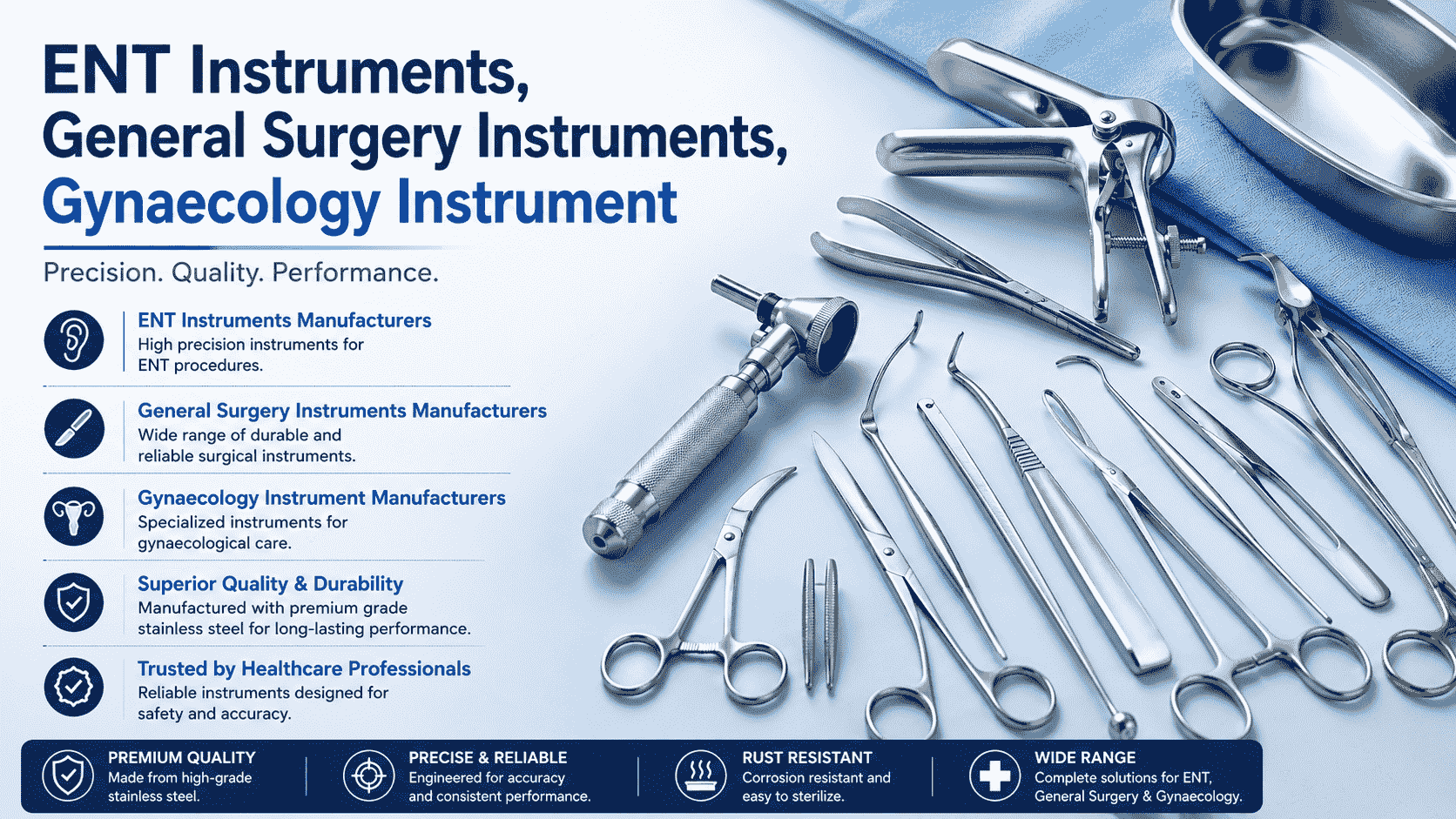
A delayed shipment is frustrating. A poorly finished curette that fails inspection after landing at the distributor warehouse is expensive. That’s the part many buyers discover too late while sourcing from Gynaecology Instrument manufacturers who quote aggressively but cut corners quietly.
Most procurement managers already know price is negotiable. Instrument consistency is not. Whether you're sourcing ENT Instruments, General Surgery Instruments, or Gynaecology Instrument sets for private labeling, the real cost shows up months later through returns, corrosion complaints, loose joints, or inconsistent finishing across batches.
And yet, many buyers still select suppliers based on catalog size instead of process discipline.
At Surgifact, we’ve watched importers lose accounts over one bad shipment of surgical tools. Since 1967, we’ve manufactured instruments for wholesalers, procurement firms, and brand owners who care less about flashy brochures and more about repeatable quality.
The Spec Detail Most Buyers Ignore in Gynaecology Instrument Procurement
A surgical instrument can look polished in photos and still fail inside an operating room.
Material Grade Is Only the Starting Point
Most reliable Gynaecology Instrument manufacturers in India use stainless steel grades like AISI 410, 420, or German stainless variants depending on the application. But hardness balance matters just as much as material sourcing.
Which means a spec sheet saying “stainless steel” tells you almost nothing by itself.
For example:
-
Vaginal speculums require smooth edge finishing to prevent tissue trauma
-
Uterine curettes need consistent sharpness retention after repeated sterilization cycles
-
Needle holders demand precise jaw alignment under pressure
-
Scissors should maintain cutting performance beyond 150+ autoclave cycles
Nobody tells you this early enough: mirror polish can actually hide poor grinding work.
Surface Finish Affects Sterilization Reliability
Hospitals across India and export markets increasingly demand instruments compatible with steam sterilization temperatures reaching 134°C. Microscopic surface pitting becomes a contamination risk over time.
A supplier who avoids discussing passivation testing usually has a reason.
That’s one reason experienced buyers request:
-
Passivation reports
-
Rockwell hardness data
-
CE or ISO documentation
-
Batch traceability
-
Ultrasonic cleaning process details
Packaging Errors Create More Damage Than Manufacturing Defects
Here’s a problem wholesalers underestimate. Instruments shipped loosely in low-density packaging often develop micro scratches during transit. By the time the shipment reaches a distributor in Europe or the Middle East, the finish already looks compromised.
We’ve seen buyers reject containers over packaging negligence alone.
What Procurement Teams Should Check Before Finalizing Any Supplier
1. Ask How They Handle Batch Consistency
Good suppliers discuss tooling tolerances confidently.
Bad suppliers say things like: “Minor variation is normal.”
No serious distributor wants that answer.
2. Verify Actual Manufacturing Capability
Some companies market themselves as ENT Instruments Manufacturers or General Surgery Instruments Manufacturers while outsourcing most production.
That creates accountability gaps fast.
Ask directly:
-
Which processes are in-house?
-
Who controls heat treatment?
-
How is QC documented?
-
Can they share production images or inspection workflows?
3. Certificate Validity Matters More Than Logo Placement
An expired ISO certificate framed in a reception area helps nobody.
Most buyers never verify whether certificates are active or linked to the actual manufacturing entity. That mistake becomes painful during customs audits or hospital registration approvals.
4. Evaluate Communication Speed During Technical Queries
Here’s a simple test. Send a dimensional specification revision.
If the supplier replies after four days with a vague “noted,” expect production problems later. Serious surgical instrument manufacturers answer technical changes precisely because they understand tolerances affect usability.
5. Inspect Joint Movement and Finishing Personally
Especially for:
-
Forceps
-
Scissors
-
Speculums
-
Needle holders
One loose box joint can ruin confidence in the entire shipment.
And honestly, some suppliers polish defects instead of correcting machining errors.
How Reliable Surgical Instruments Protect Distributor Margins
Cheap instruments rarely stay cheap after distribution begins.
Lower Return Rates Protect Dealer Relationships
Distributors supplying hospitals or surgical centers cannot afford recurring complaints. One recurring issue with rust spots or jaw misalignment damages trust quickly.
That’s why established Gynaecology Instrument manufacturers focus heavily on inspection before dispatch.
Consistent Instruments Reduce Rebranding Problems
Private-label buyers need dimensional consistency across repeated orders. Otherwise:
-
Product photography changes
-
User feedback becomes inconsistent
-
Inventory mixing becomes risky
Which means your own brand credibility starts slipping.
Better Steel Processing Improves Instrument Life
Proper heat treatment affects:
-
Edge retention
-
Corrosion resistance
-
Flexibility
-
Structural durability
A cheaper instrument that fails after 20 sterilization cycles costs more than a stable instrument lasting years.
Export Documentation Prevents Customs Delays
Experienced General Surgery Instruments Manufacturers in India usually maintain:
-
HS code clarity
-
Material declarations
-
Inspection documentation
-
Export packaging compliance
That reduces shipment holds significantly.
Stable Supply Chains Matter More After 2020
Freight volatility exposed weak manufacturers badly. Companies dependent on scattered subcontractors struggled with delivery schedules.
Buyers now prioritize manufacturing control over aggressive pricing.
Why Jalandhar Continues to Lead Surgical Instrument Manufacturing
Punjab has been connected to surgical instruments manufacturing for decades, and Jalandhar remains one of the strongest production hubs in India for ENT Instruments Manufacturers in India and Gynaecology Instrument Manufacturers in India.
That’s not accidental.
The region developed around skilled metalworking clusters, polishing units, forging expertise, and export-focused manufacturing. Tooling support is easier here than in many emerging industrial zones.
And proximity matters more than buyers think. Access to Delhi cargo routes and northern export logistics helps reduce shipment coordination delays for overseas consignments.
We’ve Been Manufacturing Surgical Instruments Since 1967
At Surgifact, we manufacture ENT Instruments, General Surgery Instruments, and Gynaecology Instrument ranges for wholesalers, procurement managers, importers, and private-label brands across multiple export markets.
We’re ISO-certified, and we’ve spent decades refining processes that most catalogs never mention.
For example, we changed part of our polishing inspection workflow after repeated export feedback showed buyers were detecting hairline finishing marks under LED surgical lighting. Older inspection setups missed those reflections. We adjusted the process instead of arguing with customers.
That’s the difference experience makes.
Our manufacturing facility in Jalandhar supports:
-
OEM and private labeling
-
Bulk export orders
-
Custom instrument sets
-
Batch-wise inspection
-
International packaging standards
And we know something many newer factories don’t: maintaining delivery discipline during peak procurement cycles is harder than making promises during quotation discussions.
Send Specifications, Quantities, and Branding Requirements Directly
If you're sourcing from experienced Gynaecology Instrument Manufacturers in India, send us:
-
Product list or catalog references
-
Required quantities
-
Branding or laser marking details
-
Packaging expectations
-
Destination country
We typically respond to serious B2B inquiries within 24 business hours.
MOQ depends on the instrument category, but most export orders begin from mixed bulk quantities rather than single-item purchasing.
Visit Surgifact Contact Page to discuss requirements directly with our team.
Conclusion
Reliable Gynaecology Instrument manufacturers are judged long after the shipment leaves the factory floor. Buyers remember defect rates, consistency, communication, and how suppliers react when problems appear.
At Surgifact, we continue building surgical instruments the way export manufacturing actually works — through inspection discipline, production control, and long-term buyer relationships. The demand for dependable ENT Instruments and General Surgery Instruments will keep growing, but the suppliers who survive will be the ones who maintain standards under pressure, not just during quotations.
Here is the another blog you might be interested in:
Premium ENT & General Surgery Instruments India
FAQs
Which certifications should buyers verify before choosing Gynaecology Instrument Manufacturers?
Check whether the ISO certification is current and issued to the actual manufacturing entity, not a trading office. Ask for supporting documentation tied to production. Some suppliers display old certificates for years after expiry.
Are ENT Instruments Manufacturers in India suitable for OEM private labeling?
Many are, but not all handle branding professionally. Ask whether laser marking, custom packaging, and barcode labeling are done in-house or outsourced. Delays usually start there.
What is the common mistake buyers make while sourcing General Surgery Instruments?
Focusing only on price. A lower quote often means inconsistent finishing, weak heat treatment, or subcontracted production without quality control.
How long should quality surgical instruments typically last?
That depends on usage frequency and sterilization handling. Properly manufactured instruments can perform reliably through hundreds of sterilization cycles. Poor maintenance will shorten lifespan regardless of manufacturer quality.
Why do hospitals reject some imported instruments after delivery?
Usually because of corrosion spots, poor alignment, rough finishing, or packaging damage during transit. Inspection failures rarely happen because of appearance alone.
Are all Gynaecology Instrument Manufacturers in India actual manufacturers?
No. Some are traders operating with outsourced production networks. That doesn’t automatically make them unreliable, but traceability becomes harder during disputes or replacement claims.
What should distributors ask ENT Instruments Manufacturers before placing repeat orders?
Request batch consistency details, production lead times, and inspection reporting methods. Reliable ENT Instruments Manufacturers in India can explain their QC process clearly without vague answers.

 English
 Arabic
 French
 Spanish
 Portuguese
 Deutsch
 Dutch
Dutch
 Italiano
 Russian
 Romaian
 Portuguese (Brazil)
 Greek
Greek