


Double-Ended Studs in Construction: Stronger Than You Think
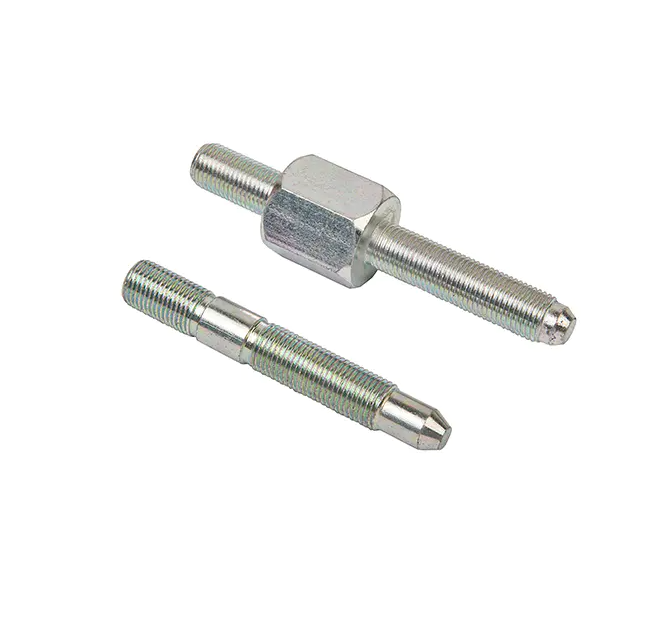
Construction sites rarely celebrate fasteners. Concrete mixers, steel erection crews, and structural engineers talk about spans, loads, and deadlines — not the individual connectors holding everything together. Yet double-ended studs play a genuinely critical role in structural steel connections, anchor bolt systems, and precast concrete panel installation that deserves far more recognition than it typically receives.
Anchor stud applications in concrete foundations illustrate this clearly. Double-ended studs cast into or post-installed into concrete provide the threaded projections onto which structural steel base plates, machinery frames, and equipment housings fasten. Without reliable double-ended studs at foundation level, entire structural systems lose their secure connection to the ground. Engineers specify these fasteners carefully, calculating pull-out strength, shear resistance, and embedment depth for every critical anchor position.
Precast concrete panel assembly also depends on double-ended studs regularly. Lifting inserts, alignment pins, and connecting hardware in precast systems often incorporate double-ended stud configurations that allow panels to connect to each other and to structural frames cleanly and repeatably. The ability to install one end permanently during manufacture and leave the other end accessible for field connection makes double-ended studs particularly well-suited to off-site fabrication workflows.
Corrosion protection for double-ended studs in construction environments demands serious consideration. Hot-dip galvanized double-ended studs provide robust zinc coating that resists outdoor exposure effectively over long service periods. Mechanically galvanized and zinc-plated versions offer lighter coating options suitable for less aggressive environments. In coastal or chemically aggressive sites, stainless steel or epoxy-coated double-ended studs become necessary to prevent premature corrosion that could compromise structural integrity.
Thread protection during concrete placement and construction activity presents a practical challenge. Plastic thread protector caps fitted over the exposed ends of double-ended studs prevent concrete splatter, impact damage, and thread contamination that would complicate nut installation later. Removing these caps and cleaning threads carefully before final assembly ensures smooth nut running and accurate torque readings during structural bolt-up.

 Arabic
 French
 Spanish
 Portuguese
 Deutsch
 Turkish
 Dutch
Dutch
 Italiano
 Russian
 Romaian
 Portuguese (Brazil)
 Greek
Greek