


Carabiner Shapes and Gates: Which One Is Right for You?
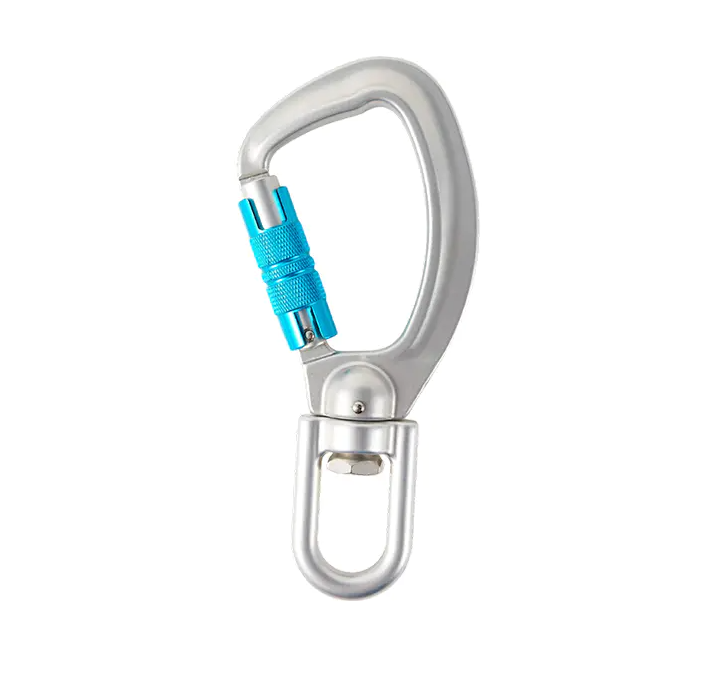
Few pieces of equipment carry as much responsibility in such a compact package as the carabiner. This metal loop fitted with a spring-loaded gate has become the fundamental connection device across climbing, rescue, rigging, and industrial safety systems worldwide. Understanding what a carabiner actually does, how it's built, and why different designs exist helps anyone who clips one into a system make smarter, safer choices.
At its core, a carabiner functions as a quickly openable and closable link between two components in a safety system. The main body — forged from aluminum alloy or steel — forms a continuous load-bearing loop when the gate is closed. The gate itself swings inward or outward depending on design, springs back to the closed position automatically, and in locking versions, incorporates a sleeve or mechanism that prevents accidental opening under load or contact pressure.
Shape defines a carabiner's functional character more than any other single design variable. Oval carabiners, the earliest widespread design, offer symmetrical loading that suits pulleys, aid climbing equipment, and rack organization particularly well. The oval shape keeps loads centered regardless of orientation, preventing equipment from sliding to one end of the carabiner during use. D-shaped carabiners shift the load toward the stronger spine side of the body, reducing weight relative to the oval design without sacrificing significant strength. Asymmetric D carabiners — the most common shape in modern climbing hardware — open this geometry further, creating a larger gate opening that makes clipping easier and faster, especially when working single-handed on a demanding route.
Pear-shaped or HMS carabiners occupy a specific and important niche. Their wide top section creates enough rope movement space to run a Munter hitch knot smoothly, making them the standard choice for belaying and rappelling operations. The broad geometry also suits pulley systems and load-releasing hitches in rescue rigging, where rope management under tension requires space and smooth running surfaces.
Gate design represents the second major variable in carabiner selection. Straight gates open quickly and suit sport climbing quickdraws where fast clipping matters. Bent gates — featuring a concave inner edge — make rope clipping even faster and appear on the rope-end carabiner of sport climbing quickdraws almost universally. Wire gates eliminate gate flutter issues at speed, resist icing in cold conditions, and reduce overall weight, making them popular in alpine climbing where every gram matters across a long day.
Locking carabiners add a sleeve mechanism over the gate that prevents opening without deliberate rotation or manipulation. Screw-lock versions require manual rotation of a threaded collar. Auto-locking designs close and lock automatically after gate release. Locking carabiners serve as belay device attachments, anchor masterpoints, and critical connection points where accidental opening would have serious consequences.

 English
 Arabic
 French
 Spanish
 Portuguese
 Deutsch
 Turkish
 Dutch
Dutch
 Italiano
 Russian
 Portuguese (Brazil)
 Greek
Greek