


How Do Environmental Conditions Affect Bolt Action Rifle Accuracy at Distance?
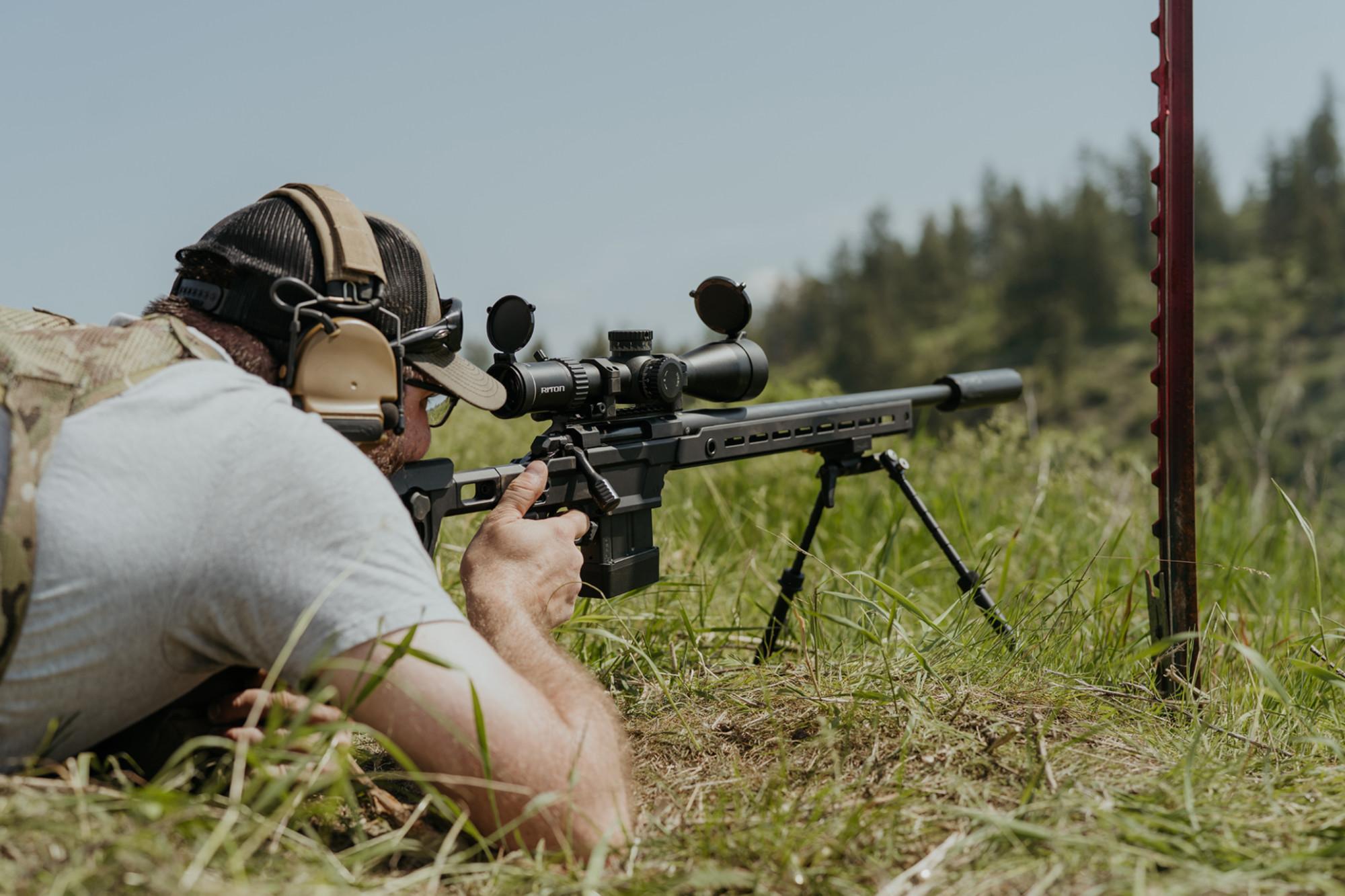
Mastering long-range shooting with a bolt action rifle requires understanding a layer of complexity that shorter-range shooting never demands: the environment actively moves your bullet between the muzzle and the target. Wind, temperature, altitude, and humidity all affect trajectory in ways that compound with distance. Learning to account for these variables — and using the right equipment to isolate them — separates competent long-range shooters from truly proficient ones.
Wind: The Dominant Long-Range Variable
Wind deflection is typically the largest source of error at ranges beyond 400 yards. A 10 mph full-value crosswind deflects a 6.5mm 140gr bullet approximately 8.5 inches at 500 yards and over 35 inches at 1,000 yards. These are not small numbers — missing a 12-inch steel plate at 1,000 yards by 35 inches requires a significant wind reading error.
Wind reading is an observational skill developed over many range sessions. Mirage — the heat shimmer visible through a scope at higher magnifications — is one of the most reliable wind indicators available. Wind speed and direction at the muzzle, midrange, and near the target can all differ, and the integrated effect of all these winds determines total deflection.
How Temperature Affects Trajectory
Temperature affects trajectory through two mechanisms: its effect on propellant burn rate and its effect on air density. Colder temperatures reduce powder burn efficiency, producing lower muzzle velocities — sometimes 50 to 75 feet per second lower than summer velocities with the same load. This velocity reduction increases bullet drop at distance and changes the supersonic transition point.
Cold air is also denser than warm air, which increases drag on the bullet and further increases drop. A ballistic solution developed in summer conditions at sea level will be measurably off on a cold November morning at the same location.
Altitude and Air Density
Higher altitude means lower air density, which means less drag on the bullet. Shots at high altitude fly flatter than at sea level — bullets retain more velocity and drop less over the same distance. A ballistic solution valid at sea level will strike high at a mountain range without altitude correction. Modern ballistic calculators account for this with density altitude inputs.
Humidity Effects
Humidity has the smallest practical effect of the environmental variables, but it is often misunderstood. Contrary to intuition, humid air is actually less dense than dry air at the same temperature — water vapor is lighter than the nitrogen and oxygen molecules it displaces. This means shots in very humid conditions fly very slightly flatter than in dry conditions. The effect is small enough to be practically negligible at most ranges but worth understanding conceptually.
Why a Stable Platform Matters for Reading Conditions
This is where quality shooting bags connect directly to environmental reading capability. When the rifle is perfectly stable on bags and the shooter's mechanics are consistent, all observable shot deviations come from environmental sources rather than technique variations. This allows the shooter to build reliable wind and condition data from observed impacts.
A bolt action rifle shooter using proper bags who sees every shot impact in a consistent vertical string can conclude with confidence that wind is not the issue — something else is causing vertical dispersion. The same shooter seeing consistent lateral drift can confidently call wind and make the appropriate correction. Without stable bag support, technique errors create noise that makes condition reading unreliable.
Building a Data Book
Every serious long-range shooter maintains a data book — a record of observed impacts, environmental conditions, corrections applied, and results. This book, built session by session on a stable supported platform, becomes an invaluable reference that accelerates skill development. Entries made from unstable improvised positions contain too many variables to be useful references.
Conclusion
Environmental mastery at long range with a bolt action rifle develops through disciplined observation from a stable platform. Shooting bags create the controlled foundation that makes observed data meaningful. Once shooter-induced error is removed from the equation, every deviation the rifle shows tells you something true about the conditions — and that feedback is how long-range mastery is actually built.

 Arabic
 French
 Spanish
 Portuguese
 Deutsch
 Turkish
 Dutch
Dutch
 Italiano
 Russian
 Romaian
 Portuguese (Brazil)
 Greek
Greek