


How to Print High-Quality Plastic Cards Without Ever Outsourcing It
Printing professional plastic cards used to feel like something only specialist print companies could manage. Businesses would send their card designs, staff details, customer data, or event attendee lists to an external supplier and then wait for the final cards to arrive. This process worked for some large bulk orders, but it was not always convenient for modern organisations that need flexibility, speed, and control.
Today, offices, schools, retailers, clubs, event organisers, and local organisations can print high-quality plastic cards themselves using a badgy printer. With the right setup, you can design and print staff ID cards, membership cards, loyalty cards, visitor badges, access cards, and event passes without outsourcing the job.
A badgy plastic card printer gives your organisation the freedom to print cards when you need them. Instead of waiting days for a supplier, you can create one card or a small batch directly from your desk. For New Zealand businesses, Badgy NZ provides practical solutions such as Badgy100, Badgy200, card design software, blank PVC cards, colour ribbons, templates, and support resources.
If your business wants better control over card quality, branding, turnaround time, and data privacy, using a badgy printer for plastic cards is a smart step forward.
Why Businesses Are Moving Away From Outsourced Card Printing
Outsourcing can be useful when a company needs thousands of cards at once. However, many businesses do not need huge print runs. They need flexibility. A new employee may need an ID card today. A retail store may want to issue loyalty cards to new customers on the spot. A school may need replacement student cards. A club may need membership cards for new joiners every week.
When these small printing needs are outsourced, the process often becomes slow and expensive. You may need to send files, check proofs, pay setup costs, wait for production, and then wait again for delivery. If there is a spelling mistake or design update, the delay becomes even longer.
In-house card printing removes many of these problems. With a Badgy printer, you can create cards on demand, make quick edits, and print only the number you need.
The Main Benefits of Printing Plastic Cards In-House
Printing cards in-house gives organisations more control over the full process. You are not dependent on a supplier’s schedule, minimum order quantity, or delivery timeline. You can update designs, change names, replace damaged cards, and print urgent cards whenever required.
Important benefits include:
-
Faster turnaround for staff, visitors, customers, or members
-
Better control over design and branding
-
More privacy for personal data
-
Lower waste because you print only what you need
-
Easy replacement of lost or damaged cards
-
No need to wait for external suppliers
-
Professional plastic card quality
-
Better flexibility for small and medium organisations
A Badgy card printing setup is especially useful for organisations that need cards regularly but not always in large quantities.
Outsourced Printing vs In-House Badgy Printing
|
Feature |
Outsourced Plastic Card Printing |
In-House Badgy Printing |
|
Turnaround time |
Can take several days |
Cards can be printed when needed |
|
Minimum order |
Often required |
Print one card or small batches |
|
Design control |
Changes may delay the order |
Edit designs instantly |
|
Data privacy |
Staff or customer data is shared externally |
Data stays within your organisation |
|
Cost flexibility |
May include setup, proofing, and delivery fees |
Better for regular small print needs |
|
Replacement cards |
Need to reorder |
Print immediately |
|
Best suited for |
Very large bulk runs |
Staff IDs, visitor cards, loyalty cards, memberships, and events |
For businesses that need practical, day-to-day card printing, in-house production can be more convenient and efficient.
What You Need to Start Printing Plastic Cards
You do not need a complicated print room to start producing professional cards. A Badgy setup is designed to make the process simple for everyday users. The package usually includes the printer, software, blank cards, colour ribbon, and downloadable templates, depending on the model you choose.
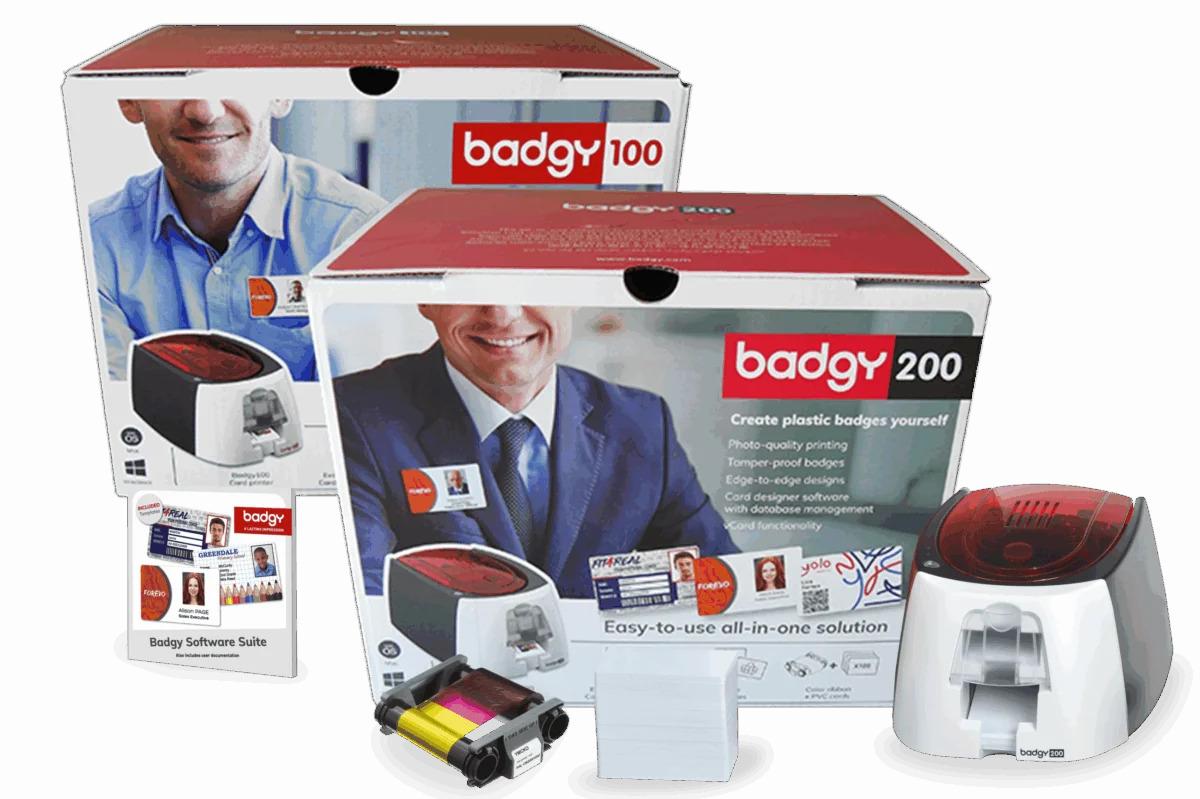
Badgy100 is designed for one-off card printing and is ideal for single printing needs. Badgy NZ states that the Badgy100 package includes a Badgy100 plastic-card printer, 50 blank white PVC cards, a colour ribbon with 50-print capacity, Evolis Badge Studio software, and a library of personalisable badge designs available for free download.
Badgy200 is better suited for batch print runs. Badgy NZ explains that with Badgy200, users can personalise and print several dozen or several hundred cards in one go, and the Plus version of Evolis Badge Studio allows database importing and mail-merge printing.
Step-by-Step: How to Print High-Quality Plastic Cards Yourself
Printing plastic cards in-house becomes simple once you follow a clear process. The goal is to prepare a clean design, use the right consumables, and print with consistent settings.
Step 1: Choose the Right Badgy Printer
Start by choosing the printer that matches your printing volume. If you only need occasional cards, Badgy100 is a practical choice. It is suitable for small businesses, clubs, schools, startups, and offices that print cards one at a time.
If your organisation prints cards more often or needs batches for staff, students, members, customers, or events, Badgy200 may be the better choice. It supports larger print runs and is designed for users who need more speed and flexibility.
Step 2: Prepare Your Card Design
A professional plastic card starts with a good design. Your card should be clear, easy to read, and aligned with your brand identity. Avoid overcrowding the card with too much information. The best designs usually include only the details that are needed for identification or use.
A strong plastic card design may include:
-
Organisation logo
-
Brand colours
-
Person’s name
-
Photo
-
Job title, membership type, or card category
-
ID number
-
Barcode or QR code
-
Expiry date
-
Contact or emergency information, if needed
With Evolis Badge Studio software, users can personalise cards and badges in just a few clicks. Badgy NZ also offers downloadable ready-to-use card designs, which makes it easier to create professional layouts without starting from scratch.
Step 3: Use Quality PVC Cards and Ribbons
Card quality depends heavily on the materials used. Using compatible PVC cards and ribbons helps produce better results and protects the printer from unnecessary issues. Cheap or unsuitable cards can affect print quality, colour results, and printer performance.
Badgy NZ’s product range includes consumables for Badgy printers, including cards and ribbons for high-quality printing. For event badge printing, Badgy NZ describes the solution as a complete pack with a PVC-card printer, consumables for high quality printing, Evolis Badge Studio software, and ready-to-use card designs.
Step 4: Personalise Each Card
Once your design is ready, add the personal details. For a staff card, this could include the employee’s name, photo, and department. For a loyalty card, it could include a customer name, barcode, and membership number. For an event badge, it may include attendee type, access level, or session details.
This is where in-house printing becomes very useful. You can personalise every card without waiting for an external designer or print supplier.
Step 5: Print a Test Card
Before printing a full batch, always print a test card. This allows you to check colour, alignment, spelling, logo quality, photo clarity, and barcode readability. A test print can prevent wasted cards and helps ensure the final result looks professional.
Check the following before printing more cards:
-
Is the name spelled correctly?
-
Is the logo sharp?
-
Is the photo clear?
-
Is the text easy to read?
-
Is the barcode or QR code working?
-
Are the margins correct?
-
Does the card match your brand style?
Step 6: Print On Demand or in Batches
After checking your test card, you can print the final cards. If you are using Badgy100, you can print one card at a time for smaller needs. If you are using Badgy200, you can print larger batches more efficiently.
Badgy NZ notes that Badgy100 is ideal when you need to print one-off cards on demand, while Badgy200 is suitable for batch print runs and can print several dozen or several hundred cards in one go.
Popular Plastic Cards You Can Print Without Outsourcing
A badgy plastic card printer is useful for many types of organisations. It is not limited to employee ID cards. You can use it for several business, education, retail, event, and membership purposes.
|
Card Type |
Common Use |
|
Staff ID cards |
Employee identification and workplace security |
|
Visitor badges |
Temporary guest identification |
|
Access cards |
Controlled entry and internal permissions |
|
Loyalty cards |
Customer retention and repeat purchase programmes |
|
Membership cards |
Clubs, gyms, associations, and community groups |
|
Student cards |
Schools, colleges, and training centres |
|
Event badges |
Conferences, seminars, exhibitions, and workshops |
|
Business cards |
Durable and professional networking cards |
Badgy NZ explains that the Badgy card printer can be used to create event badges, business cards, visitor badges, access badges, staff ID badges, and loyalty cards.
How In-House Printing Improves Brand Image
A plastic card is often one of the first physical brand items a person receives from your organisation. A staff member wears it every day. A customer keeps a loyalty card in their wallet. A member uses it to access services. An event attendee carries it throughout the venue.
When that card looks professional, it improves how people see your brand. Strong card design helps communicate trust, organisation, and attention to detail.
Badgy NZ highlights that the Badgy card printer allows users to create and personalise loyalty cards tailored to their brand image in just a few minutes. It also notes that personalised cards can include a barcode, logo, and design to enhance brand image and build customer loyalty.
Why Plastic Cards Are Better Than Paper Alternatives
Paper cards or laminated passes may appear cheaper at first, but they often do not last. They bend, tear, fade, and look less professional over time. Plastic cards are stronger and more suitable for repeated use.
Plastic cards are especially useful when cards need to be carried daily, scanned regularly, or presented to customers and visitors. They provide a better feel, cleaner appearance, and longer-lasting result.
Using a badgy printer for plastic cards also means you can avoid printing low-quality temporary cards. Your organisation can produce cards that look official from the start.
Quality Tips for Better Plastic Card Printing
To get the best results from your Badgy printer, it is important to follow good design and printing habits. Even a simple card can look professional if it is prepared properly.
Keep the Layout Clean
Do not overload the card with too much text. Use clear sections and leave enough space around the main details.
Use High-Quality Images
Employee photos and logos should be clear and properly sized. Low-resolution images can make the card look unprofessional.
Match Your Brand Colours
Use colours that match your business branding. This creates consistency between your cards, website, signage, uniforms, and marketing materials.
Check Text Size
Names, job titles, and ID numbers should be easy to read at card size. Small text may look fine on screen but become difficult to read when printed.
Maintain the Printer
Use recommended cleaning products and compatible consumables to help maintain print quality and printer performance.
Why Badgy NZ Is a Smart Choice for New Zealand Organisations
Badgy NZ provides a focused product range for businesses and organisations that want to print plastic cards in-house. The website includes information on the Badgy solution, Badgy100, Badgy200, consumables, card templates, technical support, how-to videos, and where to buy.
This makes it easier for New Zealand users to understand their options and choose a system that matches their needs. A small business may begin with Badgy100, while a larger office, school, retailer, or club may choose Badgy200 for batch printing.
Reasons to choose Badgy NZ include:
-
Practical solutions for in-house plastic card printing
-
Options for both single-card and batch printing needs
-
Badgy100 and Badgy200 printer choices
-
Card design software for personalisation
-
Blank PVC cards and colour ribbons
-
Downloadable badge design templates
-
Support resources for setup and maintenance
-
Suitable products for offices, schools, stores, clubs, events, and local organisations
Badgy NZ supports many sectors, including companies, stores, clubs and associations, educational establishments, and local government.
Final Thoughts
Printing high-quality plastic cards no longer needs to be outsourced. With a badgy printer, businesses can create professional cards in-house, save time, protect data, and improve branding. Whether you need one staff card, a set of loyalty cards, or a batch of event badges, a badgy plastic card printer gives you the control to print what you need, when you need it.
For New Zealand organisations that want a reliable and practical setup, Badgy NZ offers the products, consumables, templates, and support needed to get started. A badgy printer for plastic cards is more than a printing device. It is a smarter way to manage identification, membership, loyalty, and event card printing without delays or outsourcing.

 Arabic
 French
 Spanish
 Portuguese
 Deutsch
 Turkish
 Dutch
Dutch
 Italiano
 Russian
 Romaian
 Portuguese (Brazil)
 Greek
Greek