


Clean Coal Technology Industry Outlook Amid Global Energy Transition
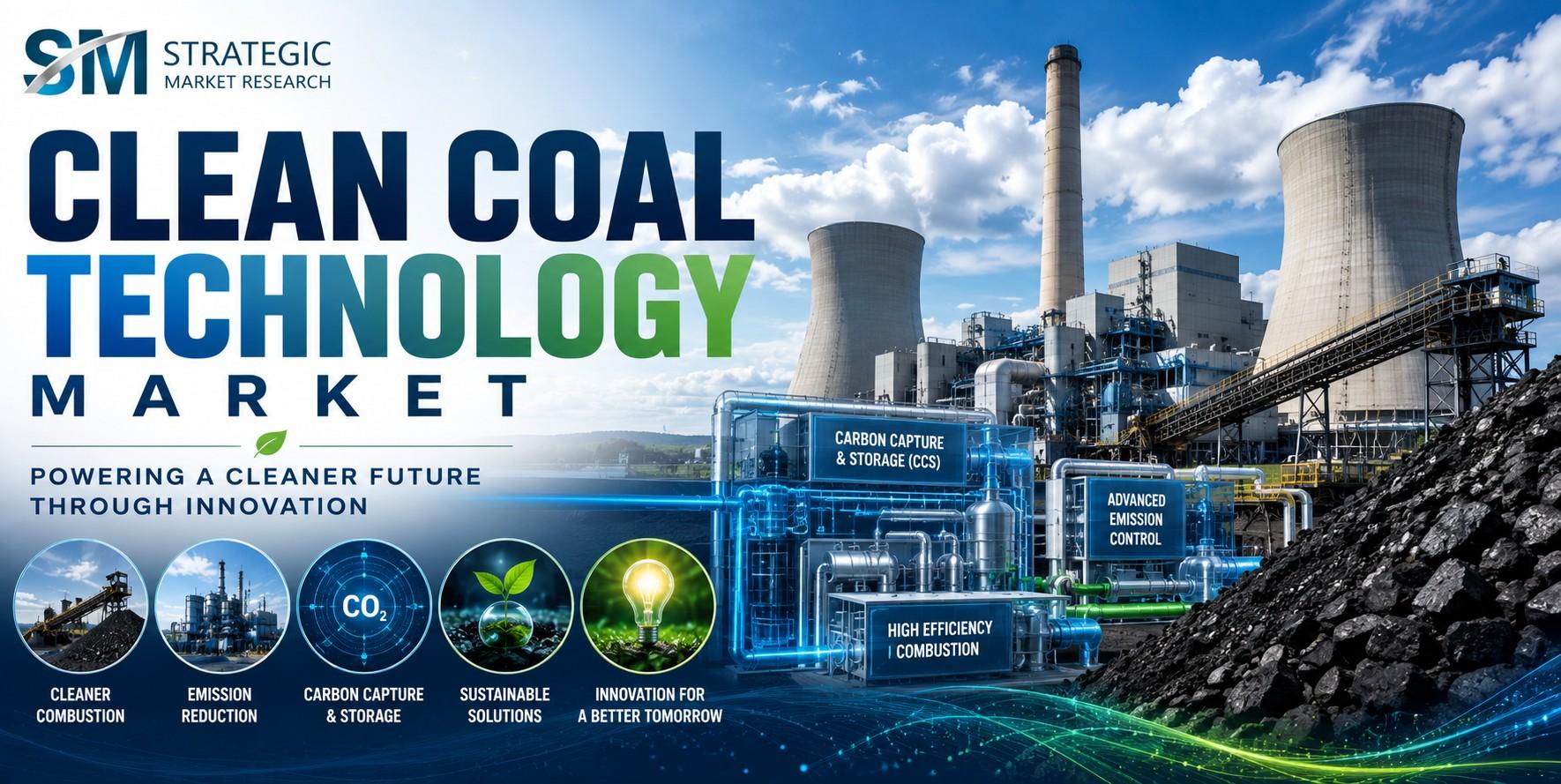
Clean Coal Technology Market: Supporting Low-Emission Thermal Power Generation During the Global Energy Transition
The global clean coal technology market is gaining renewed attention as governments and energy producers work to balance growing electricity demand, energy security requirements, and carbon-reduction objectives. Clean coal technologies include a broad range of advanced systems designed to improve the environmental performance of coal-fired power generation through enhanced efficiency, reduced emissions, carbon management integration, and optimized fuel consumption.
Although renewable energy adoption is accelerating worldwide, coal continues to play a major role in electricity generation across several industrialized and emerging economies due to abundant domestic reserves, grid reliability needs, and baseload power requirements. As a result, clean coal technologies are increasingly viewed as transitional solutions that help modernize existing coal infrastructure while lowering sulfur dioxide (SO₂), nitrogen oxide (NOx), particulate matter, mercury emissions, and carbon dioxide (CO₂) intensity.
Advancements in ultra-supercritical power systems, integrated gasification combined cycle (IGCC), fluidized bed combustion, carbon capture utilization and storage (CCUS), coal gasification, and advanced emissions-control technologies are reshaping the future of coal-based energy production. These technologies enable utilities to improve thermal efficiency, reduce operational costs, extend plant lifespan, and comply with increasingly strict environmental regulations.
Rising investments in industrial decarbonization, cleaner fuel conversion, retrofitting of thermal plants, and energy-efficiency upgrades are expected to create long-term growth opportunities across the clean coal technology landscape.
Market Overview and Future Outlook
The clean coal technology market is expected to register stable but strategically significant growth over the coming years as multiple economies continue investing in low-emission thermal power infrastructure. Market expansion is being supported by modernization of aging coal-fired plants, deployment of advanced combustion technologies, and rising investment in carbon-reduction systems.
Asia-Pacific remains the largest regional market due to extensive coal-based electricity generation across China, India, Indonesia, and other Southeast Asian countries. North America and Europe are focusing more heavily on carbon capture deployment, industrial decarbonization initiatives, and emissions-control upgrades for existing thermal facilities. Meanwhile, countries in the Middle East and Africa are exploring advanced coal-utilization technologies to strengthen industrial development and diversify energy resources.
The increasing use of artificial intelligence, predictive maintenance systems, digital twins, advanced sensors, and automated combustion optimization is further improving plant efficiency and emissions management. Utilities are adopting real-time analytics and smart monitoring platforms to optimize coal consumption and improve operational sustainability.
Major Market Drivers
Rising Need for Energy Security and Reliable Baseload Power
One of the key factors driving the clean coal technology market is the continued reliance on stable baseload electricity generation. Renewable energy sources such as solar and wind are inherently intermittent, increasing the importance of dependable backup and continuous power generation systems.
Countries with significant domestic coal reserves continue utilizing coal-fired power generation to reduce dependence on imported fuels and strengthen national energy security. Clean coal technologies allow these nations to maintain coal utilization while minimizing environmental impact through improved efficiency and lower emissions.
Rapidly industrializing and urbanizing economies are particularly focused on expanding reliable power infrastructure capable of supporting long-term economic growth.
Increasingly Strict Environmental Regulations
Governments worldwide are introducing tighter air-quality and carbon-emission regulations aimed at reducing industrial pollution and greenhouse gas emissions. Conventional coal plants are under growing pressure to meet stringent limits on sulfur dioxide, nitrogen oxide, particulate emissions, and overall carbon intensity.
As a result, utilities and industrial operators are investing in flue gas desulfurization systems, electrostatic precipitators, selective catalytic reduction technologies, and carbon capture systems. Advanced clean coal technologies help operators comply with environmental standards while avoiding the closure of critical power-generation assets.
Large-scale environmental modernization initiatives are particularly prominent in countries such as China, India, the United States, Germany, Japan, and South Korea, where coal remains part of the energy mix.
Expansion of Carbon Capture Utilization and Storage (CCUS)
Carbon capture utilization and storage is becoming an increasingly important component of global decarbonization strategies. CCUS systems capture carbon dioxide generated during coal combustion and either store it underground or convert it into industrial products and feedstocks.
Growing policy support for net-zero goals, industrial carbon reduction, and low-carbon manufacturing is accelerating investment in carbon capture infrastructure. Governments are offering subsidies, incentives, and research funding to encourage CCUS deployment across power plants and industrial facilities.
The integration of CCUS with ultra-supercritical plants and coal gasification systems is expected to create new pathways for lower-emission fossil-fuel utilization.
Modernization of Aging Coal Power Infrastructure
Many coal-fired facilities worldwide were constructed decades ago and now operate with low efficiency, high emissions, and increasing maintenance requirements. Utilities are investing in modernization programs to improve operational performance and extend plant life.
Upgrades involving advanced boilers, turbine optimization, combustion-control systems, emissions-monitoring technologies, and digital automation platforms are contributing to market growth. Modern ultra-supercritical plants achieve significantly higher thermal efficiency than traditional subcritical facilities, reducing coal consumption and lowering emissions intensity.
Market Challenges
Accelerating Shift Toward Renewable Energy
One of the primary restraints affecting the clean coal technology market is the rapid global transition toward renewable energy sources. Governments and investors are increasingly prioritizing solar, wind, hydroelectric, hydrogen, and battery-storage projects as part of long-term decarbonization strategies.
Declining renewable energy costs and expanding clean-energy incentives are reducing investment interest in coal-related infrastructure across several developed economies. In addition, many financial institutions are restricting funding for new coal projects due to environmental and sustainability concerns.
This transition may limit long-term expansion opportunities for certain clean coal technologies, especially in regions pursuing aggressive fossil-fuel phaseout policies.
High Installation and Operational Costs
Advanced clean coal systems require substantial investment for installation, integration, and maintenance. Technologies such as IGCC plants, carbon capture systems, and ultra-supercritical boilers involve sophisticated engineering, specialized materials, and complex infrastructure upgrades.
Retrofitting older facilities can be particularly expensive, discouraging adoption in cost-sensitive developing markets. Carbon capture technologies also increase operating costs because of the energy-intensive nature of carbon separation and storage processes.
These financial barriers continue to restrict widespread deployment among smaller utilities and industrial operators.
Environmental Opposition and Regulatory Uncertainty
Coal remains one of the most debated energy sources because of its environmental impact and contribution to greenhouse gas emissions. Environmental groups and climate policy advocates continue opposing coal-related investments regardless of efficiency improvements.
Uncertain carbon-pricing policies, changing environmental regulations, and shifting political priorities can create investment risks for long-term clean coal projects. In several regions, investors remain cautious about allocating capital to technologies that may face tighter restrictions in the future.
Emerging Growth Opportunities
Hydrogen Production Through Coal Gasification
Coal gasification technologies are increasingly being explored for hydrogen production. Gasification converts coal into synthesis gas, which can then be processed into hydrogen for industrial and energy applications.
The combination of coal gasification and carbon capture technologies offers opportunities for producing lower-emission hydrogen while utilizing existing coal reserves. Several countries are evaluating coal-to-hydrogen pathways to support industrial decarbonization and future hydrogen economies.
Expansion into Industrial Applications
Clean coal technologies are expanding beyond conventional power generation into sectors such as chemicals, fertilizers, steel manufacturing, cement production, and synthetic fuels. Coal gasification systems are increasingly used to produce methanol, ammonia, and industrial feedstocks.
This diversification is helping technology providers reduce reliance on traditional thermal power markets while opening new revenue opportunities across heavy industrial sectors.
Integration of AI and Digital Optimization
Artificial intelligence and industrial automation are improving the operational efficiency and sustainability of coal-fired facilities. AI-based combustion optimization, predictive maintenance, digital twins, and emissions forecasting systems are helping utilities reduce fuel usage and improve plant performance.
Advanced analytics platforms can monitor boiler conditions, optimize air-fuel ratios, detect equipment failures, and reduce unplanned downtime. Smart monitoring technologies are expected to become an important competitive differentiator across future clean coal projects.
Competitive Landscape
The clean coal technology market remains highly competitive and technology-driven, involving engineering companies, equipment manufacturers, energy providers, carbon capture specialists, and industrial automation firms.
Leading market participants are focusing on:
- Advanced emissions-control technologies
- High-efficiency combustion systems
- Carbon capture integration
- Coal gasification technologies
- Digital plant optimization
- Industrial decarbonization solutions
- Strategic partnerships and government-backed projects
Companies are increasingly collaborating with utilities, governments, and research institutions to develop next-generation low-emission thermal power solutions. Investments in pilot projects, demonstration facilities, and carbon-neutral coal initiatives are accelerating innovation throughout the industry.
Competition is also intensifying around scalable CCUS deployment, modular carbon-capture systems, and hybrid energy systems combining thermal generation with renewable energy integration.
Regional Insights
Asia-Pacific
Asia-Pacific dominates the clean coal technology market due to extensive dependence on coal-fired electricity generation. China and India continue investing heavily in ultra-supercritical plants, emissions-control retrofits, and advanced thermal-efficiency upgrades to reduce pollution while maintaining energy security.
Rapid industrialization, expanding electricity demand, and abundant domestic coal reserves continue supporting long-term market growth across the region.
North America
North America is witnessing growing investment in carbon capture technologies and industrial decarbonization projects. The United States is expanding CCUS infrastructure, hydrogen production initiatives, and advanced thermal power modernization programs supported by federal climate incentives.
Europe
Europe remains focused on reducing emissions from existing thermal infrastructure while accelerating renewable energy adoption. Several countries are exploring carbon capture systems and industrial decarbonization strategies for hard-to-abate sectors.
Middle East and Africa
The Middle East and Africa are gradually exploring clean coal technologies to support industrial development and diversify energy portfolios. Investments in advanced thermal-efficiency systems and industrial gasification projects are expected to increase steadily over the coming years.
Latest Impact Analysis
The clean coal technology market is undergoing substantial transformation due to rising decarbonization pressure, evolving energy policies, and continuous advancements in carbon-management technologies. Recent global energy supply disruptions and electricity shortages have reinforced the importance of dependable baseload generation, prompting several countries to reconsider the role of cleaner thermal power systems.
At the same time, climate commitments are pushing technology developers to accelerate innovation in carbon capture efficiency, low-emission combustion systems, digital optimization, and industrial carbon-recycling technologies.
Geopolitical tensions affecting natural gas supply chains have also renewed interest in domestic coal-utilization strategies in certain regions. Utilities are increasingly balancing environmental goals with energy affordability, supply reliability, and industrial competitiveness.
Future Perspective
The long-term future of the clean coal technology market will depend on how global energy systems balance decarbonization priorities with energy-security needs. While renewable energy deployment will continue expanding rapidly, coal is expected to remain part of the energy mix in several developing economies for the foreseeable future.
Advanced clean coal technologies integrated with carbon capture, hydrogen production, digital optimization, and emissions-control systems are expected to play a transitional role in reducing emissions from existing thermal infrastructure. Future market growth will depend heavily on policy support, carbon-pricing mechanisms, technological innovation, and the commercial scalability of large-scale CCUS deployment.
As industries worldwide seek lower-emission operations without compromising power reliability, clean coal technologies are expected to retain strategic relevance within the broader global energy transition.
Related Reports:
Gasification Clean Coal Market

 English
 Arabic
 French
 Spanish
 Portuguese
 Deutsch
 Turkish
 Dutch
Dutch
 Italiano
 Russian
 Romaian
 Greek
Greek