


How Much Protein in 3 Eggs? Calories & Nutrition Guide
Introduction
Eggs are one of the most popular and affordable sources of high-quality protein in the world. Whether you eat them for breakfast, after a workout, or as part of a balanced diet, eggs provide essential nutrients that support muscle growth, brain function, and overall health.
But one of the most common questions people ask is:
“How much protein is in 3 eggs?”
In this detailed guide, you’ll learn everything about the protein content, calories, nutrients, health benefits, drawbacks, comparisons, and frequently asked questions about eggs. This article is designed to help you understand how eggs fit into a healthy diet and fitness lifestyle.
Protein in Eggs: The Basics
A typical large egg (from Egg) contains:
- Protein: ~6–6.5 grams
- Calories: ~70–78 kcal
- Fat: ~5 grams
- Carbohydrates: <1 gram
So when you eat 3 eggs, the nutritional value multiplies.
How Much Protein in 3 Eggs?
If we consider 1 large egg contains about 6.3 grams of protein, then:
👉 3 Eggs Provide:
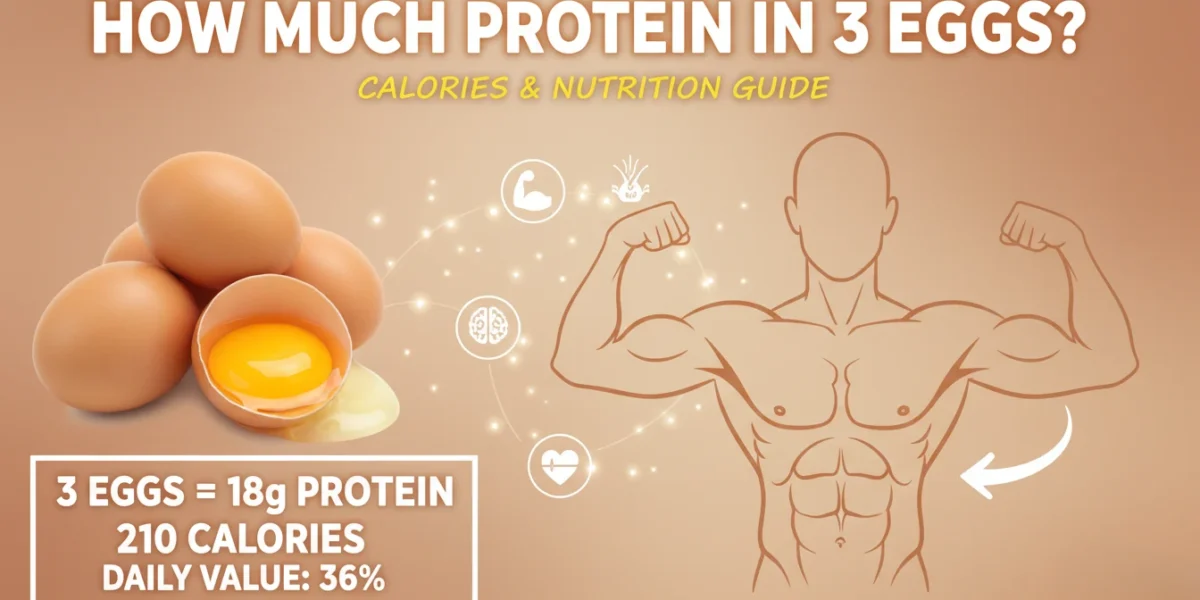
- Protein: ~18–19 grams
- Calories: ~210–234 kcal
- Fat: ~15 grams
- Carbs: ~1–2 grams
Key Takeaway:
3 eggs provide nearly 20 grams of high-quality complete protein, making them an excellent natural protein source for muscle building and daily nutrition.
Protein Quality in Eggs
Egg protein is considered a “complete protein”, meaning it contains all 9 essential amino acids that your body cannot produce on its own.
These amino acids are crucial for:
- Muscle repair
- Hormone production
- Enzyme function
- Immune support
This is why eggs are often used as a benchmark protein source in nutrition science.
Calories in 3 Eggs
Calories vary depending on cooking method:
3 Large Eggs (Plain, Boiled or Poached):
- ~210–220 kcal
3 Eggs (Fried in oil or butter):
- ~270–350 kcal (depending on fat used)
3 Eggs (Scrambled with milk & butter):
- ~250–320 kcal
👉 Cooking method significantly affects calorie intake, but protein remains nearly the same.
Nutritional Breakdown of 3 Eggs
Here’s a detailed breakdown:
| Nutrient | Amount (3 Eggs) |
|---|---|
| Calories | 210–234 kcal |
| Protein | 18–19 g |
| Total Fat | 15 g |
| Saturated Fat | 4–5 g |
| Carbohydrates | 1–2 g |
| Cholesterol | ~550–600 mg |
| Vitamin A | High |
| Vitamin D | Moderate |
| Vitamin B12 | High |
| Choline | Very High |
| Selenium | High |
Health Benefits of Eating 3 Eggs Daily
1. Supports Muscle Growth
Eggs are rich in leucine, an amino acid essential for muscle protein synthesis. This makes them ideal for gym-goers and athletes.
2. Boosts Brain Function
Eggs contain choline, which is essential for memory, cognitive function, and brain development.
3. Helps in Weight Management
Eggs are highly satiating, meaning they keep you full for longer and reduce unnecessary snacking.
4. Improves Eye Health
They contain lutein and zeaxanthin, antioxidants that support eye health and reduce risk of age-related vision problems.
5. Strengthens Bones
Vitamin D in eggs helps improve calcium absorption and bone strength.
6. Enhances Metabolism
High protein intake increases thermogenesis, helping the body burn more calories.
Are 3 Eggs Enough Protein for a Day?
It depends on your body needs:
- Sedentary adult: 50–60g protein/day
- Active individual: 70–100g protein/day
- Athletes/bodybuilders: 100–150g+ protein/day
👉 So 3 eggs provide about 20–35% of daily protein needs for many people, but should be combined with other protein sources like dairy, meat, legumes, or protein supplements.
Best Ways to Eat 3 Eggs
1. Boiled Eggs (Best for Health)
- No added fat
- Preserves nutrients
- Ideal for weight loss
2. Scrambled Eggs
- Easy digestion
- Can add vegetables for fiber
3. Omelette
- Versatile and filling
- Can include cheese, onions, spinach
4. Fried Eggs
- Tasty but higher in calories due to oil
Egg White vs Whole Egg
| Feature | Egg White | Whole Egg |
|---|---|---|
| Protein | High | High |
| Fat | 0 g | Moderate |
| Calories | Very low | Moderate |
| Vitamins | Low | High |
| Minerals | Low | High |
👉 Egg whites are great for low-calorie diets, but whole eggs provide better overall nutrition.
Pros and Cons of Eating 3 Eggs
✅ Pros
- High-quality complete protein
- Rich in vitamins and minerals
- Supports muscle growth
- Affordable and widely available
- Improves satiety (reduces hunger)
- Supports brain and eye health
❌ Cons
- High cholesterol content (~550–600 mg in 3 eggs)
- May not suit people with specific cholesterol sensitivity
- Excess frying adds unhealthy fats
- Allergy risk for some individuals
- Overconsumption may imbalance diet if not varied
Comparison: Eggs vs Other Protein Sources
| Food | Protein (per 100g) | Calories |
|---|---|---|
| Eggs | ~13g | ~155 kcal |
| Chicken breast | ~31g | ~165 kcal |
| Milk | ~3.4g | ~60 kcal |
| Lentils | ~9g | ~116 kcal |
| Paneer | ~18g | ~265 kcal |
👉 Eggs are not the highest protein source but are among the most balanced and bioavailable proteins.
Who Should Eat 3 Eggs Daily?
Good for:
- Gym-goers and athletes
- People trying to lose weight
- Students needing brain nutrition
- Busy professionals needing quick meals
Should be cautious:
- People with high cholesterol (consult doctor)
- Individuals with egg allergies
- Those on strict low-fat diets
Myths About Eggs
❌ Myth 1: Eggs increase bad cholesterol
👉 Reality: For most healthy people, eggs do not significantly impact blood cholesterol.
❌ Myth 2: Only egg whites are healthy
👉 Reality: Most nutrients are in the yolk.
❌ Myth 3: Eating eggs daily is harmful
👉 Reality: Moderate daily consumption is safe for most people.
FAQs About Protein in 3 Eggs
1. How much protein is in 3 boiled eggs?
About 18–19 grams of protein.
2. Is 3 eggs a day enough protein?
It depends on your needs. It covers a portion but not all daily protein requirements.
3. Can I eat 3 eggs daily for weight loss?
Yes, boiled eggs are excellent for weight loss due to high satiety and low calories.
4. Do eggs build muscle?
Yes, eggs provide complete protein that supports muscle repair and growth.
5. Which is better: egg white or whole egg?
Whole eggs are more nutritious, but egg whites are lower in calories.
6. How many calories are in 3 fried eggs?
Approximately 270–350 calories, depending on oil used.
7. Is egg protein better than whey?
Egg protein is natural and complete, while whey is faster absorbing. Both are excellent.
Final Verdict
Three eggs provide around 18–19 grams of high-quality protein, along with essential vitamins, minerals, and healthy fats. They are one of the most efficient and affordable protein sources available.
However, balance is key. While eggs are nutritious, they should be part of a varied diet that includes vegetables, grains, legumes, and other protein sources.
If your goal is muscle gain, weight loss, or general health, eating 3 eggs daily can be a simple and powerful addition to your nutrition plan.
Visit Now >> https://reviewsandbuy.org/nutrition/how-much-protein-in-3-eggs-guide/

 English
 Arabic
 French
 Spanish
 Deutsch
 Turkish
 Dutch
Dutch
 Italiano
 Russian
 Romaian
 Portuguese (Brazil)
 Greek
Greek