Mental health practices across the USA are seeing a major rise in patient demand, but many therapists still struggle with one persistent challenge — billing. From insurance verification delays to denied claims and changing payer guidelines, billing for mental health therapists has become more complicated than ever.
For solo therapists, group counseling centers, psychologists, psychiatrists, and behavioral health clinics, even small billing mistakes can create major revenue gaps. A missed modifier, incomplete documentation, or incorrect CPT code can delay payments for weeks.
That’s why many providers are now focusing on improving their billing systems, streamlining claims management, and partnering with experienced support teams that understand behavioral health reimbursement.
This article explores the real challenges of mental health billing, practical ways to improve collections, and why specialized billing support is becoming essential for practices across different states in the USA.
Why Mental Health Billing Is More Complex Than Other Specialties
Behavioral health billing involves more than simply submitting claims. Therapists must manage:
- Time-based CPT coding
- Telehealth billing requirements
- Prior authorization rules
- Frequent payer policy changes
- Documentation compliance
- Coordination between therapy and psychiatry services
Unlike general medical specialties, mental health claims are often reviewed more closely by insurance companies. This increases the chances of denials, underpayments, and delays.
For example, a therapist providing 60-minute psychotherapy sessions may use CPT code 90837, while shorter sessions require different coding structures. If the documentation does not support medical necessity, the claim can easily be rejected.
In many states, providers are now turning to specialized medical billing services that understand payer-specific behavioral health requirements.
Common Billing Challenges Mental Health Therapists Face
Insurance Verification Delays
One of the biggest issues in behavioral health practices is incomplete insurance verification before appointments.
When eligibility checks are skipped:
- Claims may be denied
- Patients receive unexpected bills
- Collections become harder
- Cash flow slows down
A strong front-end verification process helps therapists avoid reimbursement issues before treatment even begins.
Frequent Claim Denials
Denied claims are extremely common in behavioral health.
Some of the most common denial reasons include:
- Incorrect CPT codes
- Missing modifiers
- Authorization issues
- Incomplete session notes
- Non-covered services
- Timely filing limits exceeded
Practices that monitor denial patterns regularly tend to recover revenue faster.
Telehealth Billing Confusion
Teletherapy expanded rapidly across the USA, but billing rules continue to evolve.
Different payers may require:
- Specific telehealth modifiers
- Place of service variations
- Audio-only documentation
- State-specific compliance rules
Mental health providers offering virtual care must stay updated to avoid claim rejections.
The Importance of Accurate Medical Coding in Behavioral Health
Accurate coding is the foundation of clean claims.
Mental health practices depend heavily on proper:
- CPT coding
- ICD-10 diagnosis selection
- Modifier usage
- Documentation alignment
This is where professional medical coding services become valuable. Skilled coders help reduce billing errors while ensuring documentation supports reimbursement.
Behavioral health coding mistakes often lead to:
- Downcoding
- Audits
- Payment delays
- Compliance risks
Many growing practices now combine medical billing and coding services to improve both claim accuracy and payment turnaround times.
State-Specific Demand for Mental Health Billing Support
Behavioral health providers across the country are increasingly seeking specialized billing partners that understand regional payer requirements.
Delaware Behavioral Health Practices
The demand for a reliable mental health billing agency delaware continues to grow as more therapy clinics expand insurance participation.
Providers also look for a trusted mental health billing services company delaware that can handle credentialing, claims follow-up, and denial management efficiently.
Georgia Mental Health Providers
Behavioral health clinics in Georgia face increasing payer complexity, especially with Medicaid and managed care plans.
A dependable mental health billing company georgia can help providers improve reimbursement accuracy while reducing administrative workload.
Many clinics also prefer working with a mental health billing services company georgia that understands local insurance trends and behavioral health coding standards.
Arizona Therapy Clinics
The need for specialized mental health billing services arizona has increased due to rising telehealth adoption and expanding mental health programs.
Therapists often need billing teams that can manage multi-payer behavioral health claims effectively.
North Carolina Counseling Centers
The growth of private practices has increased demand for mental health billing services north carolina, especially for providers managing hybrid therapy models.
Clinics in Cary also seek dedicated mental health billing services cary to improve collections and reduce billing backlogs.
Ohio Behavioral Health Billing
Behavioral health practices are increasingly searching for mental health billing services ohio to improve claim submission accuracy and payer follow-up.
Many providers specifically look for mental health billing toledo ohio support because local payer regulations and reimbursement policies can vary significantly.
Expanding Billing Needs Across Other States
Behavioral health practices are also actively seeking:
- mental health billing services connecticut
- mental health billing services illinois
- mental health billing services rhode island
- mental health billing services tennessee
- mental health billing services texas
- mental health billing services virginia
As insurance regulations continue evolving, therapists need billing systems that are proactive rather than reactive.
How Revenue Cycle Management Improves Mental Health Practice Stability
Many therapists focus heavily on patient care while overlooking the financial side of the practice.
That’s where revenue cycle management services play a critical role.
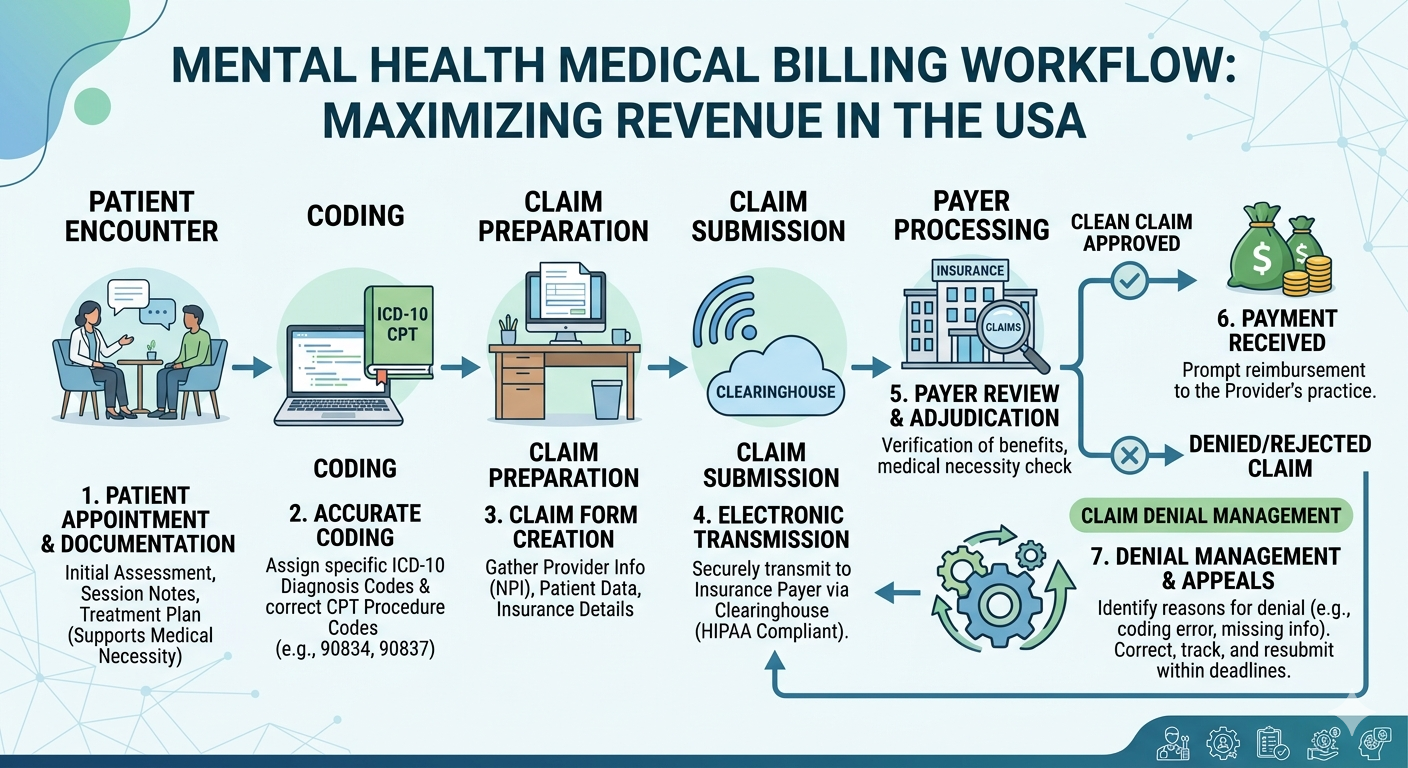
Revenue cycle management includes:
- Patient registration
- Insurance verification
- Claim creation
- Coding review
- Claim submission
- Payment posting
- Denial management
- Accounts receivable follow-up
An optimized revenue cycle helps practices:
- Reduce claim denials
- Improve cash flow
- Shorten payment cycles
- Increase revenue visibility
- Lower administrative stress
For growing therapy clinics, efficient billing operations directly impact long-term sustainability.
Why Credentialing Matters for Mental Health Therapists
Many providers underestimate how important credentialing is for consistent reimbursement.
Without proper enrollment:
- Claims may reject automatically
- Insurance payments may be delayed
- Providers cannot join payer networks
- Revenue loss increases
Professional credentialing services help therapists:
- Enroll with commercial payers
- Maintain CAQH profiles
- Revalidate provider information
- Handle payer follow-ups
- Prevent enrollment gaps
For new therapy practices especially, credentialing delays can significantly affect early revenue growth.
Real-World Example: How Billing Gaps Affect Therapy Practices
Consider a small behavioral health clinic with:
- 4 therapists
- 25 patient visits daily
- Average reimbursement of $120 per session
If even 10 claims per week are denied due to coding or documentation errors, the clinic could lose thousands of dollars monthly.
Now multiply that over a year.
Many practices discover that improving billing accuracy alone can dramatically improve profitability without increasing patient volume.
Key Strategies to Improve Billing for Mental Health Therapists
1. Verify Insurance Before Every Visit
Coverage rules frequently change. Verifying eligibility helps avoid claim denials and patient disputes.
2. Use Behavioral Health-Specific Coding Support
General billing teams may not fully understand psychotherapy coding requirements. Specialized medical billing and coding services reduce costly errors.
3. Monitor Denial Trends Monthly
Tracking denial patterns helps identify recurring issues before they impact revenue significantly.
4. Improve Documentation Consistency
Clinical notes should clearly support:
- Medical necessity
- Session duration
- Treatment goals
- Progress tracking
Incomplete documentation remains one of the top denial triggers in behavioral health.
5. Focus on Accounts Receivable Follow-Up
Unpaid claims should never sit unresolved for long periods.
Consistent follow-up improves:
- Cash flow
- Collection rates
- Insurance accountability
The Growing Shift Toward Outsourced Behavioral Health Billing
Many mental health providers are now outsourcing billing operations to reduce administrative pressure.
The benefits often include:
- Lower overhead costs
- Faster reimbursements
- Reduced denial rates
- Better compliance monitoring
- Improved operational efficiency
Instead of hiring large in-house teams, practices can access experienced billing professionals with behavioral health expertise.
This allows therapists to focus more on patient care rather than insurance paperwork.
How 247 Medical Billing Services Supports Mental Health Practices
As behavioral health billing continues becoming more complex, many providers seek experienced partners who understand the unique challenges of therapy reimbursement.
247 Medical Billing Services supports healthcare providers with:
- Medical billing services
- Medical coding services
- Medical billing and coding services
- Revenue cycle management services
- Credentialing services
By helping practices improve billing accuracy, reduce denials, and streamline reimbursement workflows, specialized billing support can contribute to stronger financial performance and smoother operations.
For mental health therapists navigating payer complexities, compliance requirements, and evolving telehealth regulations, experienced billing guidance can make a significant difference.
Conclusion
Billing for mental health therapists is no longer just an administrative task — it is a critical part of maintaining financial stability and delivering uninterrupted patient care.
From coding accuracy and telehealth compliance to credentialing and denial management, behavioral health billing requires specialized attention.
As therapy practices continue growing across the USA, providers who invest in efficient billing systems, proper documentation, and experienced support teams are better positioned for long-term success.
Whether operating a solo practice or managing a multi-provider behavioral health clinic, improving billing processes can help therapists reduce stress, improve collections, and focus more on what truly matters — patient outcomes.
FAQs
1. Why is billing for mental health therapists more challenging than other specialties?
Mental health billing involves time-based coding, detailed documentation requirements, telehealth regulations, and frequent insurance policy changes, making claims more complex.
2. What are the most common reasons for denied behavioral health claims?
Common reasons include incorrect CPT coding, authorization issues, incomplete documentation, missing modifiers, and insurance eligibility problems.
3. How can medical coding services help mental health providers?
Professional medical coding services help improve coding accuracy, reduce denials, support compliance, and ensure documentation aligns with payer requirements.
4. What does revenue cycle management include for therapy practices?
Revenue cycle management services typically include insurance verification, claim submission, coding review, payment posting, denial management, and accounts receivable follow-up.
5. Why are credentialing services important for therapists?
Credentialing services help providers enroll with insurance networks, maintain compliance, and avoid reimbursement delays caused by incomplete payer enrollment.
6. Should mental health therapists outsource billing services?
Many therapists outsource billing to improve reimbursement accuracy, reduce administrative workload, manage denials more effectively, and maintain healthier cash flow.




 English
 Arabic
 French
 Spanish
 Deutsch
 Turkish
 Dutch
Dutch
 Italiano
 Russian
 Romaian
 Portuguese (Brazil)
 Greek
Greek