


The Ultimate Attention Magnet: How LED Rental Exhibits Drive Booth Traffic at Trade Shows
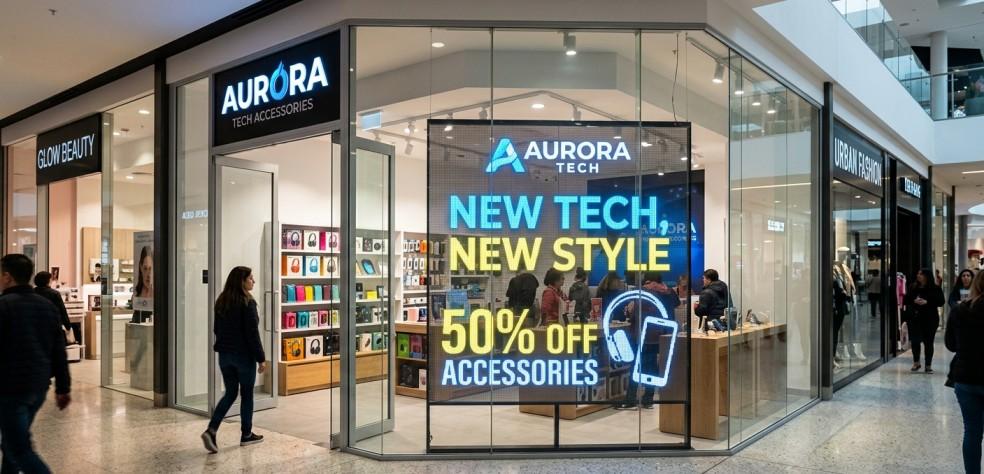
Walk onto the floor of any major trade show—CES in Las Vegas, the NRF Big Show in New York, or Automate in Chicago—and you will immediately understand the problem. Hundreds of booths stretch in every direction. Exhibitors have spent thousands on custom graphics, promotional giveaways, and perfectly manicured product displays. And yet, most of these booths blur together into an indistinguishable sea of banner stands, retractable signs, and fabric backdrops. The human brain, confronted with this visual overload, simply checks out. To stand out, you cannot just be present. You must be impossible to ignore. You must be the brightest, most dynamic, most mesmerizing object in the attendee's field of vision. That is where rental LED walls come in. In a crowded convention hall, everyone is fighting for eyes. Standard banner stands blend into the background; glowing, seamless LED walls win the floor. The led screen rental model has transformed trade show marketing by making high-impact, cinema-quality displays accessible to exhibitors of nearly any budget. Instead of shipping heavy, permanent structures or settling for static vinyl, brands can now rent modular LED panels that curve, tower, wrap around corners, and display full-motion video that stops foot traffic cold. For exhibitors who understand that attention is the only currency that matters on the trade show floor, LED rental is not a luxury. It is a competitive necessity.
The Problem with Static Displays
Let us be honest about what a traditional trade show booth actually looks like to an attendee. They have been walking the floor for four hours. Their feet hurt. Their bag is full of brochures they will never read. They have seen 47 variations of the same "Innovation" headline printed on foam core. The banner stands, no matter how well designed, are flat. They do not move. They do not change. After the first glance, they offer nothing new.
Static displays also suffer from the distance problem. An attendee 50 feet away cannot read a 3-inch font on a banner. They can, however, see a 10-foot-tall LED tower displaying a slow-motion video of your product in use. Motion is detectable from dramatically farther away than static text or images. Human peripheral vision is exquisitely sensitive to movement. A glowing, changing LED wall triggers an automatic orienting response. The attendee's head turns before they have consciously decided to look. That is the moment your booth wins.
Modular Rental Panels: Beyond the Rectangle
The most exciting capability of rental LED systems is their modularity. Unlike a fixed, permanent installation that is bolted to a wall, rental panels are designed to be configured, reconfigured, and reconfigured again. A single set of 500mm x 500mm panels can be assembled into:
Curved Walls: By using panels with angled connector locks (typically adjustable in 2.5-degree or 5-degree increments), a rental LED wall can curve gently around a booth's perimeter. A curved wall softens the harsh lines of a convention center and creates a "hugging" effect that draws attendees into the space. The curve also improves viewing angles: attendees standing at an oblique angle still see a clean image, not a distorted mess.
Towers and Columns: Instead of one wide wall, exhibitors are increasingly building tall, narrow LED towers that flank their booth entrance. A pair of 8-foot-wide by 12-foot-tall LED towers creates a "digital gateway." Attendees walk between the towers, instantly surrounded by motion graphics and product videos. The psychological effect is that they have entered a premium, high-production-value environment. Their expectations are elevated before they have spoken to a single salesperson.
L-Shapes and Wraps: By placing LED panels on both the back wall and a side wall of a booth (forming an L shape), exhibitors create a partially immersive environment. The content can be synchronized across both surfaces, so a product animation starts on the back wall and "moves" onto the side wall. This is disorienting in a delightful way. The attendee feels surrounded by the brand, not just faced with it.
The rental model makes these complex shapes practical. A company that owns a flat LED wall cannot easily reconfigure it into a curve or a tower. A rental house, by contrast, maintains a large inventory of versatile panels, curved connector hardware, and custom rigging. They deliver exactly the configuration you need for each show, then take it back and reconfigure it for the next client.
Real-Time Content: Social Media Walls and Live Feeds
A glowing LED wall is attention-getting. A glowing LED wall that displays live, changing, relevant content is irresistible. Rental LED systems can be fed from any video source, which opens up powerful engagement strategies.
Social Media Walls: Display a live feed of Instagram and Twitter posts using your event hashtag. Attendees love seeing their own content on a giant, beautiful screen. They will stop, point, pull out their phones to take a picture of their picture, and tag your brand. The screen becomes a self-perpetuating content engine. One exhibitor at South by Southwest (SXSW) reported a 300% increase in social media mentions after installing a live social media wall on a rental LED display.
Real-Time Product Feeds: If you are launching a new product or running a show special, display a live counter of how many units have been sold, how many demos have been given, or how much time remains in a flash sale. Scarcity and social proof are powerful psychological triggers. When an attendee sees "237 demos completed today," they think, "I should be number 238."
Live Camera Feeds: Place a small, discreet camera at your booth and display the feed on the LED wall. Attendees see themselves walking toward the booth. They wave at themselves. They laugh. They have already engaged with your brand before you have said a word.
High Brightness: Cutting Through Convention Center Gloom
Convention center lighting is a nightmare for display technology. The overhead lights are harsh, direct, and often aimed specifically to eliminate shadows for photography. A standard consumer television or a rear-projection screen gets completely washed out. The image looks faded, low-contrast, and sad.
Rental LED walls are designed for exactly this environment. They output between 1,000 and 5,000 nits (compared to a consumer TV's 300-500 nits). At full brightness, an LED wall is not competing with the convention center lights. It is overpowering them. The image remains punchy, saturated, and readable from across the hall.
This high brightness also solves the glare problem. Standard LCD screens have a reflective glass surface. Convention center lights bounce off that surface, creating hotspots and mirror-like reflections that obscure the image. LED walls have a matte, non-reflective surface. The light from the overhead fixtures is absorbed or diffused, not reflected. The attendee sees the content, not a distorted reflection of their own face.
Dwell Time: The Metric That Matters
Trade show success is measured in dwell time—the number of minutes a qualified attendee spends inside your booth. The industry average is depressingly low: 2 to 4 minutes. An attendee stops, grabs a brochure, maybe asks one question, and leaves.
An effective LED wall changes that calculus dramatically. Exhibitors who replaced static backwalls with rental LED displays report average dwell time increases of 50% to 150%. A 6-minute dwell time means the salesperson has time to ask qualifying questions, demonstrate the product, and capture a lead. A 2-minute dwell time means they barely have time to say hello.
Why does LED increase dwell time? Because the screen gives attendees something to look at while they wait. In a static booth, an attendee waiting for a salesperson has nothing to do but stare at their phone. They get bored and leave. In a booth with a dynamic LED wall, they watch the content. The content can be designed to answer common questions, showcase case studies, or simply entertain. The attendee is engaged during the wait. They are far less likely to drift away.
Practical Rental Considerations for Trade Shows
If you are convinced that a rental LED wall belongs in your next trade show booth, here are practical considerations.
Lead Time: Book your rental at least 60 to 90 days before the show. High-quality rental inventory is limited, especially during major industry weeks.
Structural Engineering: Large LED walls require proper rigging and ballasting. The rental company should provide stamped engineering drawings for the convention center's approval. Do not skip this step. A falling LED wall is a catastrophe.
Content Resolution: Design your content at the native resolution of the LED wall. Do not stretch a 1920x1080 image across a 3840x1080 wall. The rental house will provide exact pixel dimensions.
On-Site Technician: Always, always, always include an on-site technician in your rental agreement. Trade shows have unpredictable power, interference from nearby booths, and the ever-present risk of an attendee bumping into a panel. The technician fixes problems before you even notice them.
Conclusion
The trade show floor is a battlefield for attention. The victors are not the brands with the cleverest slogan or the most expensive giveaways. The victors are the brands that glow, move, and captivate. Rental LED walls give every exhibitor—from the billion-dollar tech giant to the hungry startup—access to the most powerful attention magnet ever invented. They are modular, bright, dynamic, and surprisingly affordable. And they transform a booth from a static display into an experience. In a hall of thousands of booths, experience wins every time. Rent the wall. Own the floor.

 English
 Arabic
 French
 Portuguese
 Deutsch
 Turkish
 Dutch
Dutch
 Italiano
 Russian
 Romaian
 Portuguese (Brazil)
 Greek
Greek