


Top 10 Digital Marketing Strategies Used by Experts in 2026
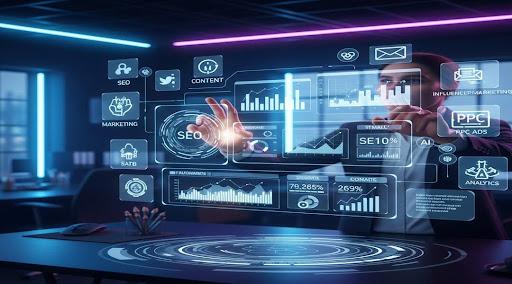
Digital marketing in 2026 is no longer just evolving—it is being completely redefined. The strategies that worked only a few years ago are quickly becoming outdated as technology, algorithms, and consumer behavior continue to shift at a rapid pace. Audiences are more selective, competition is stronger, and brands that fail to adapt are struggling to remain visible online.
Today’s leading marketers are not simply launching campaigns. They are building intelligent, data-driven systems that combine AI, personalization, automation, and multi-channel engagement to create long-term growth. Instead of chasing trends, experts focus on delivering meaningful experiences that connect with users throughout the entire customer journey.
1. AI-Powered Content Creation and Optimization
Artificial intelligence has become one of the most powerful tools in modern marketing. Businesses are using AI to generate content ideas, conduct keyword research, optimize SEO, analyze customer behavior, and predict future trends. Platforms like ChatGPT, Jasper, and Surfer SEO allow marketers to create high-quality content faster than ever before.
The real advantage of AI is not replacing creativity but scaling it. Companies can now produce more content, maintain consistency across channels, and improve efficiency without sacrificing quality.
2. Search Intent and Advanced SEO Strategies
SEO in 2026 is focused more on user intent than simple keyword placement. Search engines have become smarter at understanding what users truly want, which means marketers must create content that directly answers questions and solves problems.
Experts now focus on semantic SEO, topical relevance, conversational search, and long-tail keywords that match user intent. Businesses that understand why users search are achieving higher rankings and stronger conversion rates.
3. Hyper-Personalized Marketing
Generic marketing no longer works because consumers expect personalized experiences. Businesses are using customer data, behavioral tracking, and automation tools to deliver customized emails, ads, recommendations, and website experiences.
Personalized marketing helps brands build stronger relationships with customers because every interaction feels more relevant. This approach increases engagement, improves customer loyalty, and drives significantly higher conversions.
4. Short-Form Video Marketing
Short-form video content continues to dominate digital platforms like TikTok, Instagram Reels, and YouTube Shorts. Modern audiences prefer fast, engaging, and visually appealing content that is easy to consume and share.
Experts understand that video is one of the fastest ways to build trust, increase visibility, and capture attention. Brands that consistently create entertaining, educational, or emotionally engaging videos are experiencing rapid growth across multiple industries.
5. Omnichannel Marketing
Successful marketers no longer rely on a single platform to generate results. Omnichannel marketing combines SEO, social media, email marketing, paid advertising, and content marketing into one connected strategy.
The goal is to create a seamless customer journey across multiple touchpoints. A customer may discover a brand through social media, read a blog post later, click on an advertisement, and finally convert through an email campaign. Consistency across channels is now essential for success.
6. Data-Driven Decision Making
Modern marketing decisions are powered by analytics and measurable insights rather than guesswork. Businesses use tools like Google Analytics and Hotjar to track user behavior, traffic sources, and conversion patterns.
Data helps marketers identify opportunities, improve campaigns, and eliminate ineffective strategies quickly. Companies that rely on data-driven marketing gain a major competitive advantage because they can optimize performance continuously.
7. Conversational Marketing
Consumers now expect instant communication and real-time support from brands. Conversational marketing uses chatbots, live chat systems, and messaging platforms to engage users immediately.
Instead of waiting for email responses or filling out long forms, customers can interact directly with businesses in real time. This creates a smoother customer experience, improves satisfaction, and increases conversions by reducing friction during the buying process.
8. Social Commerce and Influencer Marketing
Social media platforms have evolved into powerful shopping ecosystems where users can discover and purchase products directly. Influencer collaborations, live selling, and in-app purchases are becoming increasingly common.
Consumers trust influencers more than traditional advertisements because influencer content feels authentic and relatable. Brands that partner with creators effectively are building stronger credibility and reaching highly engaged audiences.
9. Content Clusters and Topical Authority
Experts are focusing on building authority rather than publishing random content. This strategy involves creating pillar pages supported by multiple related articles that are internally linked together.
Content clusters help search engines understand expertise within a niche while also improving user experience. Websites that demonstrate deep knowledge on specific topics are rewarded with stronger rankings and greater visibility.
10. User Experience and Website Optimization
A website is no longer just an online presence—it is the foundation of the customer experience. Slow loading speeds, poor mobile optimization, confusing navigation, and cluttered layouts can significantly reduce conversions.
Experts prioritize website speed, responsive design, clean layouts, and usability because user experience directly impacts both SEO performance and revenue. Even small improvements in website performance can lead to major increases in customer engagement and sales.
Digital marketing success in 2026 depends on adaptability, innovation, and customer understanding. Businesses that embrace AI, prioritize personalization, leverage data, and optimize user experiences are consistently outperforming competitors.
For companies looking to grow, the best approach is to start implementing these strategies gradually. Focus on mastering a few key areas first, track performance carefully, and refine your systems over time. Progress and consistency matter far more than perfection.
The digital landscape will continue evolving rapidly, and the brands that learn, test, and adapt the fastest will dominate the future. The opportunity is enormous for businesses willing to take action now.
Ready to Elevate Your Digital Marketing Strategy?
Now is the perfect time to take action and start implementing the strategies that are shaping the future of digital marketing. Begin with a few high-impact tactics, focus on delivering value to your audience, and continuously optimize based on real data and performance insights.
The digital landscape is evolving rapidly, and businesses that adapt early are the ones that gain the biggest competitive advantage. From AI-powered content creation and personalized marketing to short-form video and omnichannel campaigns, every strategy you apply can help drive stronger engagement, better conversions, and long-term growth.
Success in 2026 will belong to brands that stay agile, experiment consistently, and never stop improving. Start building smarter marketing systems today and position your business ahead of the competition before the market becomes even more crowded.

 English
 Arabic
 French
 Spanish
 Portuguese
 Deutsch
 Turkish
 Dutch
Dutch
 Italiano
 Russian
 Romaian
 Portuguese (Brazil)