


Fiber Laser Welder: Precision Welding Technology Transforming Industrial Fabrication
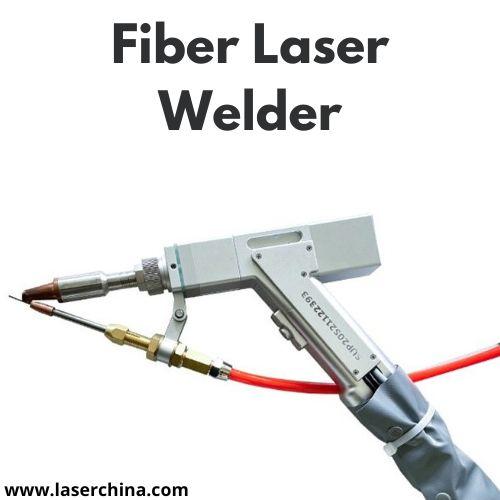
In modern industrial manufacturing, precision and efficiency are no longer optional—they are essential. The fiber laser welder has emerged as a leading solution for industries looking to achieve high-quality welding with minimal material distortion. Unlike traditional welding methods, fiber laser welding relies on concentrated laser beams to join metals and alloys with remarkable precision. This technology has revolutionized sectors ranging from automotive and aerospace to electronics and heavy machinery manufacturing.
The core principle behind fiber laser welding is the generation of a high-intensity laser beam that is guided through optical fibers. These fibers allow for exceptional beam quality, maintaining a focused point even over long distances. As the laser interacts with the metal surface, it rapidly heats and melts the material, forming a clean and precise weld. This process is particularly suitable for thin metals and materials that require minimal thermal impact.
One of the most striking aspects of fiber laser welders is their ability to handle a wide range of metals. Steel, aluminum, copper, titanium, and various alloys can be effectively welded using this technology. This versatility makes fiber laser welders a staple in production lines where multiple materials are used, providing uniform results across different components. In industries where precision is critical, such as aerospace, this ensures that structural integrity is never compromised.
The operational process of a fiber laser welder is highly adaptable. Parameters such as laser power, pulse duration, and travel speed can be adjusted to match the specific needs of a project. This flexibility allows manufacturers to work with varying material thicknesses without changing equipment. Moreover, fiber laser welding produces minimal spatter, reducing the need for post-processing and cleanup, which contributes to faster production cycles and lower overall costs.
In addition to precision, fiber laser welders are designed for automation and integration. Many production facilities integrate these welders into robotic systems, enabling continuous operation with minimal human intervention. This not only increases efficiency but also ensures consistency in high-volume production. Automated fiber laser welding systems are capable of maintaining uniform weld quality, even in complex geometries or on components that are difficult to reach using traditional methods.
Safety is another important consideration in industrial welding, and fiber laser welders are designed with that in mind. The enclosed beam path reduces the risk of accidental exposure, and advanced monitoring systems allow operators to maintain control over the welding process at all times. Unlike open-arc welding methods, fiber laser welding minimizes harmful fumes and reduces the thermal footprint, creating a safer working environment.
Maintenance and durability are key factors when investing in industrial equipment. Fiber laser welders benefit from a solid-state design with fewer moving parts than traditional welding systems. This reduces the likelihood of mechanical failure and extends the operational lifespan of the equipment. Additionally, the optical fiber delivery system requires minimal alignment adjustments, making the welder easier to operate and maintain. Regular inspections and proper calibration ensure that performance remains consistent over years of use.
The economic impact of integrating fiber laser welders into production lines is significant. While the initial investment may be higher than conventional welding equipment, the long-term savings from increased productivity, reduced material waste, and lower labor costs make it a profitable choice for many manufacturers. Industries that have adopted fiber laser welding consistently report improvements in throughput and overall production quality.
Another notable application of fiber laser welders is in micro-welding and electronics assembly. The precision offered by these welders makes them ideal for joining very small components without causing thermal damage to surrounding areas. This capability is particularly important in industries such as medical devices, semiconductors, and telecommunications, where even minor inaccuracies can compromise the functionality of the product.
The environmental impact of industrial welding is also influenced by the choice of technology. Fiber laser welding is a cleaner alternative compared to conventional arc welding, as it generates less smoke, fumes, and noise. Energy efficiency is another advantage, as fiber lasers convert electricity into laser light with high efficiency, reducing overall power consumption. Manufacturers increasingly prioritize such sustainable practices, making fiber laser welders a forward-looking choice for modern production.
In conclusion, the fiber laser welder has redefined what is possible in industrial manufacturing. Its combination of precision, adaptability, and efficiency makes it an indispensable tool for industries that demand high-quality welds and consistent performance. From large-scale automotive production to delicate electronics assembly, this technology offers a reliable solution that meets the evolving needs of modern manufacturing.
Final Thoughts
The fiber laser welder represents the pinnacle of welding technology, blending precision, versatility, and productivity. As industries continue to evolve, the ability to deliver flawless welds quickly and efficiently becomes increasingly important. By embracing fiber laser welding, manufacturers can achieve superior results while maintaining operational efficiency and safety. This technology not only enhances production capabilities but also sets a new standard for quality and innovation in industrial fabrication.

 English
 Arabic
 French
 Spanish
 Portuguese
 Deutsch
 Dutch
Dutch
 Italiano
 Russian
 Romaian
 Portuguese (Brazil)
 Greek
Greek