


Industrial Motorized Valves – Smart Control for Oil, Gas & Chemical Plants
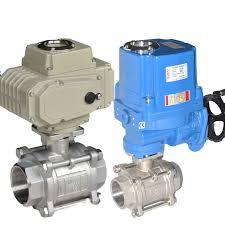
Industrial motorized valves play a vital role in modern industrial operations, especially in oil, gas, and chemical processing environments. These sectors handle fluids that are often hazardous, corrosive, flammable, or sensitive in nature. In such conditions, manual valve operations can be slow, risky, and inconsistent. Motorized valves solve these challenges by offering automated, accurate, and safe control.
A motorized valve is a combination of a valve body and an electric actuator that opens, closes, or adjusts the valve position automatically. These valves integrate easily with PLC, SCADA, and DCS systems, enabling remote monitoring, precise flow adjustment, and full automation. As industries increasingly adopt advanced automation technologies, motorized valves have become a standard for efficient flow management.
What Are Industrial Motorized Valves?
Industrial motorized valves are valves powered by electric actuators instead of manual handwheels or levers. The actuator converts electrical energy into mechanical torque, which then operates the valve mechanism. Motorized valves are used on ball valves, butterfly valves, gate valves, globe valves, and plug valves, depending on the application.
Their primary advantage is automated operation. The operator can control the valve from a central command system without being physically present near the pipeline, which is especially useful in hazardous industries like oil and gas.
Importance of Motorized Valves in Oil, Gas and Chemical Plants
These industries operate under strict safety, accuracy, and efficiency requirements. Motorized valves ensure stable process control and reduce operational hazards. Here are the major reasons they are widely used:
1. Enhanced Safety
Hazardous fluids and high-pressure systems require reliable shut-off and quick response capabilities. Motorized valves provide remote and emergency shut-off functions, reducing the need for manual intervention in dangerous areas. This minimizes the risk of accidents, fires, leaks, and spills.
2. Precise Process Control
Oil refining, gas processing, and chemical production involve complex processes where even small flow variations can disrupt product quality. Motorized valves offer fine movement control, allowing operators to adjust the valve to exact positions. This ensures stable flow, pressure control, and smooth operation.
3. Reduced Manual Errors
Manual operation leads to inconsistencies, especially across different shifts. With motorized valves, plant operators can maintain uniform performance and eliminate human mistakes. The system operates based on accurate signals and predefined logic.
4. Suitable for Hazardous Zones
Motorized actuators are available with explosion-proof, flameproof, and weatherproof designs. They operate reliably in offshore platforms, chemical reactors, oil pipelines, and tank farms exposed to extreme temperatures, dust, and corrosive environments.
5. 24/7 Automation
Oil, gas, and chemical plants run continuously. Motorized valves offer uninterrupted operation without fatigue, ensuring consistent flow control around the clock.
How Motorized Valves Work
A motorized valve consists of three main parts: the valve body, the electric actuator, and the control interface. The actuator receives signals from PLC or SCADA and moves the valve to the required position. Depending on the design, the valve may operate in on-off mode or modulating mode.
On-off motorized valves open or close fully, suitable for isolating pipelines or starting and stopping flow. Modulating motorized valves adjust to any position between 0 and 100 percent, making them ideal for regulating flow, pressure, or temperature.
Sensors, limit switches, torque switches, and feedback signals help ensure smooth operation and provide real-time status information to the control room.
Key Features of Industrial Motorized Valves
Motorized valves come with advanced features that support critical industrial requirements. Some of the most important features include:
-
High torque output for heavy-duty valves
-
Fast or slow operation depending on process needs
-
Position feedback for accurate monitoring
-
Soft-start and soft-stop functions
-
Manual override for emergencies
-
Weatherproof and explosion-proof housings
-
Low maintenance electric actuators
These features make the valve systems highly dependable for challenging industrial environments.
Applications in Oil, Gas, and Chemical Processing
Motorized valves are used in a wide range of operations.
Oil Industry
-
Crude oil transfer lines
-
Refinery processing units
-
Tank farms and storage terminals
-
Offshore drilling and production
Motorized valves help regulate crude movement, isolate critical lines, and maintain safety in high-risk zones.
Gas Industry
-
Natural gas pipelines
-
Gas distribution networks
-
LNG processing plants
These valves ensure precise control of pressurized gas flow and safe automated shut-off during system failures.
Chemical Industry
-
Reactors and mixers
-
Solvent and chemical transfer lines
-
Corrosive fluid systems
Motorized valves provide accurate regulation and prevent chemical exposure risk to workers.
Benefits of Using Motorized Valves
The adoption of motorized valves offers several advantages:
-
Improved operational efficiency
-
Reduced downtime due to automation
-
Accurate and stable flow regulation
-
Enhanced workplace safety
-
Lower long-term operating costs
-
Remote access and centralized control
-
Compatibility with advanced automation technologies
With these benefits, industries achieve higher productivity, safer environments, and better process reliability.
Conclusion
Industrial motorized valves are a crucial component in modern oil, gas, and chemical plants where precision, safety, and automation are priorities. With advanced electric actuation, remote control capabilities, and durable construction, these valves ensure smooth operation even under extreme conditions. As industrial automation continues to grow, motorized valves will remain a key solution for intelligent and reliable flow management.

 English
 Arabic
 French
 Spanish
 Portuguese
 Deutsch
 Turkish
 Dutch
Dutch
 Italiano
 Russian
 Romaian
 Portuguese (Brazil)