


What a Company Should Check Before Choosing a Built to Suit Data Center Provider ?
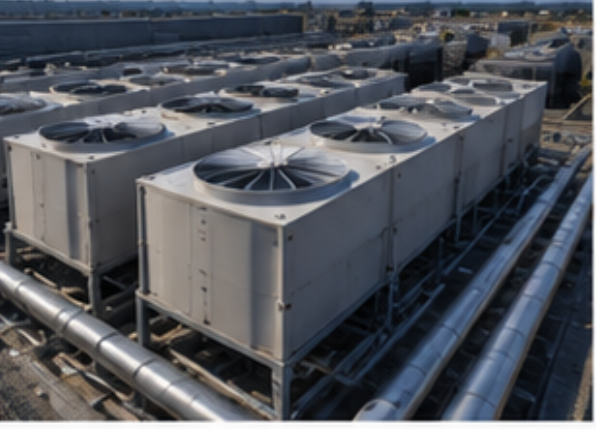
When a company considers moving critical IT infrastructure to a built to suit data center, the decision can significantly impact operational stability, costs, and growth. A built to suit data center is a facility customized to meet the specific requirements of a company rather than a standard colocation space. Choosing the right provider requires careful evaluation across multiple dimensions.
Below, we break down what companies should check before committing to a provider.
1. Facility Design and Customization Capabilities
The defining feature of a built to suit data center is that it is designed for the enterprise’s specific requirements. Companies should examine:
-
Power Capacity: Does the facility support your current and projected IT load? Consider high-density computing and redundancy requirements.
-
Cooling Systems: Are cooling solutions designed for your hardware type, and can they adapt as capacity grows?
-
Layout Flexibility: Can the provider accommodate modular growth or changing IT configurations without major disruption?
The provider’s ability to create a space tailored to your exact needs is essential. A poor fit can lead to operational inefficiencies or future expansion challenges.
2. Reliability and Uptime Guarantees
Operational continuity is critical for any business running online services or data-intensive operations. Companies should evaluate:
-
Redundant Power and Network: Check if the facility has N+1 or N+2 redundancy for power and networking.
-
Service Level Agreements (SLAs): Review guarantees on uptime and response times. A professional provider will clearly define SLAs.
-
Historical Performance: Ask for uptime records, maintenance schedules, and incident response histories.
A reliable built to suit data center minimizes downtime and protects business continuity, which is especially important for growing companies scaling services to new customers.
3. Security and Compliance Measures
Data security is a top priority. Companies should verify that the provider implements:
-
Physical Security: 24/7 surveillance, access control, and monitoring.
-
Environmental Protections: Fire suppression, flood prevention, and climate monitoring.
-
Regulatory Compliance: Support for relevant standards, such as ISO 27001, PCI DSS, or local data protection laws.
Ensuring compliance and security from day one avoids costly retrofits and reduces exposure to legal or operational risks.
4. Connectivity Options
Fast and reliable network connectivity is essential for any enterprise infrastructure. Before choosing a provider, check:
-
Carrier Diversity: Multiple telecom providers reduce dependency on a single network.
-
Cloud Connectivity: If your workloads interact with cloud platforms, check direct connectivity options.
-
Latency Considerations: Ensure the facility’s location supports optimal network performance for end-users or business operations.
A good built to suit data center will integrate seamlessly with your existing network architecture and allow room for future connectivity upgrades.
5. Operational Support and Expertise
Even with a custom-built facility, a company depends on the provider’s operational expertise:
-
Monitoring and Maintenance: Evaluate the provider’s ability to maintain power, cooling, and network systems proactively.
-
Technical Support: Confirm response times and on-site support capabilities.
-
Experience with Similar Clients: A provider familiar with enterprises of your scale or industry can anticipate operational challenges.
Operational support reduces the burden on internal IT teams and ensures that infrastructure risks are managed professionally.
6. Scalability and Expansion Options
As companies grow, IT requirements often evolve. Check if the built to suit data center allows:
-
Modular Expansion: Ability to add racks, power, or cooling without major facility changes.
-
Long-Term Capacity Planning: Can the facility accommodate anticipated growth over the next 3–5 years?
-
Flexible Lease Terms: Some providers allow scalable agreements that match business growth.
A facility that cannot adapt to future requirements may force premature relocation or costly upgrades.
7. Financial and Contract Considerations
Finally, companies should understand the financial terms:
-
Cost Structure: Evaluate upfront build costs, recurring fees, and what services are included.
-
Contract Terms: Assess obligations, exit clauses, and flexibility for scaling.
-
ROI Analysis: Compare owning versus using a custom-built facility in terms of total cost of ownership and risk reduction.
Financial clarity ensures that the investment aligns with the company’s growth strategy and risk tolerance.
Conclusion
Choosing a built to suit data center provider is more than selecting a physical space. Companies need to assess the facility’s design, operational reliability, security, connectivity, support, scalability, and financial terms. Careful evaluation across these factors allows enterprises to scale confidently without infrastructure risk.
Partnering with an experienced provider, such as platforms offered by CapitaLand Data Centre Group, can give companies a tailored facility while transferring operational and compliance responsibilities to specialists. This allows internal teams to focus on strategic business priorities while keeping critical IT infrastructure safe and reliable.
FAQs
Q.1 What is a built to suit data center?
A. It is a data center facility designed and constructed to meet the specific needs of a single enterprise, rather than using a standard colocation setup.
Q.2 Why should companies consider a built to suit data center?
A. It provides customized infrastructure, reduces operational risks, supports compliance, and allows businesses to scale efficiently.
Q.3 How do I evaluate provider reliability?
A. Review uptime guarantees, SLAs, redundancy design, and historical operational performance before committing.
Q.4 Can built to suit facilities be expanded as a company grows?
A. Yes, a properly designed facility allows modular expansion of space, power, cooling, and network connectivity to match business growth.
Q.5 What role does operational support play in choosing a provider?
A. Strong operational support ensures that infrastructure runs smoothly, reduces internal team workload, and addresses issues promptly to maintain uptime.

 English
 Arabic
 French
 Spanish
 Portuguese
 Deutsch
 Turkish
 Dutch
Dutch
 Italiano
 Russian
 Romaian
 Portuguese (Brazil)