Introduction
Erectile dysfunction (ED) is a common condition that affects men of all ages, although it becomes more prevalent with increasing age. It refers to the consistent inability to achieve or maintain an erection sufficient for satisfactory sexual performance. While occasional erection problems are normal, persistent erectile dysfunction can affect confidence, relationships, and overall quality of life.
Traditional treatments such as oral medications, injections, vacuum erection devices, and penile implants have helped many men manage ED. However, these options often provide temporary symptom relief rather than addressing the underlying cause.
Shockwave Therapy for Erectile Dysfunction, also known as Low-Intensity Extracorporeal Shockwave Therapy (Li-ESWT), is an innovative, non-invasive treatment designed to improve penile blood circulation and stimulate tissue regeneration. Instead of simply creating an erection for a short period, shockwave therapy aims to restore natural erectile function by promoting healthier blood vessels and improving vascular health.
As research continues to evolve, this treatment has gained popularity among urologists and men's health clinics as a potential option for carefully selected patients with vascular-related erectile dysfunction.
What Is Shockwave Therapy for Erectile Dysfunction?
Shockwave therapy is a medical procedure that uses low-intensity acoustic waves to stimulate healing inside penile tissues. These sound waves trigger biological responses that encourage the growth of new blood vessels, improve circulation, and enhance the function of existing blood vessels.
Healthy blood flow is essential for achieving and maintaining an erection. When blood vessels become damaged due to aging, diabetes, hypertension, smoking, or cardiovascular disease, erectile function may gradually decline.
Shockwave therapy is designed to improve this circulation naturally without surgery, injections, or medications during treatment.
Unlike tablets that only work for a few hours, shockwave therapy attempts to improve the underlying vascular health responsible for erections.
Understanding Erectile Dysfunction
An erection occurs when increased blood flow fills the erectile tissues of the penis. The brain, hormones, nerves, muscles, and blood vessels all work together during this process.
When any part of this system becomes impaired, erectile dysfunction may occur.
Common symptoms include:
- Difficulty getting an erection
- Difficulty maintaining an erection
- Reduced firmness during intercourse
- Decreased sexual confidence
- Reduced spontaneous morning erections
ED can range from mild to severe and may develop gradually or suddenly depending on the underlying cause.
How Shockwave Therapy Works
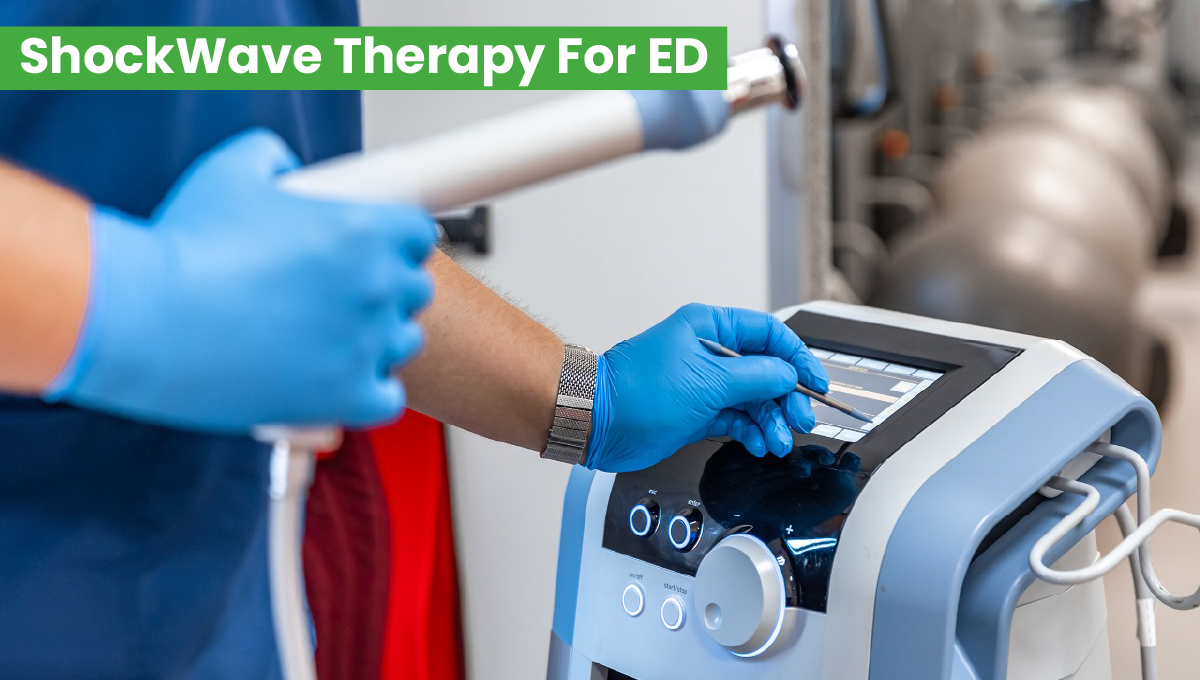
Low-intensity acoustic waves are delivered into targeted penile tissues using a specialized handheld device.
The acoustic energy creates microscopic mechanical stress within the tissue. This controlled stimulation activates the body's natural repair mechanisms without causing significant tissue damage.
The biological effects may include:
- Formation of new blood vessels (angiogenesis)
- Improved penile blood circulation
- Increased oxygen delivery
- Enhanced endothelial function
- Stimulation of stem cells
- Increased collagen remodeling
- Release of growth factors
- Improved nitric oxide activity
- Better tissue regeneration
Over time, healthier blood vessels may support stronger and more natural erections in appropriate patients.
Causes of Erectile Dysfunction
Understanding the cause of ED is important because shockwave therapy is most effective for certain types of erectile dysfunction.
Vascular Disease
Poor blood circulation is the leading cause of erectile dysfunction in many men.
Diabetes
High blood sugar damages both blood vessels and nerves, making erections more difficult.
High Blood Pressure
Hypertension reduces blood vessel flexibility and limits blood flow.
High Cholesterol
Plaque buildup inside arteries restricts circulation throughout the body, including penile arteries.
Smoking
Smoking damages the lining of blood vessels and accelerates vascular disease.
Obesity
Excess body weight contributes to hormonal imbalance and cardiovascular disease.
Stress and Anxiety
Psychological factors may interfere with normal sexual function.
Hormonal Disorders
Low testosterone and endocrine disorders may reduce libido and erectile quality.
Neurological Disorders
Conditions affecting the nervous system can interfere with nerve signals necessary for erections.
Who Is an Ideal Candidate?
Shockwave therapy may be considered for men who:
- Have mild to moderate erectile dysfunction
- Have vascular (vasculogenic) ED
- Still achieve partial erections
- Want a non-surgical treatment option
- Prefer to reduce dependence on ED medication
- Have not achieved satisfactory improvement with lifestyle changes alone
A comprehensive medical evaluation is necessary before treatment begins.
Who May Not Be Suitable?
Shockwave therapy may not be appropriate for men with:
- Severe nerve-related erectile dysfunction
- Extensive penile scarring
- Untreated hormonal disorders
- Active genital infections
- Bleeding disorders
- Certain implanted medical devices, depending on the treatment area
- Severe erectile dysfunction following radical pelvic surgery with significant nerve injury
The decision should always be made by a qualified healthcare provider.
Benefits of Shockwave Therapy
Non-Invasive
No surgery, needles, or implants are required.
Drug-Free Treatment
No medication is administered during the procedure.
Short Treatment Sessions
Most sessions are completed within 15 to 30 minutes.
Minimal Downtime
Patients usually return to work and normal activities immediately.
Improved Blood Flow
Enhanced circulation supports healthier erectile tissue.
Natural Healing
The treatment encourages the body's own repair processes.
Potential Long-Term Benefits
Some men experience improvements that continue beyond the treatment period, although duration varies among individuals.
May Improve Response to ED Medication
Certain patients who previously had limited benefit from oral medications may respond better after treatment.
The Shockwave Therapy Procedure
Initial Consultation
The doctor reviews:
- Medical history
- Sexual health history
- Current medications
- Cardiovascular risk factors
- Lifestyle habits
Additional testing may be recommended if needed.
Preparation
Little preparation is required.
Patients are usually advised to:
- Maintain normal hygiene
- Wear comfortable clothing
- Follow any medication instructions provided by the physician
During the Procedure
A conductive gel is applied to the treatment area.
A handheld shockwave device delivers low-intensity acoustic pulses to several points along the penis according to a predetermined treatment protocol.
The procedure is performed in the clinic without anesthesia.
Most patients describe the sensation as mild tapping or vibration.
After Treatment
Patients may leave immediately after the session.
Hospitalization is not necessary.
How Many Sessions Are Required?
Treatment schedules vary depending on the clinic and the patient's condition.
Common protocols involve:
- 6 to 12 sessions
- Two sessions each week
- Treatment over several weeks
Your healthcare provider will determine the most appropriate plan.
Recovery
Recovery is generally simple.
Most patients can:
- Return to work immediately
- Drive home after treatment
- Resume routine daily activities
Any recommendations regarding sexual activity should be discussed with the treating clinician.
When Will Results Appear?
Shockwave therapy does not produce immediate erections during treatment.
Because it works by promoting tissue repair and vascular changes, improvements typically occur gradually over several weeks or months.
The timing and degree of improvement differ between individuals.
Success Rate
Clinical research has shown encouraging results, particularly in men with mild to moderate vasculogenic erectile dysfunction. Many studies report meaningful improvements in erectile function scores for appropriately selected patients.
However, treatment outcomes vary based on factors such as:
- Cause of erectile dysfunction
- Severity of disease
- Age
- Overall cardiovascular health
- Diabetes control
- Lifestyle habits
- Treatment protocol used
Researchers continue to study the long-term effectiveness and identify which patients benefit most.
Possible Side Effects
Shockwave therapy has a favorable safety profile when performed by trained professionals.
Temporary side effects may include:
- Mild redness
- Temporary swelling
- Slight tenderness
- Tingling sensation
- Minor discomfort during treatment
These effects generally resolve without specific treatment.
Serious complications are uncommon.
Advantages Compared with Other Treatments
| Shockwave Therapy |
Oral ED Medications |
| Non-invasive |
Non-invasive |
| Targets vascular health |
Primarily treats symptoms |
| No medication taken during sessions |
Medication usually taken before sexual activity |
| Minimal downtime |
Minimal downtime |
| May provide lasting improvements in selected patients |
Temporary effect only |
Lifestyle Changes That Support Better Outcomes
Shockwave therapy should be viewed as part of a comprehensive approach to men's health.
Healthy habits that may improve erectile function include:
- Regular physical activity
- Heart-healthy eating patterns
- Weight management
- Smoking cessation
- Limiting alcohol
- Controlling blood pressure
- Managing diabetes effectively
- Getting adequate sleep
- Reducing stress
Cost of Shockwave Therapy
The total cost depends on several factors, including:
- Geographic location
- Clinic reputation
- Number of sessions
- Technology used
- Provider expertise
Since multiple sessions are commonly recommended, patients should ask about package pricing and the complete treatment plan before starting therapy.
Frequently Asked Questions (FAQs)
Is shockwave therapy painful?
Most men report only mild discomfort or a tapping sensation during treatment. The procedure is generally well tolerated.
Is anesthesia required?
No. Shockwave therapy is typically performed without local or general anesthesia.
Can I drive home after treatment?
Yes. Patients can usually drive and resume normal activities immediately.
Does shockwave therapy permanently cure erectile dysfunction?
No treatment can guarantee a permanent cure. Some patients experience lasting improvement, while others may require additional therapy or other treatments depending on the underlying cause.
Who benefits the most?
Current evidence suggests the greatest benefit is seen in men with mild to moderate vasculogenic erectile dysfunction, where reduced blood flow is the primary problem.
Can I continue taking ED medication?
Many patients continue prescribed ED medication during treatment if advised by their healthcare provider. Treatment plans should always be individualized.
Is the treatment safe?
When performed by qualified healthcare professionals using appropriate equipment, shockwave therapy is generally considered safe and well tolerated.
Conclusion
Shockwave therapy for erectile dysfunction is an emerging, non-invasive treatment that aims to improve erectile function by enhancing blood flow and supporting the body's natural healing processes. Rather than providing only temporary symptom relief, it seeks to address vascular factors that contribute to ED in selected patients.
Current research shows promising results, particularly for men with mild to moderate vasculogenic erectile dysfunction, though outcomes vary and long-term evidence is still developing. A thorough medical evaluation is essential to determine whether this therapy is appropriate, and it is most effective when combined with healthy lifestyle changes and management of underlying medical conditions. Patients considering shockwave therapy should consult a qualified healthcare professional to discuss potential benefits, limitations, and alternative treatment options.




 English
 Arabic
 French
 Spanish
 Portuguese
 Deutsch
 Turkish
 Italiano
 Russian
 Romaian
 Portuguese (Brazil)
 Greek
Greek