


Top Language Learning Apps for the Easiest Language to Learn?
Top Language Learning Apps for the Easiest Language to Learn
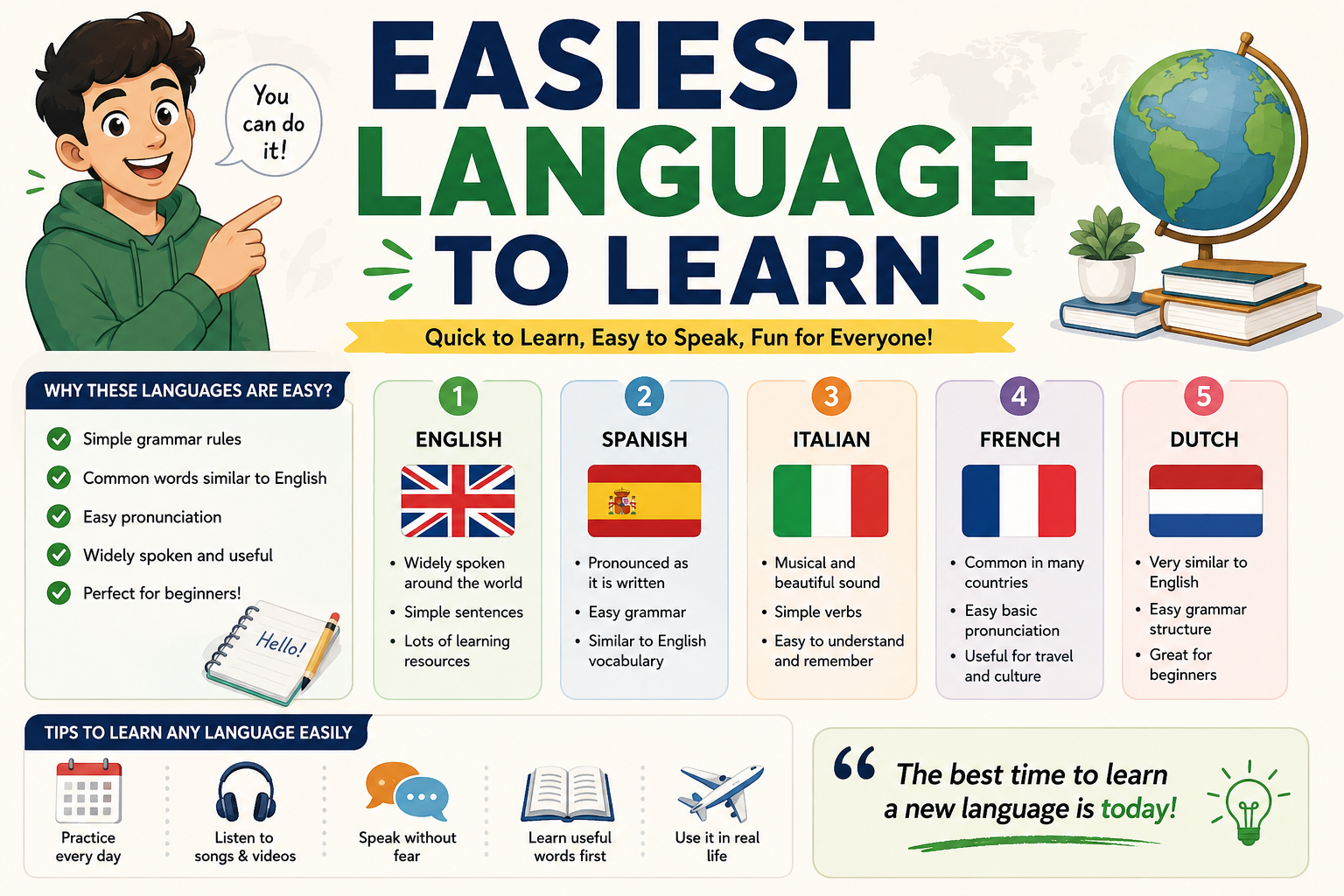
Learning a new language is easier than ever, especially if you choose one that's naturally close to your native tongue. For English speakers, languages like Spanish, Italian, Dutch, and Norwegian consistently rank among the easiest to pick up thanks to shared vocabulary, similar sentence structure, and familiar phonetics. But choosing the right language is only half the equation — the right app can make the difference between steady progress and giving up after a week. Here's a look at the best language learning apps to help you master an easy language quickly and effectively.
1. Duolingo
Duolingo remains one of the most popular language apps in the world, and for good reason. Its gamified approach — complete with streaks, leaderboards, and bite-sized lessons — makes daily practice feel more like a game than a chore. For easier languages like Spanish or Italian, Duolingo's structured skill tree covers vocabulary, grammar, and listening comprehension in short, digestible sessions.
Best for: Beginners who want a low-pressure, habit-building introduction. Why it works for easy languages: The vocabulary overlap between English and Romance languages means you'll recognize many words immediately, which keeps motivation high in the early stages.
2. Babbel
Babbel takes a more structured, classroom-style approach compared to Duolingo. Lessons are built around real-life conversations and practical scenarios, such as ordering food or asking for directions. Because Babbel was designed by linguists with specific language pairs in mind, its Spanish, French, and Italian courses for English speakers are particularly well polished.
Best for: Learners who want grammar explanations alongside vocabulary practice. Easiest Language to Learn Online: Babbel's dialogue-based lessons highlight cognates and shared grammatical patterns, helping you build sentences faster than with vocabulary drills alone.
3. Pimsleur
Pimsleur focuses almost entirely on audio-based learning, using spaced repetition to help you internalize pronunciation and conversational flow. This method is especially effective for easy languages, where listening comprehension often develops faster than in more distant languages.
Best for: Auditory learners and people who want to focus on speaking and listening. Why it works for easy languages: Since easy languages often share phonetic patterns with English, Pimsleur's audio-first method lets you build natural-sounding pronunciation quickly.
4. Rosetta Stone
Rosetta Stone's immersive method skips translation entirely, teaching new words and grammar through images, context, and repetition. While this can be challenging for harder languages, it works well for easier ones because you can lean on cognates and contextual clues to fill in gaps.
Best for: Learners who want an immersive experience without relying on their native language. Why it works for easy languages: The lack of translation forces you to think in the new language early on, which is much more achievable when the language shares roots with English.
5. Busuu
Busuu combines self-paced lessons with a community feature that connects you to native speakers for feedback on your writing and speaking exercises. This social element is particularly valuable for easier languages, where you can start forming full sentences and having real conversations sooner.
Best for: Learners who want feedback from real people, not just an algorithm. Why it works for easy languages: Because you'll progress faster in the basics, you'll reach the conversational stage — and be able to use the community feature meaningfully — much sooner than with a harder language.
6. Memrise
Memrise uses spaced repetition and video clips of native speakers to teach practical, everyday vocabulary. It's particularly good at teaching slang and colloquial expressions that textbooks often skip.
Best for: Learners who want to sound natural and casual, not just textbook-correct. Why it works for easy languages: With an easy language, you can move past basic vocabulary quickly and start using Memrise's native-speaker clips to pick up idioms and slang.
7. HelloTalk / Tandem
Language exchange apps like HelloTalk and Tandem connect you directly with native speakers for conversation practice. While not a structured course, these apps are invaluable once you have a foundation, letting you practice real conversations and get instant corrections.
Best for: Intermediate learners ready to practice real conversations. Why it works for easy languages: You'll reach a conversational level faster with an easy language, meaning you can start using these apps sooner and get more value from them.
Choosing the Right App for You
There's no single "best" app — the right choice depends on your learning style. If you thrive on daily habits and gamification, Duolingo is a great starting point. If you prefer structured grammar lessons, Babbel might suit you better. For pronunciation-focused learners, Pimsleur's audio method is hard to beat, while Busuu and HelloTalk shine once you're ready to practice with real people.
Final Thoughts
Pairing an easy language with the right app can dramatically shorten your path to fluency. Because languages like Spanish, Italian, or Dutch share so much vocabulary and structure with English, you'll likely find yourself progressing faster than expected — especially with consistent daily practice. The best strategy is often to combine two or three apps: one for structured lessons, one for vocabulary building, and one for real conversation practice. With the right combination, fluency in an easy language could be just a few months away.

 Arabic
 French
 Spanish
 Portuguese
 Deutsch
 Turkish
 Dutch
Dutch
 Italiano
 Russian
 Romaian
 Portuguese (Brazil)
 Greek
Greek