


Why jjjjound hoodie Minimalist Streetwear's Quietest Brand Makes the Loudest Statement
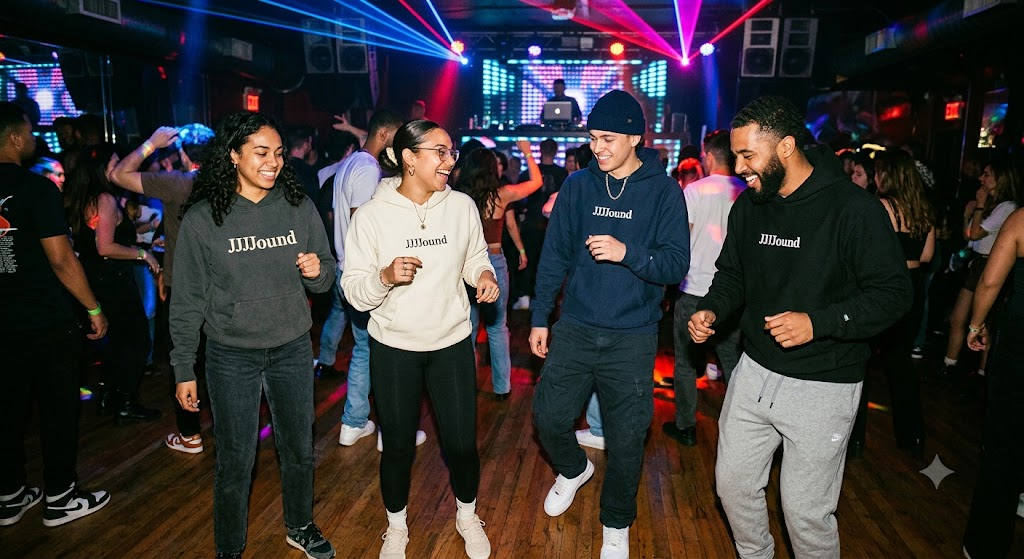
In a fashion landscape crowded with logos, hype drops, and manufactured scarcity, there's something almost rebellious about a brand that refuses to shout. JJJJound has built a cult following by doing the opposite of what streetwear usually demands — and nowhere is that philosophy more visible than in its hoodies. If you've spent any time in menswear forums, resale marketplaces, or minimalist style communities, you've probably seen the name whispered with a kind of reverence. This is why.
From Mood Board to Movement
JJJJound didn't start as a clothing label at all. The project began in 2006 as a digital mood board — a space for its founder to catalog recurring patterns in timeless design, from furniture to footwear to architecture. Over the following decade, that mood board evolved into a full collaborative design studio, one that partners with established heritage brands rather than building everything from scratch. This is a crucial part of understanding the hoodie: JJJJound rarely reinvents a garment. Instead, it takes an already-proven silhouette and refines it — adjusting proportions, swapping fabrics, and stripping away anything unnecessary until what's left feels inevitable.
That editorial instinct, more than any single design trick, is what separates a JJJJound hoodie from the hundreds of minimalist hoodies flooding the market. It isn't minimalism for its own sake. It's minimalism as the result of obsessive refinement.
The Two Signature Programs: J80 and J90
JJJJound's hoodie output is organized loosely around two recurring "programs," each pulling from a different decade of sportswear history.
The J80 Program channels 1980s off-court basketball style. These hoodies use a reverse-weave construction, which gives the fabric a slightly rugged, structured texture and helps the garment resist the vertical shrinkage that plagues cheaper fleece. The fit is relaxed rather than boxy, finished with flatlock stitching for a cleaner interior seam. Details matter here in ways that aren't obvious in a product photo: a two-way metal zipper with natural cotton tape, nickel eyelets threaded with flat cotton laces, a tonal embroidered logo tucked quietly onto the cuff, and the brand's signature beige label sewn into the kangaroo pocket. Fabric weights typically run heavy — a brushed cotton fleece body paired with a mechanical stretch rib — which is part of why these pieces have a reputation for holding their shape wash after wash.
The J90 Program, by contrast, draws from 1990s sportswear fleece. It's cut slimmer than the J80 line and carries era-specific finishing touches that give it a slightly more athletic, compact silhouette. Where the J80 hoodie feels like something you'd wear to disappear into a Sunday afternoon, the J90 feels a touch more deliberate — closer to the body, quieter in its references but still unmistakably rooted in that decade's gym-class aesthetic.
Both programs share the same underlying philosophy: take a familiar shape, apply better materials and construction than the original ever had, and remove every element that doesn't earn its place.
Why the Obsession?
There are a few reasons JJJJound hoodies command the kind of attention (and resale premiums) usually reserved for limited sneaker collaborations.
First, the restraint is the design. Most streetwear brands compete on visibility — bigger logos, louder colorways, more collaborations per season. JJJJound built its identity by doing the opposite. The branding is tonal, often nearly invisible unless you know where to look. For a certain kind of buyer — someone who wants quality and provenance without wearing a walking advertisement — that's precisely the appeal.
Second, the collaborations lend credibility. JJJJound has partnered with names like New Balance, Vans, S.N.S. Herning, Descente Allterrain, and A.P.C., among many others. These aren't quick logo-slap deals; they're genuine design collaborations where JJJJound reworks proportions, materials, or finishes on an existing product. That same rigor carries over into the in-house apparel line, including the hoodies, which benefits from the studio's broader reputation for taste-making.
Third, scarcity is real, not manufactured. Many pieces are marked "Final Sale" and produced in limited runs. Combined with steady demand from a loyal following, this has pushed certain colorways and drops onto resale platforms like Grailed at a premium over retail.
Styling a JJJJound Hoodie
Part of what makes these hoodies so wearable is that they're designed to function as a foundation piece rather than a statement piece. A few ways they tend to show up in outfits:
-
Layered under a wool overcoat or field jacket for cooler months, using the hoodie's collar as texture rather than the main event.
-
Paired with tailored trousers to play with the high-low contrast that's become a hallmark of elevated streetwear — the hoodie is the "casual" pull the outfit needs.
-
Worn alone with straight-leg denim and clean leather sneakers — the simplest option, and arguably the one that shows off the construction best, since there's nothing else competing for attention.
-
As a base layer under structured outerwear, taking advantage of the heavier fleece weights that hold their shape without bulking up the silhouette.
Because the color palette leans heavily into neutrals — black, grey mix, natural tones — a JJJJound hoodie tends to slot easily into an existing wardrobe rather than demanding you build around it.
Is It Worth the Price?
This is the question every prospective buyer eventually asks, and it doesn't have a universal answer. If you're comparing a JJJJound hoodie purely on a cost-per-wear basis against a mass-market fleece, it will lose. But that's not really the comparison being made. What you're paying for is fabric weight and construction quality that's closer to a technical outerwear piece than a basic hoodie, a design lineage tied to a studio with real credibility in the industry, and — for better or worse — a piece that signals a specific kind of taste to people who recognize it.
For buyers who care about longevity, understated design, and being part of a smaller, more design-literate corner of streetwear, the investment tends to make sense. For anyone chasing logos or immediate recognizability, it won't.
Final Thoughts
JJJJound's hoodies are a useful case study in how much can be communicated through restraint. In an industry that often equates value with visibility, this is a brand built on the opposite bet — that quiet, well-executed design earns its own kind of loyalty. Whether that's through the reverse-weave heft of a J80 piece or the slimmer, 90s-inspired cut of a J90, the throughline is the same: take something familiar, refine it relentlessly, and let the details do the talking.

 English
 Arabic
 French
 Spanish
 Portuguese
 Deutsch
 Dutch
Dutch
 Italiano
 Russian
 Romaian
 Portuguese (Brazil)
 Greek
Greek